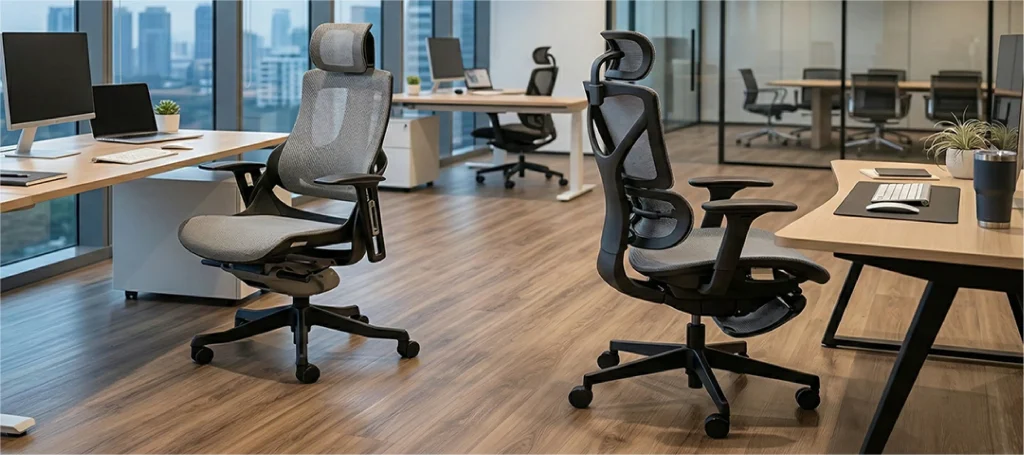
How to Choose an Ergonomic Chair in Malaysia (2026 Guide)
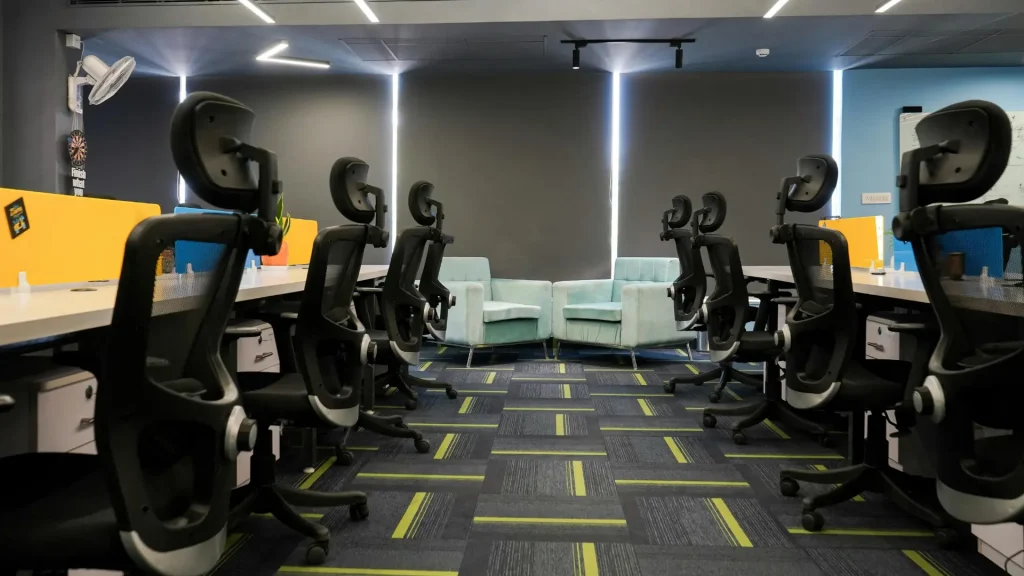
Choosing an ergonomic chair in Malaysia comes down to four decisions: the work you do, how many hours you sit, your budget, and how Malaysia’s heat and humidity affect the materials.
Get those right and any chair in the right range will work for you. Get them wrong and a RM3,000 chair won’t fix the problem.
This guide walks through each decision with specific Merryfair chair recommendations matched to each scenario.
Key Takeaways
- Your work type shapes the chair mechanics you need more than any other single factor.
- If you sit 6 or more hours daily, features like seat depth adjustment and synchro-tilt go from optional to necessary.
- Malaysia’s average humidity exceeds 80% — mesh and TPE backrests manage this practically; foam and solid panels don’t.
- Entry-level chairs handle under 4 hours a day well. Mid-range is the practical floor for 6 to 8-hour days. Premium chairs are built for full working days, year after year.
What Actually Makes a Chair Ergonomic?
Not every chair sold as “ergonomic” in Malaysia is worth the label. A chair that truly earns it adapts to your body and movement, rather than forcing your body to hold a fixed position.
Here are the features that matter most.
Lumbar support is the big one. Your lower back naturally curves inward, and when a chair doesn’t support that curve, your spine gradually rounds and your muscles fatigue much faster. Adjustable lumbar support in both height and depth matters because a fixed cushion often sits in the wrong place for your specific body type.
Seat height and depth are often underestimated. Your feet should sit flat on the floor with your thighs roughly horizontal, and the seat should be deep enough to support your thighs without cutting into the back of your knees.
A backrest that moves with you is what separates decent chairs from great ones. When you recline, your back should stay supported throughout the movement rather than losing contact with the chair halfway.
Breathable materials are not optional in Malaysia’s heat and humidity. Mesh or 3D mesh backrests allow airflow and stop heat from building up during long sessions.
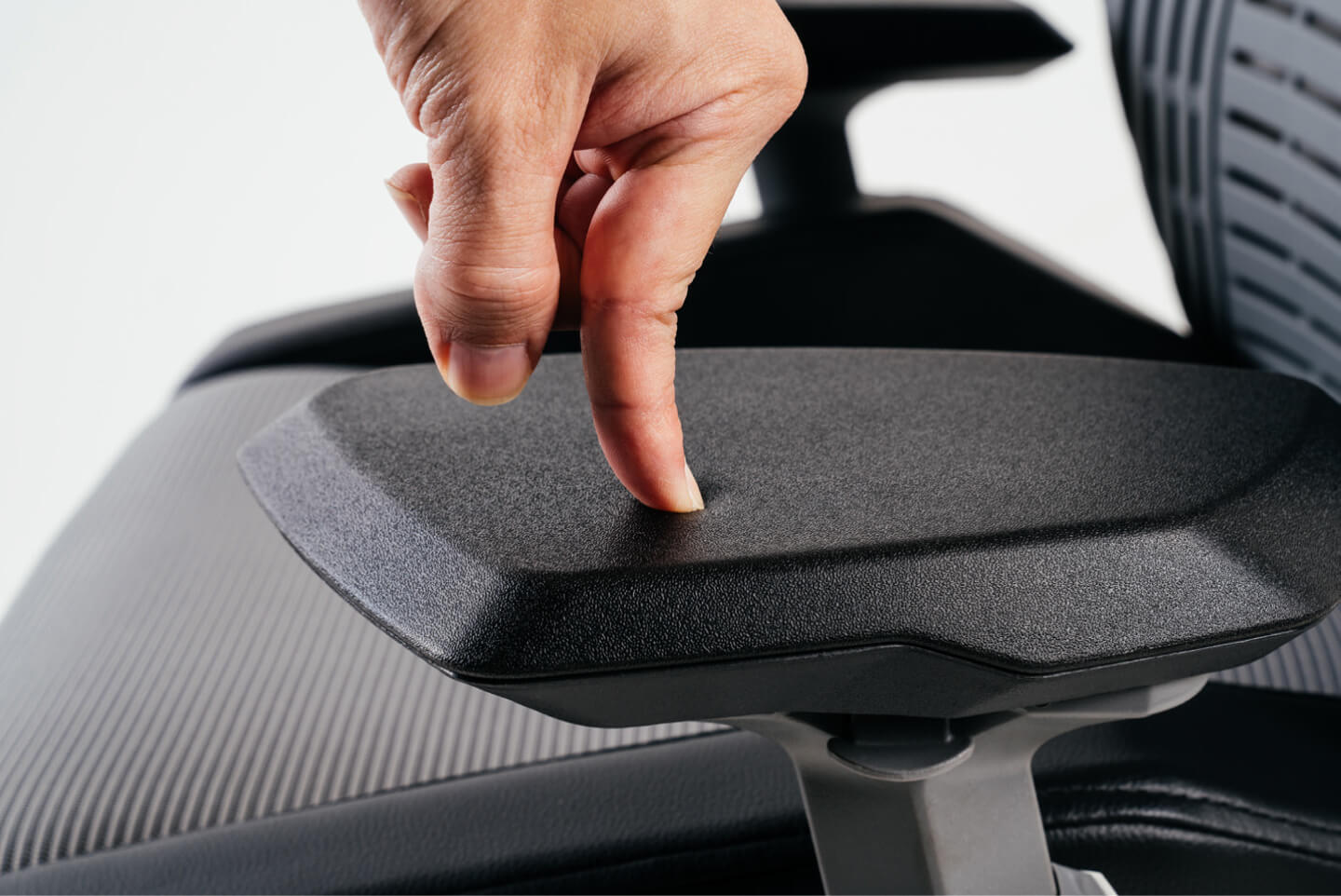
Adjustable armrests do more than most people realise. Properly positioned armrests take load off your neck and shoulders while typing, and at minimum they should adjust in height.
These features separate a properly engineered chair from one that just looks ergonomic. For a deeper breakdown of each one, the ultimate guide to ergonomic chair features covers all of them.
How to Choose an Ergonomic Chair by Work Type
The work you do shapes how your body holds itself in a chair. But it’s the factor most buyers overlook when they’re comparing specs.
Desk work: typing, reading, calls
Standard desk work means long upright sessions with frequent keyboard and mouse use. The priority is a stable lumbar zone and armrests that don’t raise your shoulders during typing.
A synchro-tilt mechanism matters more than most expect. It keeps your back supported as you shift naturally between upright and slightly reclined through the day.
The Anggun is built for desk work. Its slim 3mm back frame stays clean in any workspace. The auto weight-sensing tilt adjusts recline resistance to your body weight without manual configuration.
High-focus work and gaming sessions
Long high-focus sessions mean holding a relatively fixed position for extended periods. Concentration stops you from shifting, so postural fatigue builds faster than it normally would.
You need a tighter lumbar fit and a headrest that sits at the right height for your build. A tilt lock helps for holding one position during deep work.
The Ronin has an independently adjustable lumbar, 10cm in height range and 3cm in depth. Its 10-position tilt lock gives precise control over your recline angle during long sessions.
Active and movement-heavy work
If you’re constantly shifting positions, a rigid chair works against you. You need one that flexes with movement rather than enforcing a posture.
The Reya replaces the standard rigid back frame with a TPE ribbed structure. It flexes independently across your lumbar and shoulder zones as you move.
How to Choose an Ergonomic Chair for Your Sitting Hours
How many hours you sit each day is the single most important factor in deciding how much to invest.
Most buyers anchor on features. They should anchor on hours and factor in the cost. You can calculate this with the cost-per-sit calculator to find out the actual value of your ergonomic chair.
Under 4 hours a day
Light use covers part-time remote work, studying, or occasional desk sessions. Entry-level ergonomic chairs handle most people well at this level.
Adjustable lumbar, seat height, and basic tilt are the essentials here. Seat depth sliders and 4D armrests deliver diminishing returns when the chair only gets a few hours of use each day.
4 to 8 hours a day
This is where most Malaysian remote workers and office employees fall. At this level, the features that seem optional start to matter.
Seat depth adjustment prevents the leg circulation issue that comes from a seat that’s too long for your thighs. A synchro-tilt keeps your back supported through the full arc of your recline. 3D armrests let you properly offload your neck and shoulders during sustained typing.
The Anggun (RM800) and Reya (RM2,070) are both built for this range. Anggun prioritises simplicity and clean adjustment. Reya prioritises adaptability for people who shift positions more.
8 or more hours a day
At this level, the cost of a cheaper chair shows up in discomfort, not in the purchase price. The gap between a RM500 chair and a properly built ergonomic chair becomes measurable by the end of a full workday.
Adaptive lumbar systems and diecast aluminium frames are standard at this level. So are longer warranties: 5 to 12 years versus the 1 to 3 years you get at entry-level.
The Wau (RM2,100) and Ronin (above RM3,000) are built for sustained daily use. Both carry BIFMA certification, which tests mechanical durability against the equivalent of 10 years of single-shift commercial use.
How to Choose an Ergonomic Chair by Budget
Budget isn’t just about what you can spend. It’s about matching your investment to how many hours you actually use the chair.
Under RM1,000
The essential features are here: adjustable lumbar, seat height, basic tilt, and breathable mesh. You’re trading refinement for access.
A chair at this level handles light-to-moderate daily use well and should last 3 to 5 years with regular use.
RM1,000 to RM2,500
This is where fully-featured ergonomic chairs start. Seat depth sliders, synchro-tilt, 3D or 4D armrests, and engineered mesh are standard at this price point.
For anyone sitting 6 to 8 hours daily, this range is the practical minimum for long-term comfort.
Above RM2,500
Premium chairs use higher-grade construction: diecast aluminium frames, high-cycle mechanisms, and materials tested against commercial durability standards.
The value case is lifespan. Chairs in this range typically last 10 to 15 years. That changes the cost-per-year calculation compared to replacing a budget chair every 3 to 5 years.
The best ergonomic office chairs for every budget in Malaysia range from RM800 mesh-back models to premium full-spec builds.
How to Choose an Ergonomic Chair for Malaysia’s Climate
Malaysia’s average humidity exceeds 80% for most of the year. In a chair you sit in for hours, materials matter more than most buyers realise until they’ve experienced the difference.
Why foam traps heat and mesh doesn’t
Dense foam seat pads compress and hold warmth. After an hour of sitting, a foam seat holds heat and moisture beneath you.
Mesh and TPE backrests allow continuous airflow. This creates a passive cooling effect that’s noticeably different in spaces that aren’t heavily air-conditioned.
Fully air-conditioned offices
In a consistently cooled workspace (22 to 24°C), the climate factor is less critical. Mesh is still the better choice for airflow, but fabric and leather seats are more tolerable in these conditions.
Home offices and lightly cooled spaces
This is where material choice has real daily consequences. A mesh or TPE backrest and a breathable seat base make a measurable difference across a long session.
What materials to look for in a Malaysian climate:
- Mesh or TPE backrest over foam or solid back panels
- Perforated seat foam or a spring-based seat base (the Reya uses 62 independent coil springs that allow airflow beneath the seat)
- Avoid leather in spaces without consistent air conditioning
All four chairs recommended in this guide use mesh or TPE backrests and are built with tropical-climate use in mind.
Our Recommended Ergonomic Chairs for Malaysian Buyers
| Chair | Price | Standout Feature | Best For |
|---|---|---|---|
| Merryfair Anggun | RM800 | Weight-sensing synchro tilt. Modular — headrest and lumbar add-onc ompatible. | Desk work, home offices, light-to-moderate daily use |
| Merryfair Reya | RM2,070 | Flexible TPE back. Spring-based seat base for airflow. | Active sitters, 6–8 hour daily use, lower back discomfort |
| Merryfair Wau | RM2,100 | Hip-pivot recline — lumbar support holds through the full arc. | Frequent recliners, premium and design-forward workspaces |
| Merryfair Ronin | Above RM3,000 | 10-position tilt lock. Adjustable lumbar (10cm height, 3cm depth). | High-focus work, gaming, long uninterrupted sessions |
Each chair below addresses a different combination of the factors covered above. All four carry BIFMA and GREENGUARD Gold certification.
Merryfair Anggun — RM800
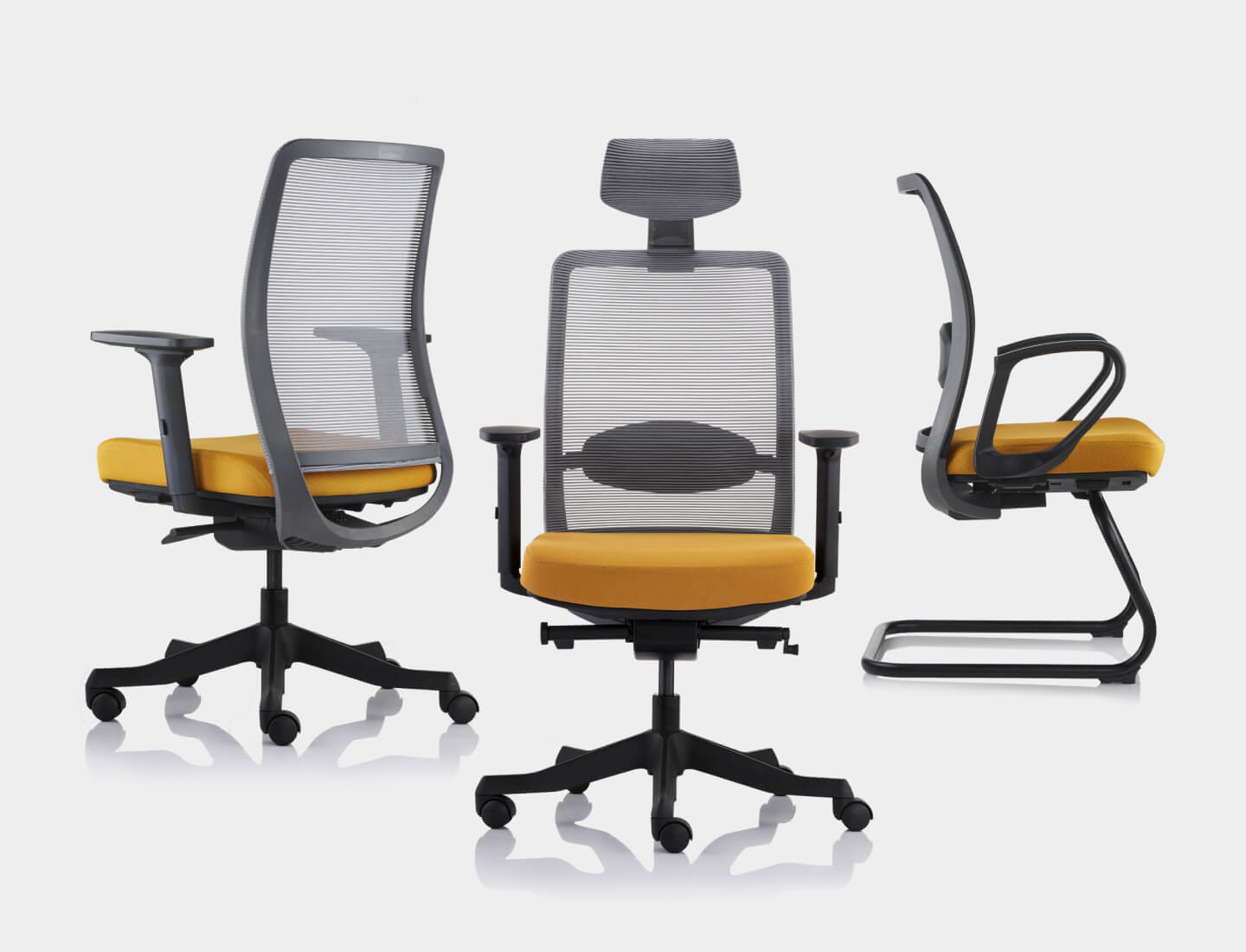
The Anggun is Merryfair’s entry-level ergonomic task chair. The 3mm back frame keeps the profile minimal in any workspace.
The synchro tilt auto-adjusts resistance to your body weight. Three-way armrests cover height, depth, and swivel, and you can add the headrest or lumbar pad later without replacing the chair.
Merryfair Reya — RM2,070
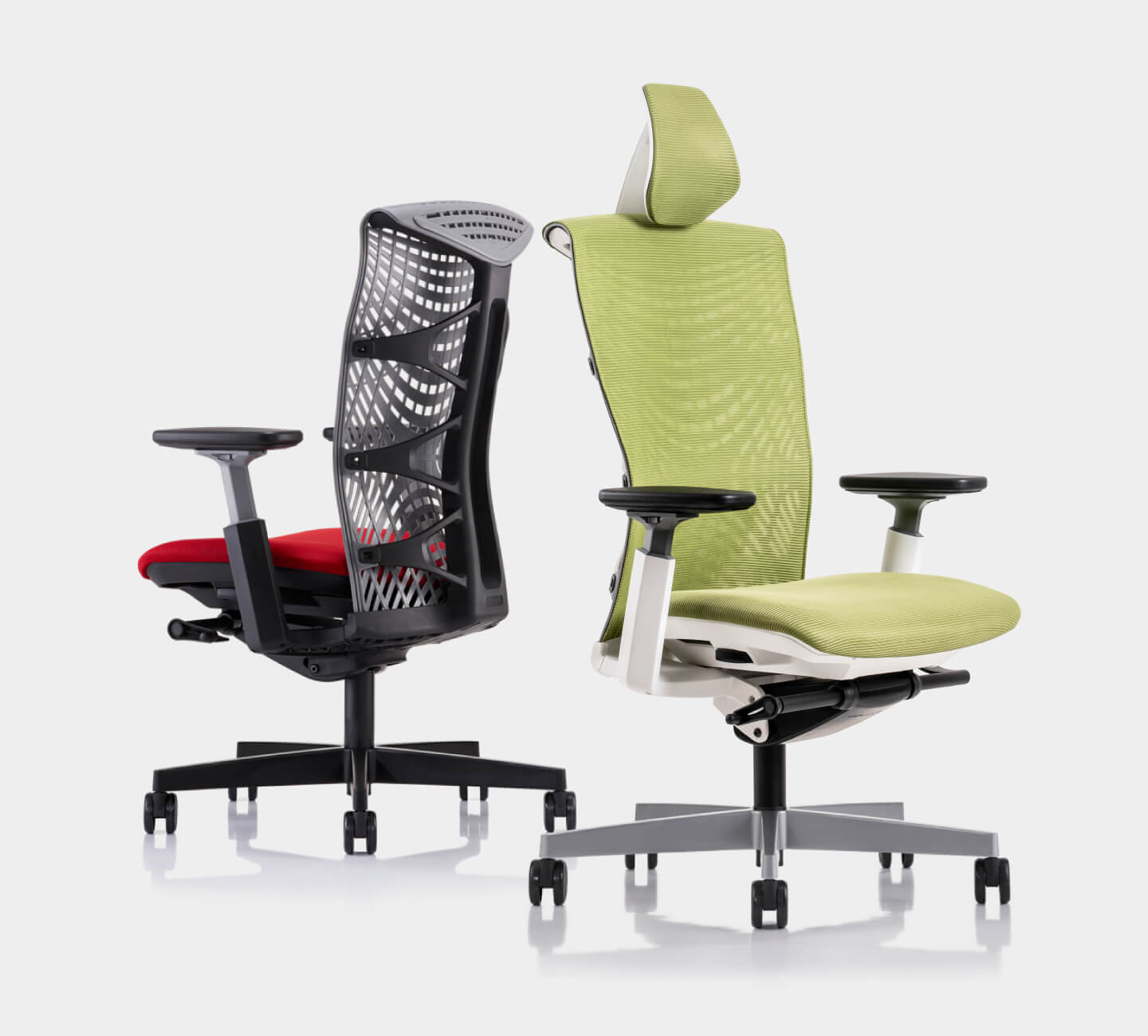
The Reya replaces the standard rigid back frame with a ribbed TPE structure. It flexes independently across your lumbar and shoulder zones as you move.
Under the seat, 62 coil springs distribute pressure dynamically and allow airflow that foam blocks. It’s built for people who shift positions throughout the day.
Merryfair Wau — above RM2,100
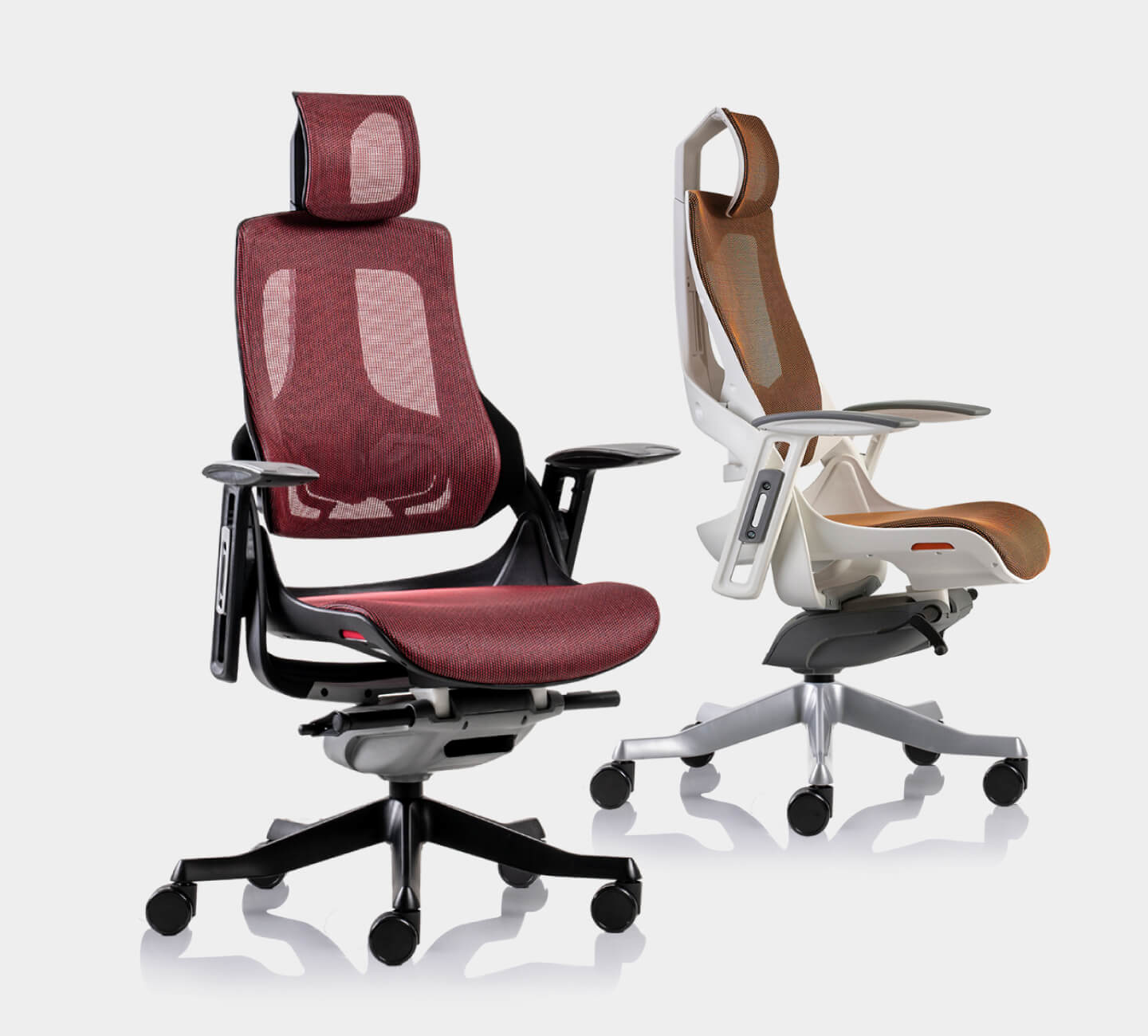
The Wau‘s back and seat pivot close to the hip joint. That keeps your lumbar supported through the full arc of a recline, not just in the upright position.
It’s available in fabric, leather, or elastomer. The design references ski boot construction and sports car bucket seats.
Merryfair Ronin — above RM3,000
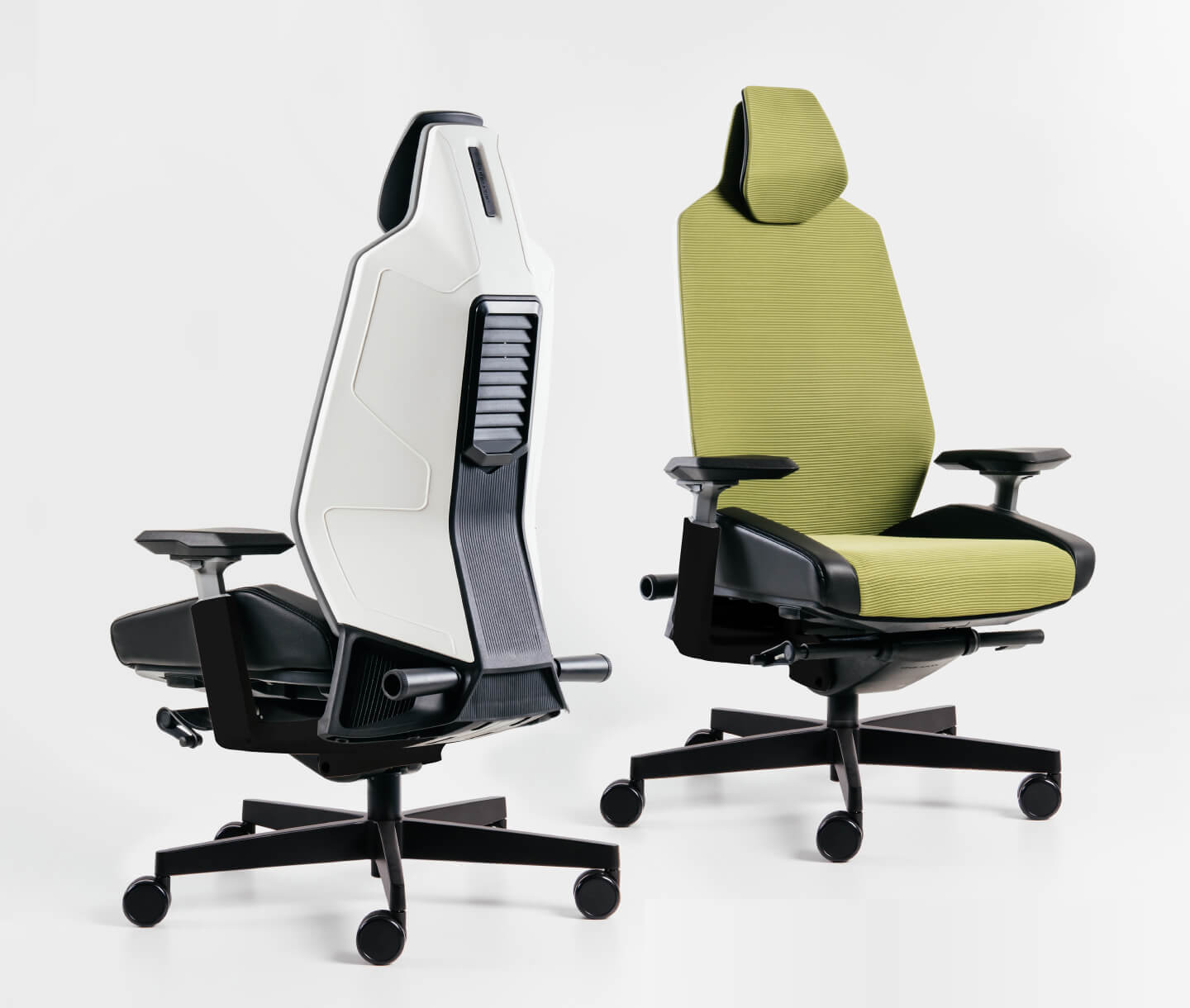
The Ronin pairs a gaming-inspired form with genuine ergonomic engineering. The lumbar adjusts 10cm in height and 3cm in depth using turn handles.
The 10-position tilt lock gives precise control over recline angle. Both mesh and TPE webbing backrest options are available.
Frequently Asked Questions
What’s the most important feature to look for in an ergonomic chair?
Adjustable lumbar support. Without proper lower back support, even a comfortable-feeling chair causes cumulative strain over time.
Is investing in an ergonomic chair worth it for working from home?
If you’re sitting more than four hours a day, yes. The cost of a quality ergonomic chair is usually far less than what back pain ends up costing in physiotherapy, medication, and lost productivity.
How do I know whether I need a budget or mid-range ergonomic chair?
If you sit fewer than 4 hours a day, an entry-level chair under RM1,000 handles most use cases well. If you sit 6 or more hours, features like seat depth adjustment and synchro-tilt shift from optional to necessary.
The clearest signal is how your body feels at the end of a full day. Persistent lower back tightness after 4 to 6 hours is usually the chair, not just your posture.
How do I know if my chair is set up correctly?
Your feet should be flat on the floor, knees at roughly 90 degrees, lower back in contact with the lumbar support, and your shoulders relaxed rather than raised or hunched forward.
When a fixed desk forces the seat higher than that, an under-desk footrest restores flat foot contact.
Are Merryfair chairs certified to international standards?
Yes. All four chairs in this guide carry both BIFMA certification and GREENGUARD Gold certification, the latter confirming low chemical emissions for healthier indoor air quality.
MORE BLOGS
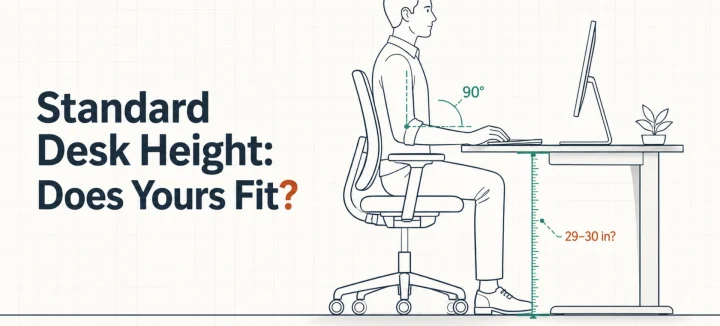
Standard Desk Height: Is 29 Inches Right for Your Body?
Standard desk height is 29 to 30 inches (73 to 76 cm). That number fits far fewer people than you’d think. A desktop that tall matches the seated elbow height of someone around 6’2″. The average American man stands 5’9″, and the average woman 5’3.5″. So this guide does two jobs. It shows you how […]
Read More
Exploding Office Chairs: The Full Truth From a Chair Maker
The exploding office chair story resurfaces every few years, same grainy photos attached. So can a chair really burst? A handful have, and every documented case involved an uncertified gas cylinder (the pressurized tube that raises and lowers your seat). Chairs built to recognized safety standards fail differently: seals leak, the seat sinks, nothing bursts. […]
Read More
How to Fix a Squeaky Office Chair by Sound and Location
A squeaky office chair makes four different noises, and each one points to a different part. To silence it for good, find the source first: the tilt mechanism, gas cylinder, casters, or armrests. Then tighten what’s loose and lubricate with the right product for that joint. This guide matches each sound to its fix, and […]
Read More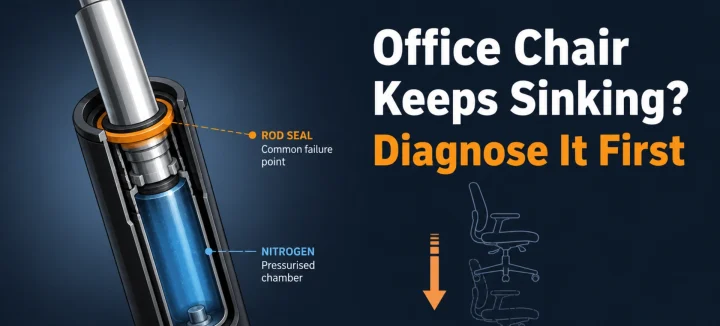
Office Chair Keeps Sinking? Diagnose and Fix It for Good
An office chair that keeps sinking or won’t stay up has one main cause: the gas cylinder under the seat is losing pressure. Worn seals let the nitrogen escape, so the piston stops holding your weight. A hose clamp or PVC pipe locks the height today; a new cylinder fixes it properly in 15 minutes. […]
Read More