What Is PU Leather? A Chair Maker’s Honest Guide
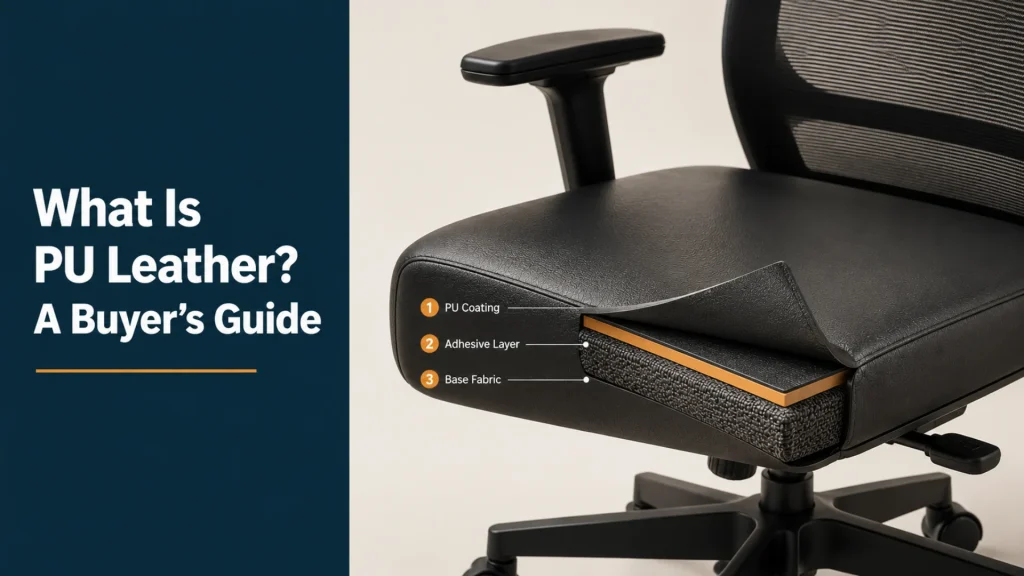
That PU leather chair flaking little black bits onto your trousers isn’t faulty. It’s doing exactly what the material was built to do.
PU leather, short for polyurethane leather, is a synthetic material: a plastic coating bonded onto a fabric backing. It mimics the look and feel of animal hide at a fraction of the cost. In its pure form it contains no real hide, so it’s vegan.
So why does one PU chair survive a decade while another peels in a year? This guide shows how it’s made, how to judge its quality, and what matters when it wraps a chair you sit in daily.
Key Takeaways
- PU leather is a plastic coating bonded to fabric, not real hide. “100% PU” is fully vegan, but “bicast” versions hide a thin layer of real cowhide underneath.
- Quality lives in three layers: the coating, the bond beneath it, and the backing fabric. Cheap PU almost always fails at the bond first.
- Most PU office chairs start cracking within 2 to 5 years. Low-grade coatings can peel before 18 months.
- For all-day seating, check the abrasion rating. A double-rub score of 30,000 or higher signals heavy-duty PU built for eight-hour shifts.
What PU Leather Actually Is
PU leather is a man-made material designed to imitate animal hide. A thin layer of polyurethane, a flexible plastic, sits on top of a woven fabric base. The two are bonded so the surface looks and feels close to real leather, at a far lower price.
You’ll see it on office chairs, sofas, handbags, and shoes. It’s the default upholstery for most affordable seating.
In our own production runs, PU is the material buyers ask about most. Usually because a previous chair let them down.
PU leather isn’t fake leather pretending to be real. It’s a plastic coating engineered to look like hide, sold honestly under its own name.
Is PU leather real leather?
No. PU leather is not real leather. In its pure form it carries no animal hide at all, which is why 100% PU is sold as vegan. The leather look is an illusion: a heated roller stamps a grain pattern into the plastic surface.
Here’s where the labels get slippery. Some products marketed as “PU leather” are actually bicast leather, which uses a layer of real split hide underneath. More on that shortly.
What does “PU” stand for?
PU stands for polyurethane, the plastic that forms the coating. It’s a versatile polymer used in foam cushions, varnishes, and adhesives. On synthetic leather, it becomes the flexible skin you see and touch. According to HowStuffWorks, that polymer is petroleum-derived, which is why fresh PU can carry a faint plastic smell.
How PU Leather Gets Made on the Factory Floor
PU leather production is highly automated. A factory starts with a backing fabric, coats it with liquid polyurethane, then embosses a grain pattern under heat and pressure. The result is a single uniform sheet that ships by the roll.
That uniformity is the selling point. And it’s also the catch.
How is PU leather manufactured?
The base fabric is usually polyester or cotton. Machines apply polyurethane as a coating or a laminated film, using heat and high pressure to fuse it to the backing. A textured roller then presses in the grain.
A final treatment seals the surface for water resistance and stain resistance. Color is mixed into the coating, so manufacturers control shade, thickness, and texture with precision genuine hide can’t match.
This is why PU comes in colors leather never could. Want a bright teal task chair? PU does that. Real hide doesn’t.
Manufacturers can dial in the exact color, thickness, and grain of PU leather, a level of control no animal hide will ever give you.
Why does some “PU leather” still contain cowhide?
Because of bicast leather. Bicast (sometimes called double-cast) takes split leather, the fibrous lower layer of a hide, and coats it with a PU or PVC film. The label still says “PU,” but real animal product sits underneath.
So if veganism is the deciding factor, “100% PU” and “bicast” are not the same thing. Read the tag, not just the headline. This single distinction trips up more buyers than any other.
Why Two PU Chairs at the Same Price Wear Out Differently
Walk into a showroom and two PU chairs can look identical. Same sheen, same grain, same price tag. Eighteen months later, one is shedding flakes and the other looks new. The difference was never the surface.
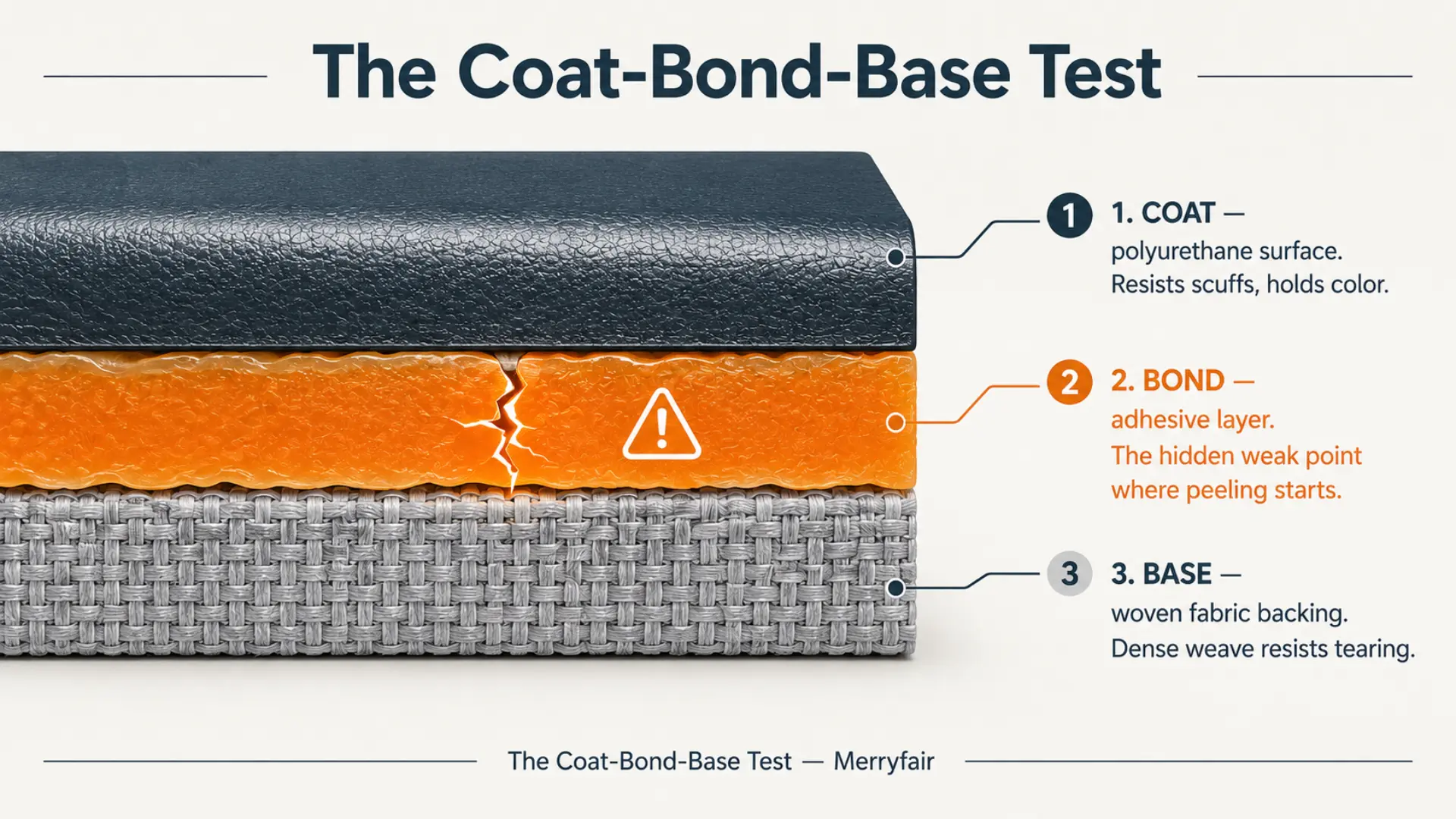
Cheap PU and quality PU look identical on day one. The difference shows up at month eighteen, when one starts shedding and the other doesn’t.
What separates cheap PU leather from good PU leather?
Three layers do. At Merryfair, we judge any PU sample using what we call the Coat-Bond-Base Test, a quick read of the three things that decide how long it lasts:
- Coat. The polyurethane surface. Thicker, higher-grade coatings resist scuffs and hold color. Thin economy coats wear through fast.
- Bond. The adhesive layer joining coat to backing. This is the hidden weak point, and it’s where failure starts.
- Base. The backing fabric. A dense polyester weave resists tearing; a flimsy base lets the whole sheet stretch and split.
Most buyers only inspect the coat, because it’s the only layer they can see. The bond and base decide the chair’s real lifespan. That’s the gap this framework closes. Budget chairs, including many why budget gaming chairs lean on thin PU bucket seats, cut cost at the bond first.
Why does PU leather peel and crack over time?
PU leather peels through a process called hydrolysis. The polyurethane coating slowly absorbs moisture, the bond weakens, and the surface separates from its backing. It doesn’t wear away from the top. It lifts from underneath.
PU leather doesn’t wear out from the surface down. It fails from the bond up, where the coating quietly separates from its backing.
Several things speed this up: UV light, cleaning chemicals, and plasticizers leaching out of the film as it ages. On a chair, body heat and sweat make it worse. Eureka Ergonomic documents the failure window starting at 18 to 36 months for synthetic seating. [REFRESH NOTE: verify lifespan window at next refresh]
And once peeling starts, it spreads. You can slow it, but you can’t reverse it.
PU Leather vs Genuine Leather vs PVC and Bonded Leather
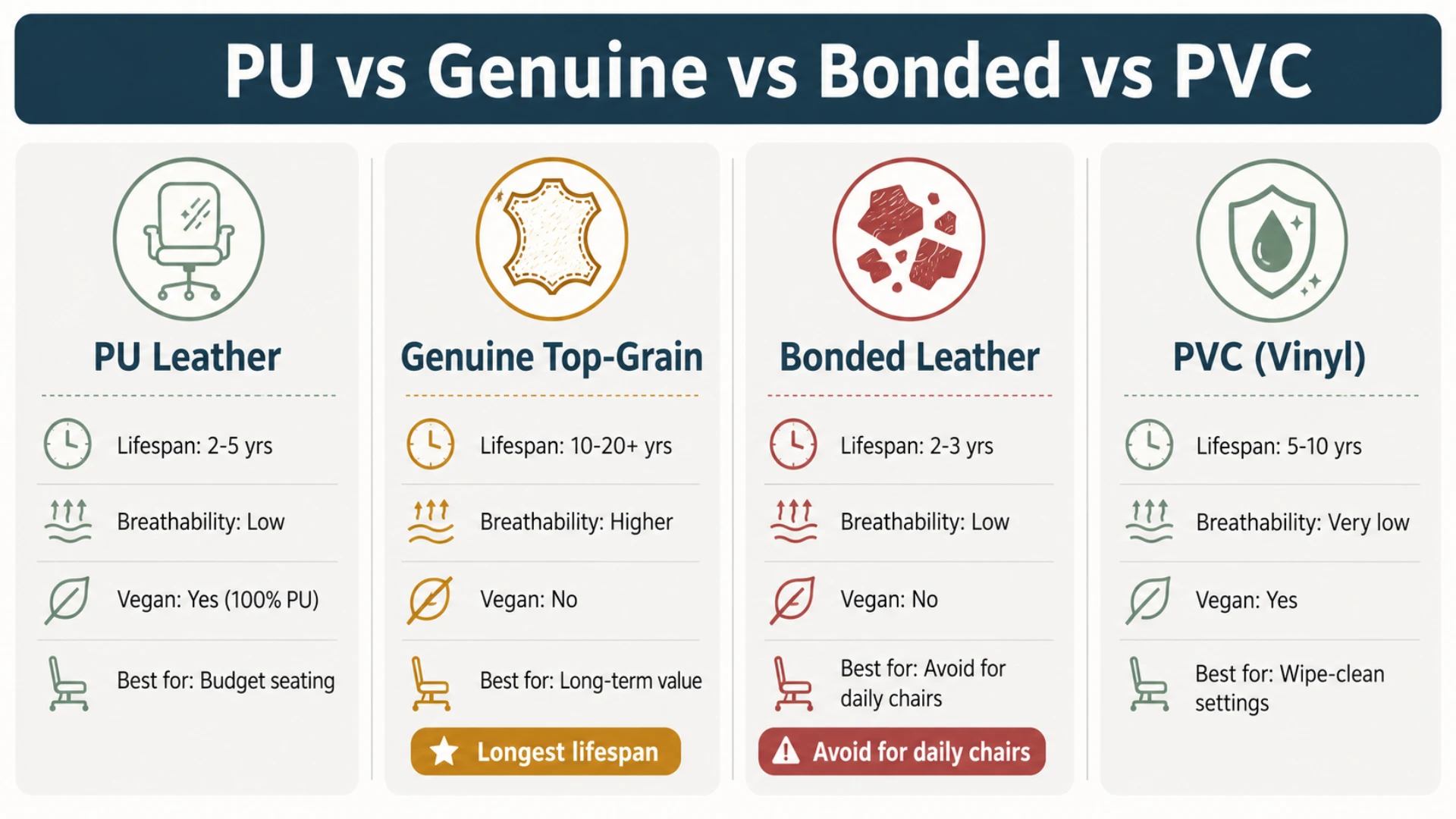
People lump every leather alternative together. They shouldn’t. PU, PVC, bonded, and genuine leather behave very differently on a chair you use for years.
Here’s the honest comparison.
| Material | What it is | Lifespan (daily use) | Breathability | Vegan? | Best for |
|---|---|---|---|---|---|
| PU leather | Plastic coat on fabric | 2-5 years | Low | Yes (100% PU) | Budget, lighter-use seating |
| Genuine top-grain leather | Real animal hide | 10-20+ years | Higher | No | Executive chairs, long-term value |
| Bonded leather | Leather scraps glued with PU | 2-3 years | Low | No | Best avoided for daily chairs |
| PVC (vinyl) | Solid plastic sheet | 5-10 years | Very low | Yes | Wipe-clean, high-spill settings |
Genuine leather costs more per chair but often less per year. PU costs less today and bills you again in three years.
What’s the difference between PU leather and genuine leather?
Genuine leather is animal hide. PU leather is plastic on fabric. Hide is porous, so it breathes, ages into a patina, and lasts decades. PU is non-porous, so it traps heat, never develops character, and eventually peels.
The trade-off is money and ethics. PU is cheaper and animal-free. Genuine leather lasts far longer and feels better over time. If you want a vegan option that still looks sharp, PU wins. If you want a chair for the next fifteen years, hide usually makes more sense, much like Merryfair’s mesh-and-fabric ergonomic swivel chair range does for breathability.
Is PU leather better than PVC or bonded leather?
For most seating, yes. PU is softer and more flexible than stiff PVC, and it breathes slightly better. It also beats bonded leather, which is essentially shredded leather scraps glued together and peels even faster.
But PVC outlasts PU in pure abrasion and water exposure. That’s why you see vinyl in clinics and bars. Each material has a job. PU’s job is affordable, decent-looking, lighter-duty seating.
In Malaysia’s humidity the stakes shift further; how mesh, fabric, and leather compare in tropical humidity decides which material actually lasts.
What to Check Before You Buy a PU Leather Office Chair
An office chair punishes upholstery harder than almost any furniture in your home. You sit, shift, and sweat in it for hours, every day, flexing the same panels thousands of times a week. Material that survives a sofa can fail fast on a task chair.
An office chair sees more abuse in a year than a sofa sees in five. Sweat, body heat, and constant flex all attack PU faster.
So what should you actually look for? Check these before you buy:
- Abrasion rating. Look for a double-rub or Martindale figure. Sailrite sets 15,000 double rubs as the contract minimum and 30,000+ as heavy-duty. A chair for eight-hour shifts should clear 30,000.
- Coating thickness. Thicker PU resists the scuffing that starts cracks. Premium grades feel substantial, not papery.
- Seam construction. Moisture enters at stitching holes first. Tight, reinforced seams delay delamination.
- Breathability. PU traps heat. For long sessions, look for perforated PU or a mesh-and-PU hybrid.
A double-rub rating under 15,000 has no business on a chair you sit in for eight hours a day.
For furniture, that abrasion test should run at 12 kPa of pressure, per BeGoodTex, because that load simulates a person actually sitting down. A high score tested at lower pressure looks good and means little. Leather has its own standard too: the International Leather Club notes ASTM D7255 for hide upholstery.
Is PU leather good for a chair you sit in all day?
It can be, if the grade is right. Quality PU on a well-built chair handles daily eight-hour use for several years and wipes clean in seconds. The problem is rarely PU itself. It’s low-grade PU sold without any durability spec.
That’s why the abrasion number matters more than the word “leather” on the label. Pair a strong rating with the ergonomic support that matters most over an eight-hour shift, and PU earns its place.
How do you make a PU leather office chair last longer?
Keep it cool, dry, and out of direct sun. Wipe spills quickly with a damp cloth, never harsh solvents, which strip the coating and speed cracking. Condition the surface every few months with a PU-safe product to keep it flexible.
Which chemicals are safe depends on the surface; a full breakdown of cleaning products that are safe for each material covers PU, mesh, and fabric.
Most peeling traces back to heat, sunlight, and aggressive cleaners. Control those three and you can stretch a mid-grade PU chair well past its typical lifespan. Comfort matters too: the right setup, including matching a chair’s lumbar support to your own spine, keeps you from grinding the same panel raw every day.
Reading a Spec Sheet the Way a Chair Maker Does
Stop reading “PU leather” as one word. Start reading it as three layers and one number.
The coat you can see. The bond and base you can’t, but they decide whether your chair lasts two years or ten. And that double-rub figure tells you more about real durability than any marketing adjective ever will.
Most product pages tell you a chair is “PU leather.” None tell you which of the three layers was built to last.
Next time a listing just says “premium PU leather,” ask the question it’s avoiding: which grade, and rated to how many rubs? When you’re ready to see it done properly, explore Merryfair’s ergonomic office chairs engineered for daily use.
Frequently Asked Questions About PU Leather
Is PU leather waterproof?
PU leather is water-resistant, not waterproof. Its non-porous surface repels spills, so a quick wipe handles most accidents. But moisture seeps in through seams, stitching holes, and any existing cracks, reaching the backing and weakening the bond. Dry spills fast and never let a wet PU chair sit damp.
Does PU leather peel like bonded leather?
Both peel, but PU lasts longer. Bonded leather is shredded scraps glued to a backing, and it often flakes within two to three years. PU is a continuous coating, so it typically holds for two to five years before hydrolysis lifts the surface. Neither can be truly repaired once peeling begins.
Is PU leather toxic or safe to sit on?
Finished PU leather is considered safe for everyday seating. New PU can release a faint plastic odor from the polyurethane as it off-gasses, which fades over weeks with ventilation. People sensitive to chemical smells may notice it longer. Air out a new chair before heavy use if odor concerns you.
How long does a PU leather office chair last?
Most PU office chairs last two to five years under daily use before peeling or cracking. Low-grade coatings can fail before 18 months, while high-grade PU on a quality chair stretches further. Lifespan depends heavily on the coating grade, heat exposure, sunlight, and how you clean it.
Can you repair peeling PU leather on a chair?
Not permanently. Repair kits with filler and leather paint can mask small peeled spots for a while. But hydrolysis keeps spreading beneath the surface, so the fix is cosmetic and temporary. Once a PU chair peels widely, reupholstering or replacing it is the only lasting solution.
MORE BLOGS
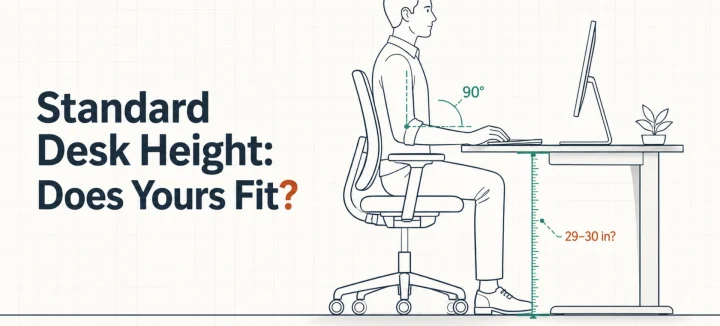
Standard Desk Height: Is 29 Inches Right for Your Body?
Standard desk height is 29 to 30 inches (73 to 76 cm). That number fits far fewer people than you’d think. A desktop that tall matches the seated elbow height of someone around 6’2″. The average American man stands 5’9″, and the average woman 5’3.5″. So this guide does two jobs. It shows you how […]
Read More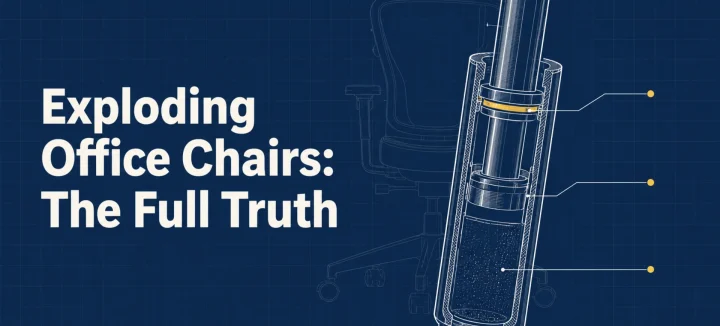
Exploding Office Chairs: The Full Truth From a Chair Maker
The exploding office chair story resurfaces every few years, same grainy photos attached. So can a chair really burst? A handful have, and every documented case involved an uncertified gas cylinder (the pressurized tube that raises and lowers your seat). Chairs built to recognized safety standards fail differently: seals leak, the seat sinks, nothing bursts. […]
Read More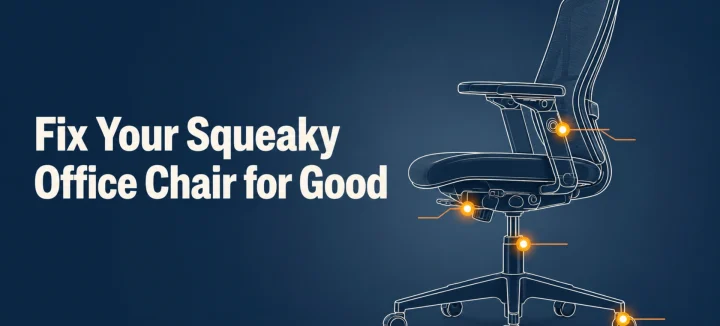
How to Fix a Squeaky Office Chair by Sound and Location
A squeaky office chair makes four different noises, and each one points to a different part. To silence it for good, find the source first: the tilt mechanism, gas cylinder, casters, or armrests. Then tighten what’s loose and lubricate with the right product for that joint. This guide matches each sound to its fix, and […]
Read More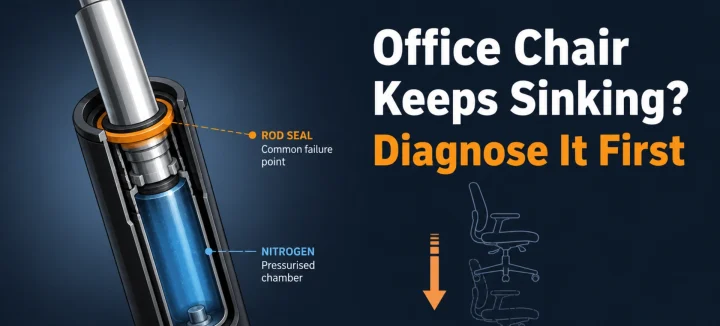
Office Chair Keeps Sinking? Diagnose and Fix It for Good
An office chair that keeps sinking or won’t stay up has one main cause: the gas cylinder under the seat is losing pressure. Worn seals let the nitrogen escape, so the piston stops holding your weight. A hose clamp or PVC pipe locks the height today; a new cylinder fixes it properly in 15 minutes. […]
Read More