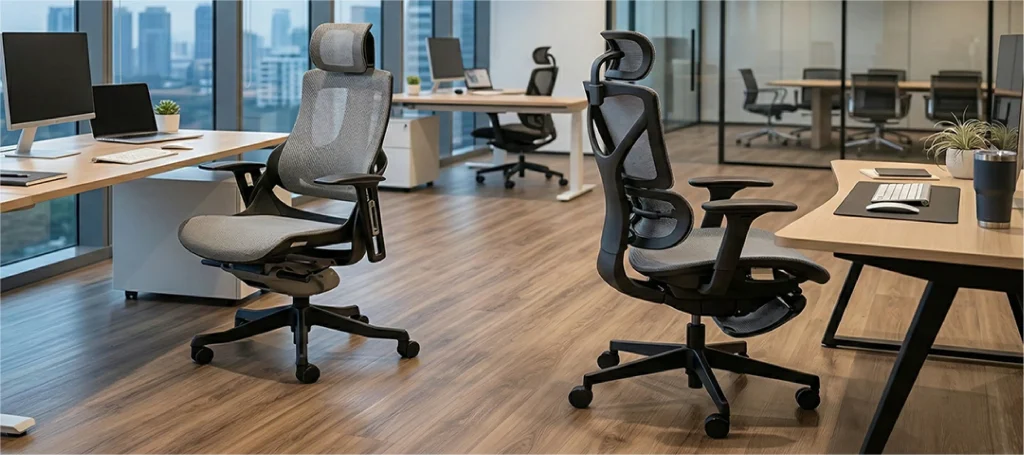
The Ultimate Guide to Ergonomic Chairs: Must-Have Features and Best Types for Every Workspace
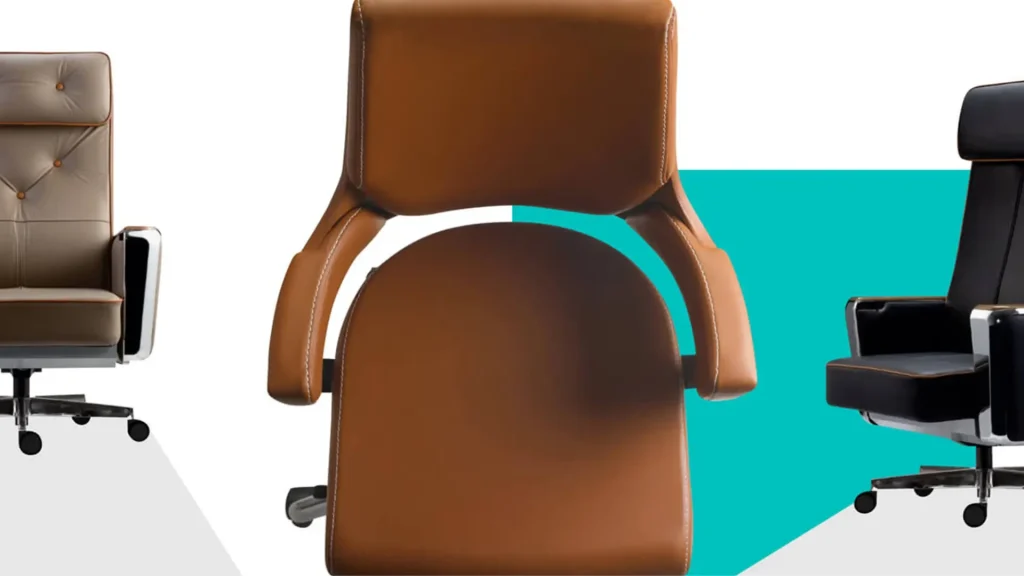
A good ergonomic chair isn’t just about comfort. It’s about how your body holds up after five, six, eight hours of seated work. Getting it right from the start is a lot easier than recovering from the damage of getting it wrong.
This guide walks you through the features that actually make a difference, and helps you match the right chair type to your specific workspace.
What Is an Ergonomic Chair?
An ergonomic chair is a chair whose seat height, seat depth, lumbar support, and armrests each adjust independently, so the chair conforms to your body rather than forcing your body to adapt. If any of those four adjustments is missing, the chair is styled ergonomic, not built ergonomic.
That word ‘independently’ is the whole test. Run it in any showroom:
- Seat height moves without changing the backrest angle.
- Seat depth slides without pulling the lumbar pad off your curve.
- Lumbar support adjusts to your spine, not a fixed bump in the mesh.
- Armrests reposition without forcing your shoulders up or out.
A chair that fails any of the four is getting its ergonomics from luck: you happen to be the body it was moulded around.
Ergonomic Chair Must-Have Features to Look For
Most people start shopping after noticing the warning signs it’s time for an ergonomic chair upgrade: a stiff lower back, tight shoulders, restless legs.
An ergonomic chair isn’t an impulse buy. The five features below decide whether it actually fixes those complaints.
Why does lumbar support need to be adjustable?
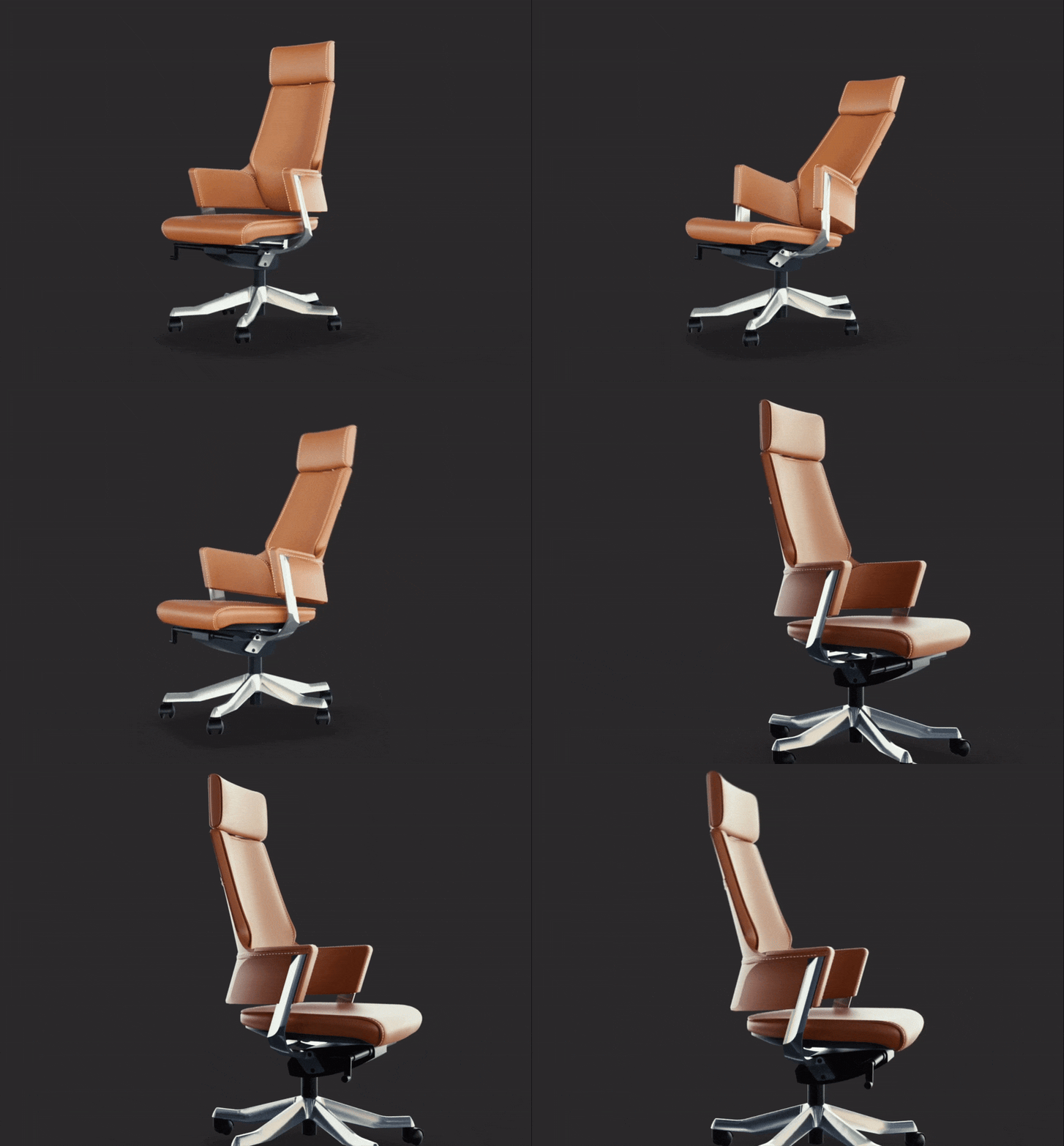
Lumbar support needs to adjust because the lower-back curve sits at a different height on every body. A fixed bump supports one spine shape; an adjustable pad slides until it fills your curve exactly. Get it wrong and the support presses your mid-back while your lumbar spine slowly flattens.
The lower back is almost always the first place a poorly designed chair makes itself felt. Discs and muscles take the strain the curve used to carry.
A proper lumbar adjustment lets you position the support at the exact height of your curve. You’ll feel the difference by the end of one working day.
That end-of-day difference is disc load, and how ergonomic chairs protect the lower back explains the mechanics behind it.
What do seat depth and width adjustments actually do?
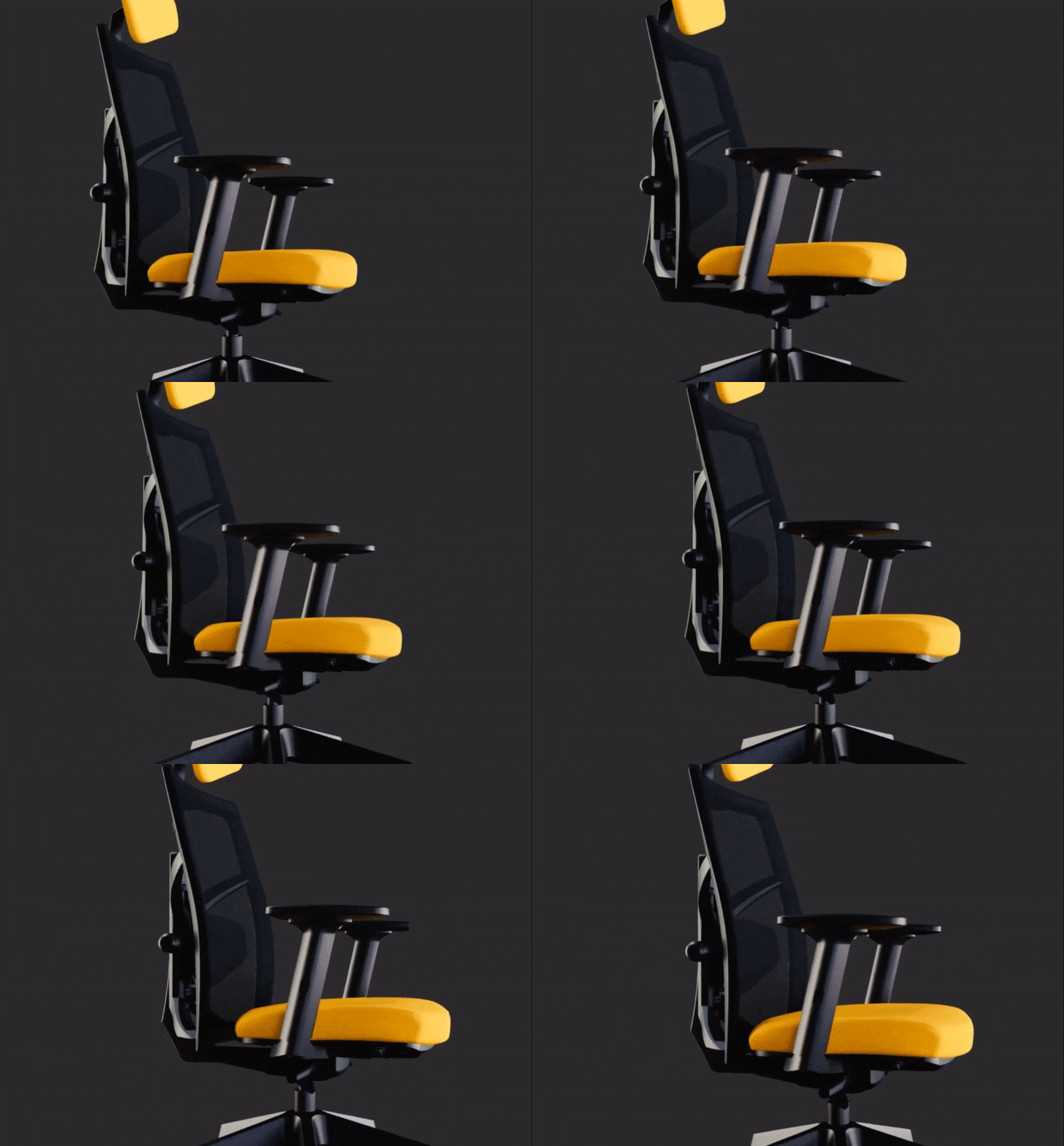
Seat depth adjustment slides the seat pan so your back reaches the backrest while two to three fingers fit between the seat edge and your knees. Width adjustment keeps armrests and side bolsters aligned with your frame. Together they let one chair fit short and long legs equally well.
Depth is the underrated one. A seat that’s too deep forces a choice between slouching forward and losing the lumbar pad entirely.
Both cost you by mid-afternoon. Adjustable depth is what makes a single chair model workable across different heights and leg lengths.
Do armrests really matter on an ergonomic chair?
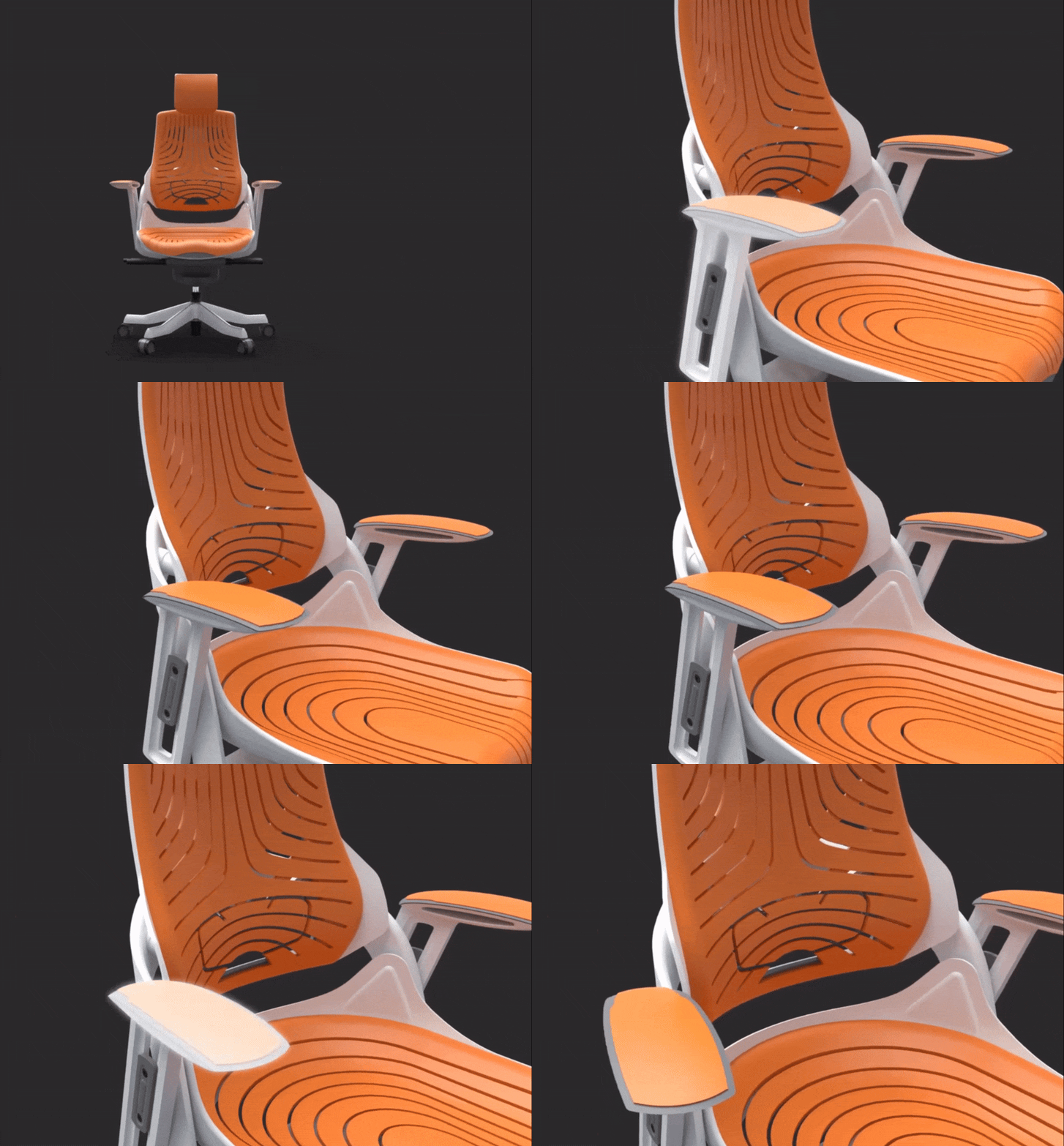
Yes, more than most buyers expect. Armrests at the wrong height feed tension straight into the shoulders and neck, and few people connect the two. Look for 4D armrests, which adjust in height, width, depth, and pivot angle, so your shoulders stay dropped whatever the task.
Typing, writing, and calls each put your forearms somewhere different. The pivot and depth adjustments are what let the armrest follow.
Which chair materials work in Malaysian heat?
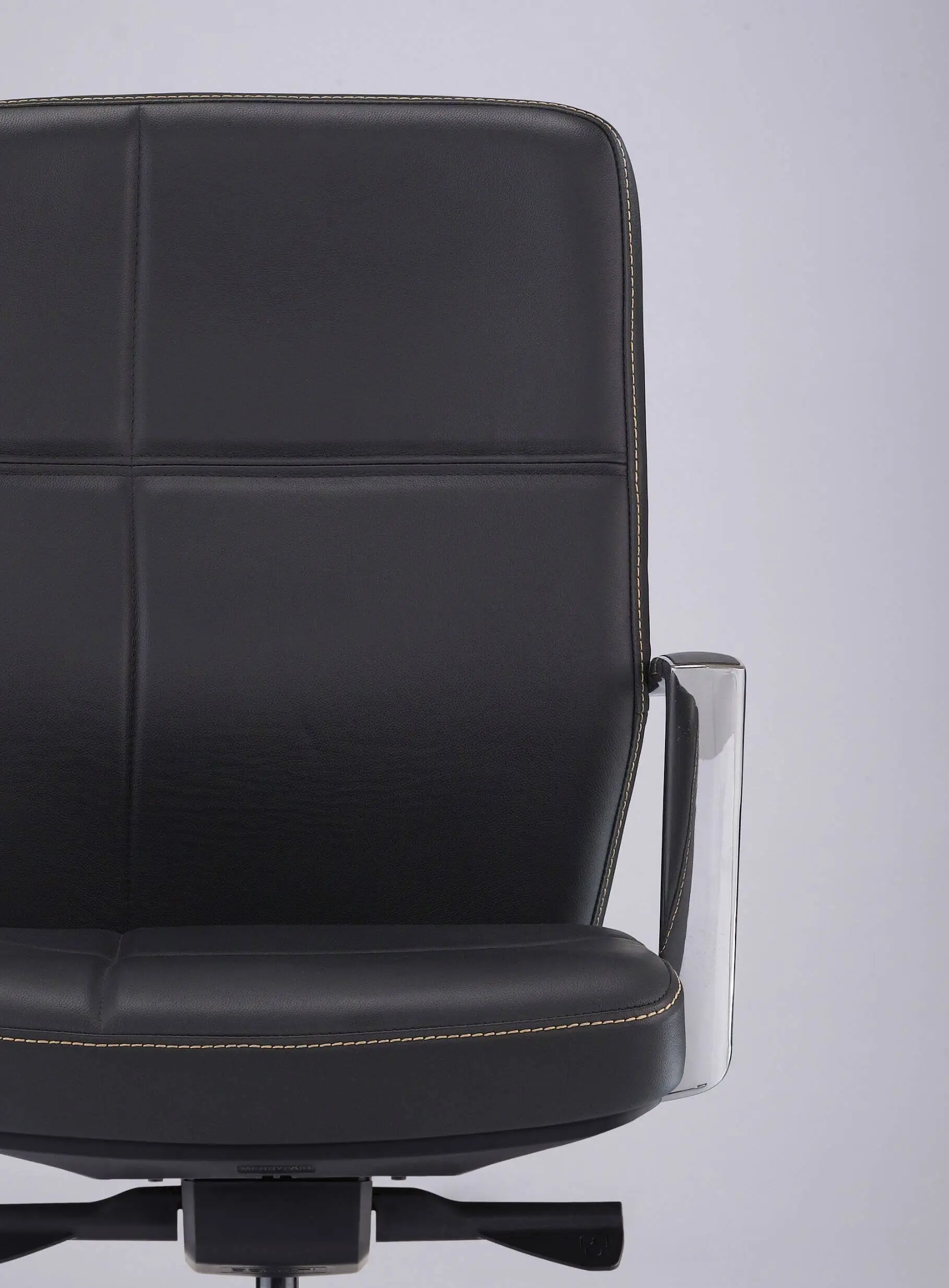
Mesh is the default for Malaysia. It lets air move through the backrest, so heat and sweat don’t build against your lower back through a tropical afternoon. High-density foam seats still earn their place underneath: firmer, longer-lasting cushioning for full workdays. A mesh back over a foam seat covers most local buyers.
The material of your chair changes more than looks. It decides how the chair feels in hour six.
Anyone who’s worked through a Malaysian afternoon knows the sweaty-lower-back problem, which is why mesh leads when choosing the right ergonomic chair in Malaysia.
Prefer to compare textures first? Browse the full range of Merryfair’s fabric, mesh, and upholstery options before deciding.
What makes a chair base stable and mobile?
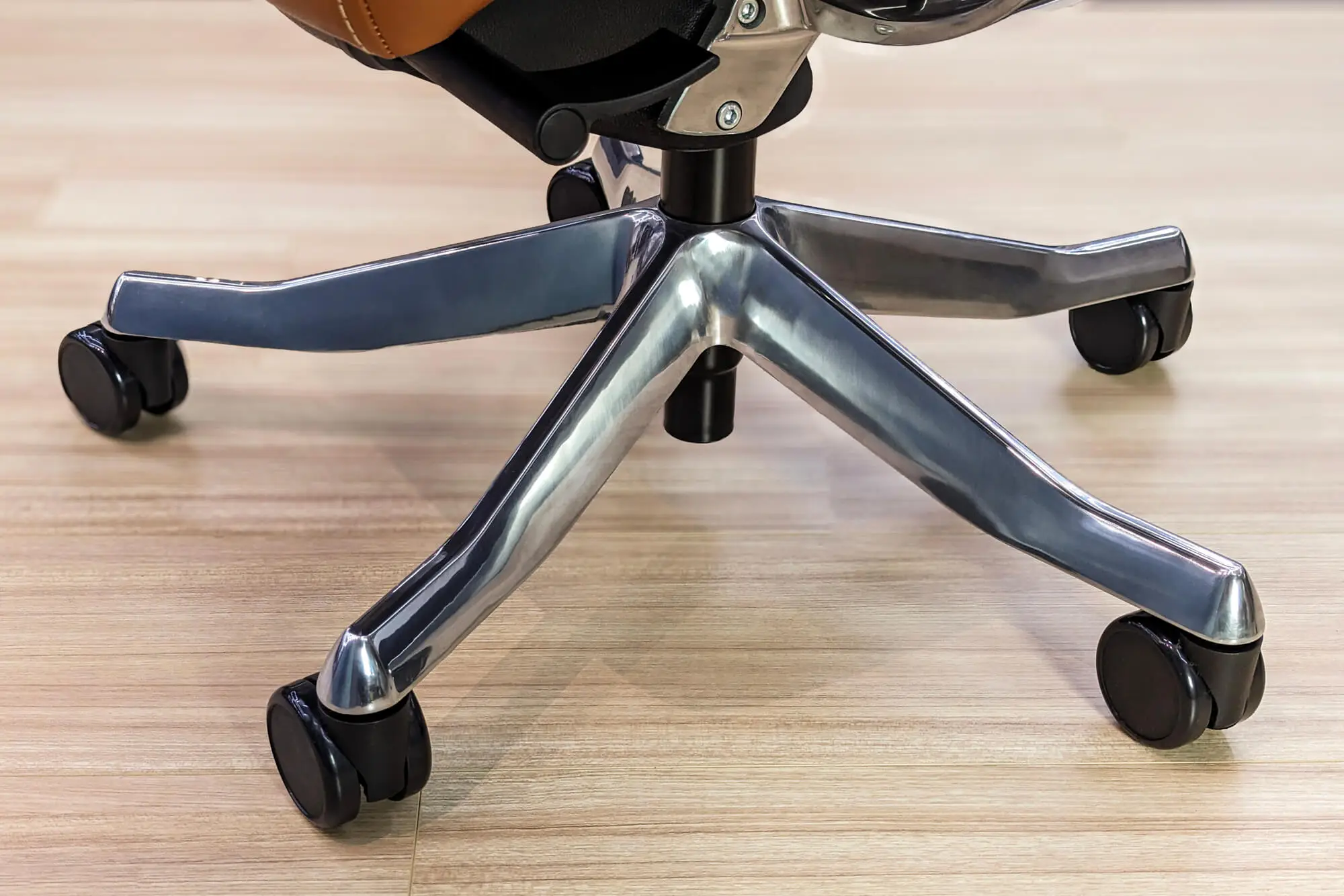
A five-point star base is the stability standard: five contact points spread your weight and remove the tipping risk of four-legged designs. Mobility comes from matching casters to the floor, harder wheels for carpet, softer rubber for hard floors. The gas cylinder between them should be certified, full stop.
Why so firm on certification? Because every documented chair explosion traces back to uncertified cylinders.
A chair that rolls freely also saves your spine in small ways: less twisting, less awkward reaching, hour after hour.
And if yours chirps when it moves, start by matching the squeak to its source rather than shopping for a replacement.
Here’s the whole features section in one showroom-ready pass:
| Feature | What it adjusts | The 10-second showroom check |
| Adjustable lumbar support | Height of the lower-back pad | Slide it while seated; it should land in your curve, not your mid-back |
| Seat depth and width | How far the seat runs under your thighs | Sit back fully; fit two to three fingers behind your knees |
| 4D armrests | Height, width, depth, pivot | Elbows at 90 degrees with shoulders fully dropped |
| Mesh vs foam materials | Airflow and seat feel | Sit ten minutes; check for heat building at your lower back |
| Five-point base and casters | Stability and rolling | Lean back and roll; no tip, no drag, no noise |
The best types of office chairs that should be present in every workspace
Knowing the features is one part of the equation. Knowing which chair type fits your specific role and work environment is the other. Here’s how the main categories break down.
| Chair Type | Best For | Key Ergonomic Benefit |
| Executive Chair | Managers, long meeting-heavy days | Full-spine support, high backrest |
| Task Chair | Desk-based workers, 6-8+ hour days | Maximum adjustability across all contact points |
| Conference Chair | Meeting rooms, collaborative spaces | Comfortable support for extended group sessions |
| Gaming Chair | Long screen hours, creative or tech roles | Pronounced lateral support, full recline range |
| Armless Chair | Compact setups, shared or benching desks | Freedom of movement, space efficiency |
Executive Chairs
Best for: meeting-heavy days and long stretches in the same seat.
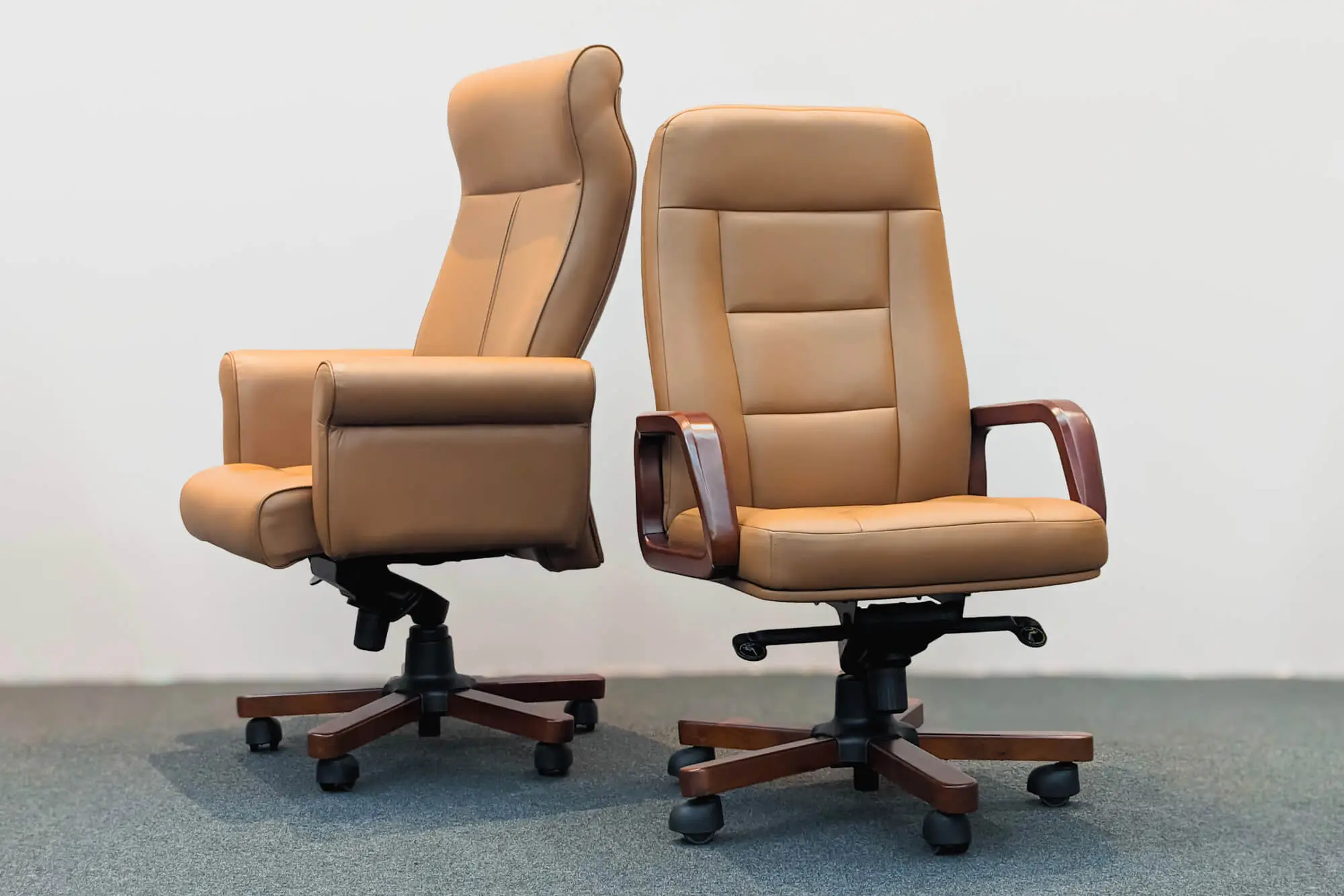
Executive chairs are built for people who spend most of the day in meetings, on calls, or at a desk. The full-height backrest supports the entire spine, upper back and shoulders included.
They also cost more to own well. Leather and premium fabrics have their own care routines, and different chair materials need different cleaning methods.
The common assumption is that executive chairs trade ergonomics for style, but a well-designed executive chair does both without compromise.
That combination pays off beyond posture: how ergonomic seating drives executive productivity tends to show up in focus, not just comfort.
Task Chairs
Best for: six-to-eight-hour desk days where adjustability decides everything.
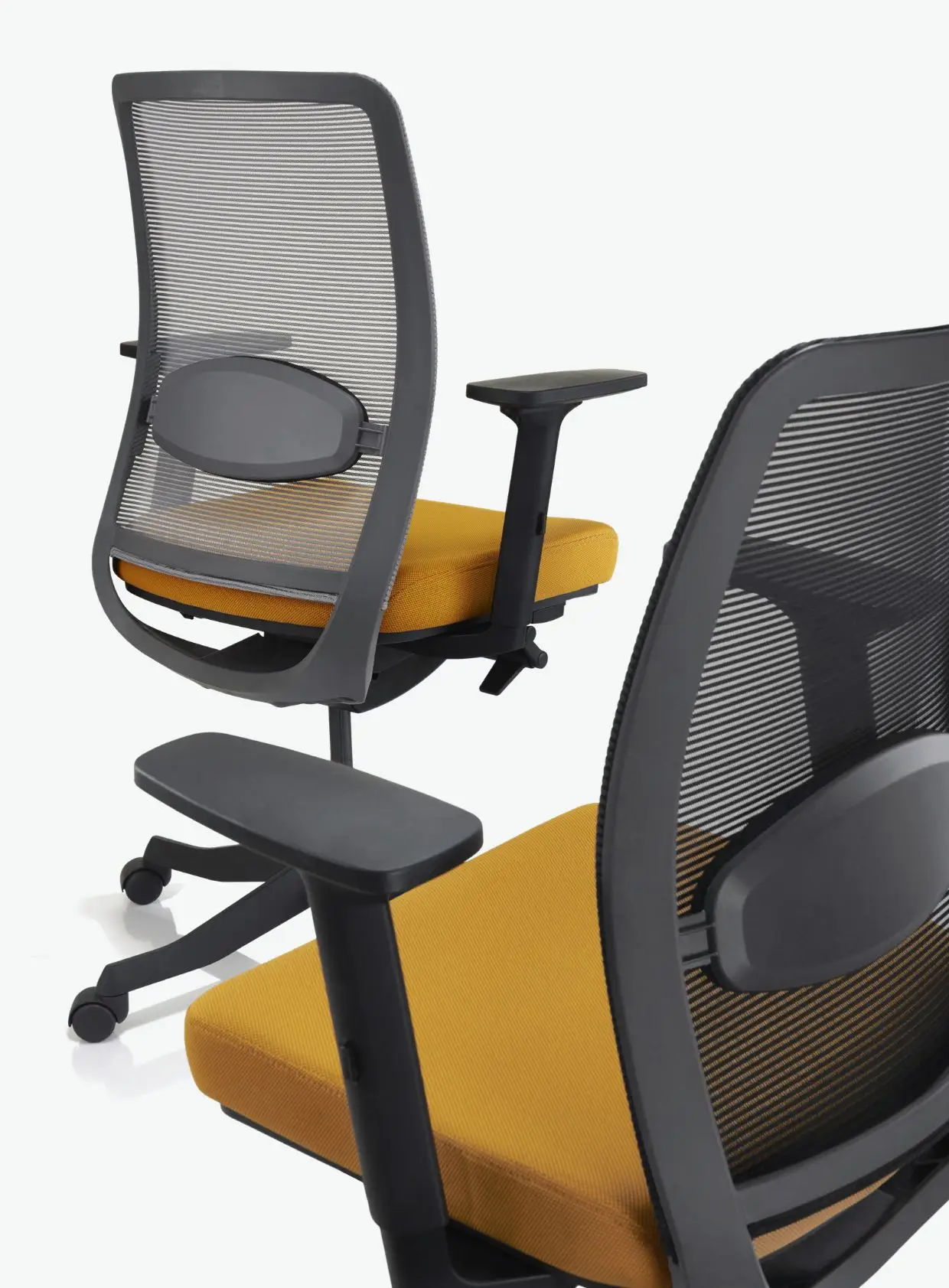
Task chairs are the workhorse of the modern office. They’re built for people spending six to eight hours or more at a desk. No category adjusts in more places, from seat depth to the synchro tilt mechanism.
A well-built task chair puts every control in your hands: height, lumbar, armrests, seat depth. For most offices, it’s the category with the strongest ergonomic value.
Height is one key factor that will affect the rest of the ergonomic features, so you should first get an ergonomic chair that matches your size and height before anything else. Tall frames above 185 cm narrow that match to the few chairs that properly fit tall users.
Shorter users get the reverse benefit. A task chair that drops low enough can remove the need for a footrest for your office chair entirely.
Conference and Collaborative Space Chairs
Best for: shared rooms where every body that sits down is different.
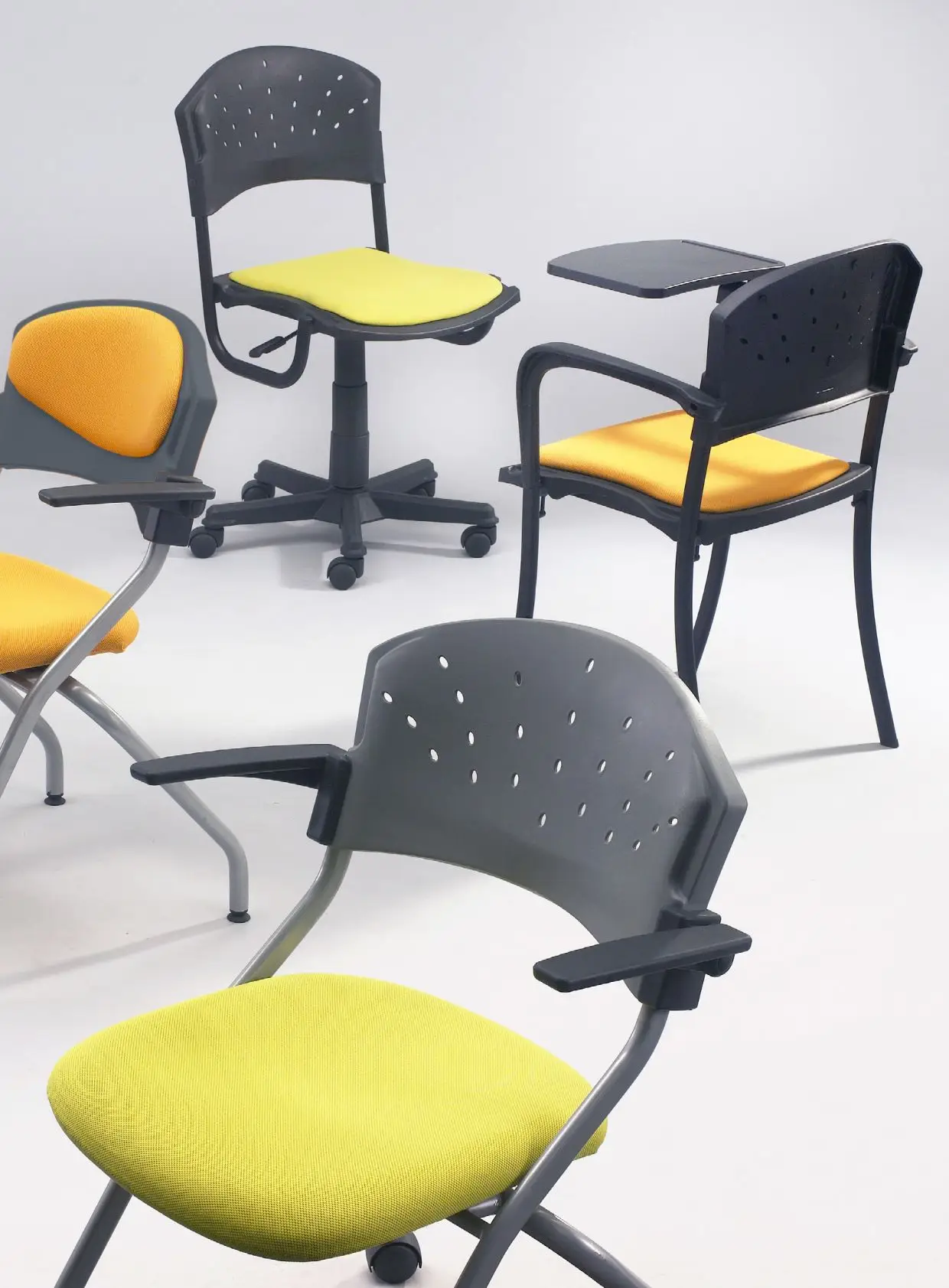
Most people spend more time in meeting rooms than they realise. A two-hour morning session plus an afternoon workshop adds up quickly, and that time deserves comfortable, properly supportive seating too.
Conference chairs prioritise a clean profile and easy movement around a shared table, while still providing enough back support to keep participants focused throughout longer meetings. It’s a category worth considering when planning the ergonomics of an entire office, not just individual workstations.
Gaming Chairs
Best for: long screen sessions that want lateral support and deep recline.
Gaming chairs moved past gaming a while ago. The bucket seat, full-length backrest, and adjustable recline serve long coding sessions and creative work just as naturally.
They tend to suit people who want more pronounced lateral support and a more enveloping seat feel. If your team works long hours at a computer, this category is worth serious consideration alongside traditional task chairs.
The safest picks are gaming chairs that pass the same adjustability checklist as task chairs.
The racer-style ones with fixed arms and thin padding don’t survive long sessions, though. Plenty of players end up preferring office chairs over gaming chairs for marathon play.
Armless Chairs
Best for: compact and shared setups where the chair must move freely.
Armless chairs solve a specific problem: restricted movement in compact or collaborative setups. Without armrests in the way, users can pull closer to the desk, shift positions more freely, and move between workstations without the chair catching on anything.
They work especially well in creative studios, benching systems, and shared-use areas where flexibility and floor space are priorities. For environments that need to do more with less, armless chairs are a practical and often underrated option.
Know Your Ergonomic Chair Features
Features only matter when they match the person sitting in the chair. The best spec sheet is wasted if you never learn how to make the correct adjustments.
The right call for someone at a compact home desk is a very different one from the right call for someone running back-to-back client meetings all day.
The best ergonomic office chairs for every budget in Malaysia differ in which features come standard at each price tier.
Start with your use case, then match the features to your body and your work pattern. That order makes the decision a lot clearer. If you’re comparing multiple Merryfair models, you can view them side by side here to make the process easier.
Frequently Asked Questions
What features should I look for in an ergonomic chair?
The most important features are adjustable lumbar support, seat pan depth adjustment, adjustable armrests, and a sturdy five-point base. These give you the tools to fit the chair to your body rather than adjusting your body to the chair.
What is the difference between a task chair and an executive chair?
Task chairs are designed for full-day desk work and prioritise adjustability across every major contact point. Executive chairs offer a taller backrest and a more commanding profile, better suited to people who move between desk work, calls, and in-room meetings throughout the day.
Is lumbar support really that important in an office chair?
Yes. The lumbar spine has a natural inward curve, and without support at that point, prolonged sitting gradually flattens it and places stress on the discs and surrounding muscles. Good lumbar support keeps the spine in a healthy position throughout the whole day.
Does chair material affect ergonomics?
It affects comfort and breathability, both of which influence how well you maintain good posture over time. Mesh is generally better for airflow in warm environments, while high-density foam suits people who prefer a more cushioned, firmer seat feel.
MORE BLOGS
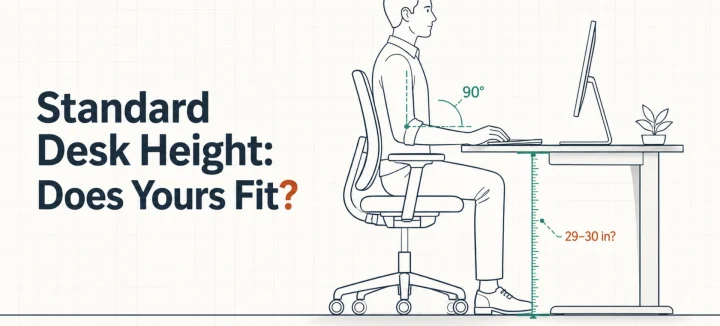
Standard Desk Height: Is 29 Inches Right for Your Body?
Standard desk height is 29 to 30 inches (73 to 76 cm). That number fits far fewer people than you’d think. A desktop that tall matches the seated elbow height of someone around 6’2″. The average American man stands 5’9″, and the average woman 5’3.5″. So this guide does two jobs. It shows you how […]
Read More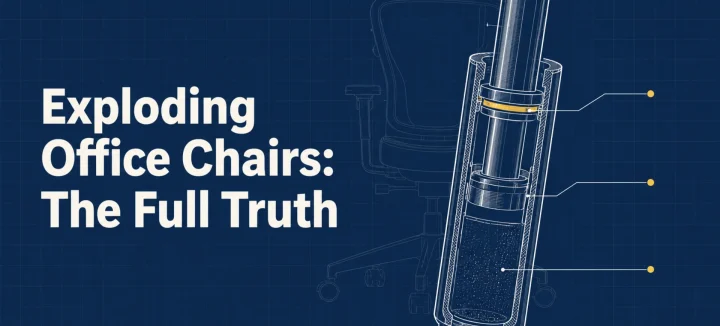
Exploding Office Chairs: The Full Truth From a Chair Maker
The exploding office chair story resurfaces every few years, same grainy photos attached. So can a chair really burst? A handful have, and every documented case involved an uncertified gas cylinder (the pressurized tube that raises and lowers your seat). Chairs built to recognized safety standards fail differently: seals leak, the seat sinks, nothing bursts. […]
Read More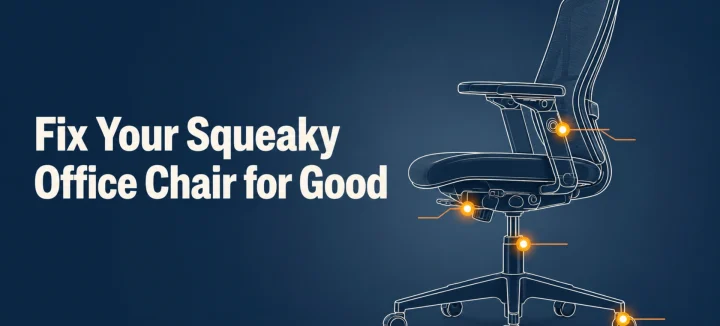
How to Fix a Squeaky Office Chair by Sound and Location
A squeaky office chair makes four different noises, and each one points to a different part. To silence it for good, find the source first: the tilt mechanism, gas cylinder, casters, or armrests. Then tighten what’s loose and lubricate with the right product for that joint. This guide matches each sound to its fix, and […]
Read More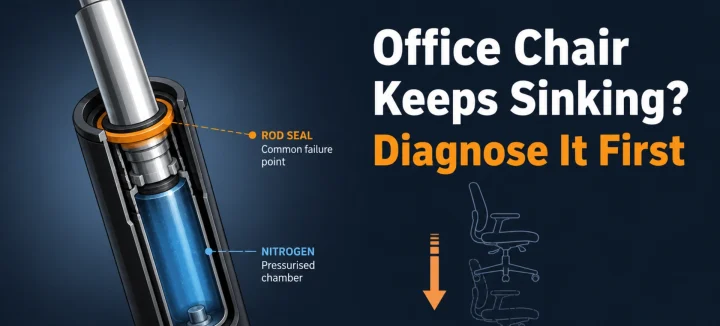
Office Chair Keeps Sinking? Diagnose and Fix It for Good
An office chair that keeps sinking or won’t stay up has one main cause: the gas cylinder under the seat is losing pressure. Worn seals let the nitrogen escape, so the piston stops holding your weight. A hose clamp or PVC pipe locks the height today; a new cylinder fixes it properly in 15 minutes. […]
Read More