Standard Desk Height: Is 29 Inches Right for Your Body?
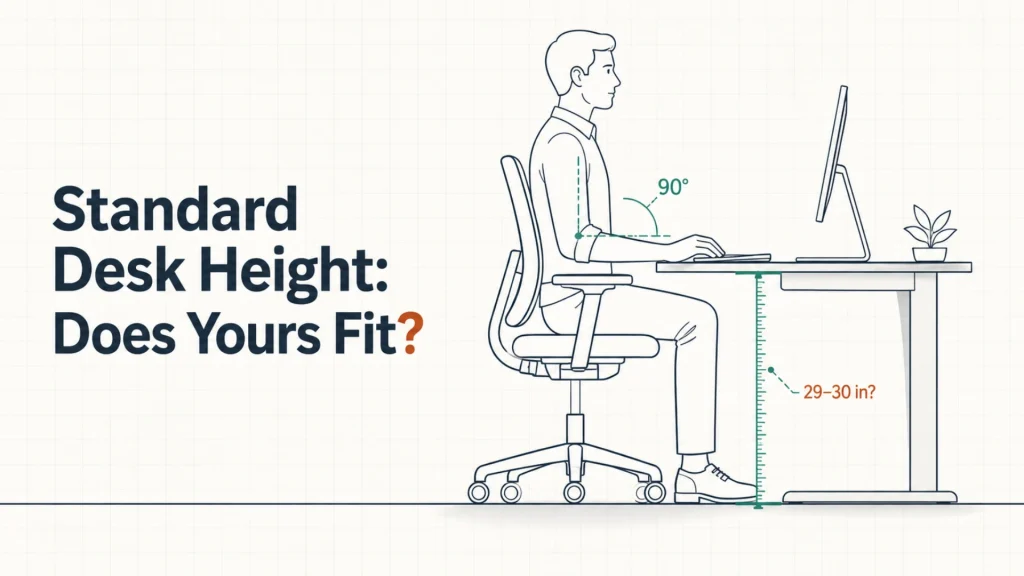
Standard desk height is 29 to 30 inches (73 to 76 cm). That number fits far fewer people than you’d think.
A desktop that tall matches the seated elbow height of someone around 6’2″. The average American man stands 5’9″, and the average woman 5’3.5″.
So this guide does two jobs. It shows you how to calculate the desk height your body needs, and how to fix a desk that misses.
Key Takeaways
- Standard desk height runs 29 to 30 inches (73 to 76 cm), matching the seated elbow height of a person around 6’2″.
- Your ideal seated desk height is roughly 0.39 times your standing height, verified with the relaxed 90-degree elbow test.
- Set the chair to your legs first, the desk to your elbows second, and the monitor to your eyes third.
- A too-tall fixed desk is fixable: raise your chair until your elbows sit level, then support your feet with a footrest.
What Is Standard Desk Height (and Who Does It Fit)?
Standard desk height in the US is 29 to 30 inches, measured from the floor to the desktop. In metric, that’s 73 to 76 cm.
Most fixed-height desks sold today land in that band, which is why average desk height and standard desk height describe the same thing. But here’s what catalogs don’t mention. The band is a manufacturing convention, not an ergonomic recommendation.
Where did the 29-inch standard come from?
The 29-inch desk predates the keyboard. Work surfaces were sized for pen and paper, and a pen approaches the page from above, so a taller surface kept the writing arm comfortable. Typing works the opposite way. Fingers approach the keys from the front, which calls for a lower surface.
Furniture makers kept the old dimension anyway. From the production side, we understand why: one fixed height simplifies tooling, packaging, and retail display. (We build seating rather than desks, so we can say this without a horse in the race.) The industry quietly decided the chair would do the fitting instead.
Who actually fits a standard height desk?
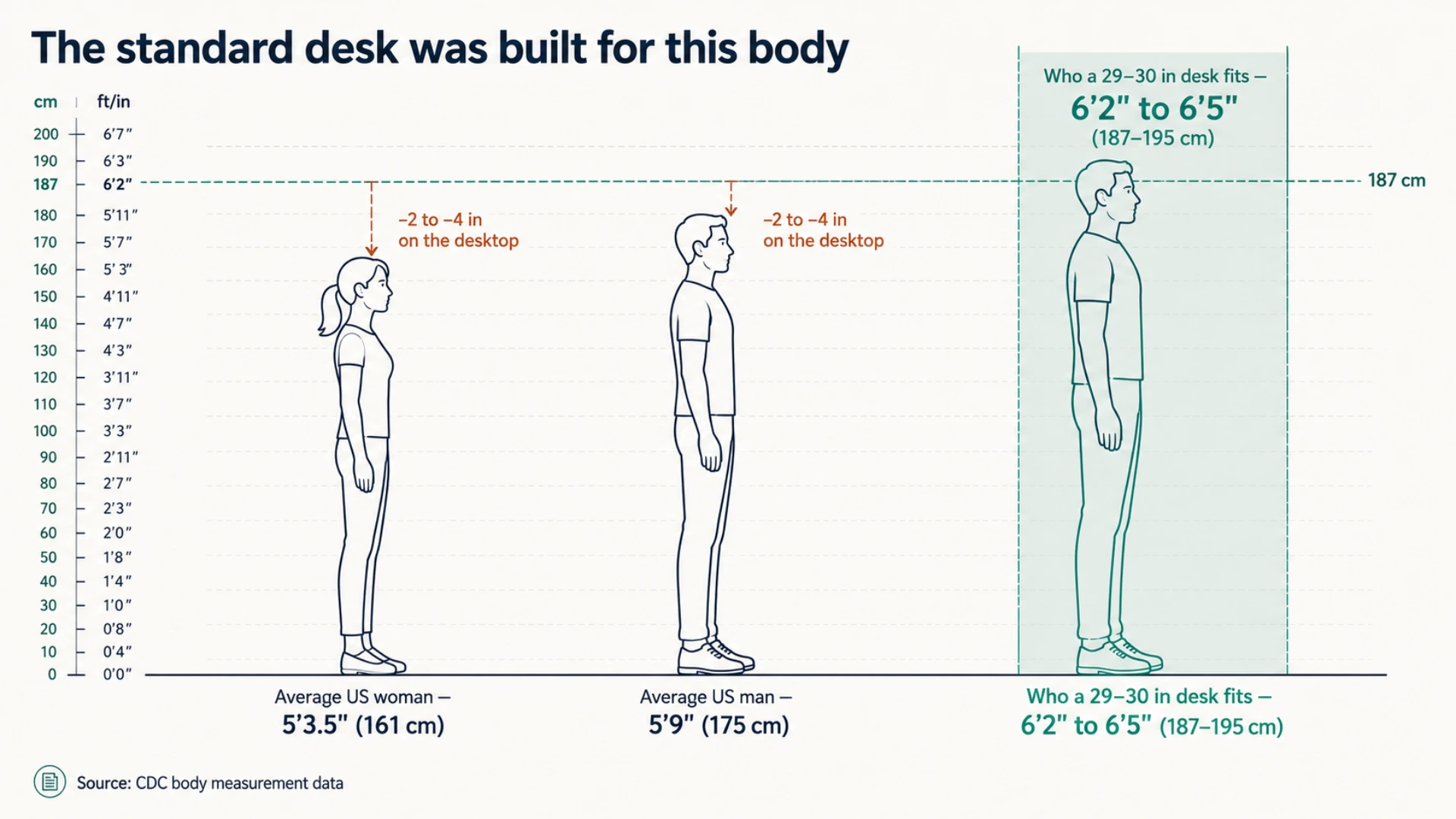
Tall people. Merryfair’s sizing work puts seated elbow height at roughly 39% of standing height. Run that backward and a 73 to 76 cm desktop suits bodies between about 187 and 195 cm, or 6’2″ to 6’5″.
Now compare that with real bodies. According to CDC body measurement data, the average American man stands 68.9 inches and the average woman 63.5 inches. For both, a standard desktop lands 2 to 4 inches too high.
The standard desk was standardized around a body that most of the people using it don’t have.
So what should your number be? That’s the next section.
How to Calculate Your Ideal Desk Height
Your ideal desk height puts the keyboard at, or slightly below, your relaxed elbow height. Sit with your feet flat and your shoulders loose.
Bend your elbows to 90 degrees and let your forearms float level. The height where your hands hover is your target desktop height.
How do I calculate my ideal desk height?
Multiply your standing height by 0.39. That’s your seated desktop target in the same unit, give or take 2 cm. For chair seat height, multiply by 0.25 and allow up to 3 cm extra for shoes.
Take someone at 5’6″ (168 cm). Their numbers work out to a 42 to 45 cm seat and a 64 to 68 cm desktop, around 25 to 26.5 inches. Notice how far that sits below the 29-inch standard.
One caveat, and it matters. Two bodies at the same height can carry different torso and leg proportions, so treat the formula as a starting range. The elbow test gives the final verdict.
Prefer to skip the math? Use the desk height calculator below. Enter your height once and it returns chair, desk, and monitor targets for both sitting and standing, and can audit the desk you already own.
Your desk doesn’t need to match an industry standard. It needs to match your elbows at rest.
What desk height do I need for my height?
The chart below applies those proportions across common heights. It extends the sizing logic behind matching chair dimensions to your body measurements out to the desktop.
| Your height | Chair seat height | Desk height, seated | Desk height, standing |
|---|---|---|---|
| 5’0″ (152 cm) | 38-41 cm | 57-61 cm (22.5-24″) | 94-98 cm |
| 5’2″ (157 cm) | 39-42 cm | 59-63 cm (23-25″) | 97-101 cm |
| 5’4″ (163 cm) | 41-44 cm | 62-66 cm (24.5-26″) | 101-105 cm |
| 5’6″ (168 cm) | 42-45 cm | 64-68 cm (25-26.5″) | 104-108 cm |
| 5’8″ (173 cm) | 43-46 cm | 66-70 cm (26-27.5″) | 107-111 cm |
| 5’10” (178 cm) | 45-48 cm | 67-71 cm (26.5-28″) | 110-114 cm |
| 6’0″ (183 cm) | 46-49 cm | 69-73 cm (27-28.5″) | 113-117 cm |
| 6’2″ (188 cm) | 47-50 cm | 71-75 cm (28-29.5″) | 116-120 cm |
| 6’4″ (193 cm) | 48-51 cm | 73-77 cm (28.5-30.5″) | 120-124 cm |
Measure in the shoes you actually work in. A 2 cm sole moves every number by 2 cm.
Desk Height and Chair Height: One System, Three Settings
Desk height never works alone. It sits inside a three-part chain of chair, desk, and monitor.
Adjust them in this order, because each setting creates the reference point for the next one.
- Chair first. Set the seat so your feet rest flat and your knees bend between 90 and 110 degrees. The full office chair adjustment sequence, from seat height to backrest angle, starts at this same point.
- Desk second. With the chair set, your relaxed elbow height marks the desktop target. OSHA’s neutral posture guidance accepts elbows anywhere from 90 to 120 degrees, as long as shoulders stay relaxed.
- Monitor third. Place the top of the screen at or just below eye level, about an arm’s length away.
Buy the chair for your legs, set the desk for your elbows, place the monitor for your eyes.
What if my desk is fixed and too high?
Raise your chair, not your tolerance. Lift the seat until your elbows sit level with the desktop, even if your feet leave the floor.
Then restore foot support with a footrest chosen and set at the correct height to fill the gap. This is the same fix OSHA describes for non-adjustable desks.
And it explains why an adjustable chair matters more than an adjustable desk for most single users. Remember that 6’2″ body the standard desk was built for? A chair with real height range, plus a footrest, is how everyone else borrows its furniture.
Height-Adjustable vs Fixed Desks: Does It Matter?
For one user with an adjustable chair and a footrest, a correctly sized fixed desk performs fine. Height adjustability earns its price in three situations: bodies outside roughly 5’2″ to 6’2″, desks shared between users, and regular sit-stand switching.
Do I really need a height-adjustable desk?
The sit-stand case is the strongest reason to say yes. Your standing desk height runs near 0.63 times your stature, roughly 40 cm above your seated number, and no fixed surface can serve both positions.
Buying fixed instead? Run two checks. Confirm the desktop lands inside your range from the chart, and confirm knee room: OSHA’s desk guidance calls for 20 to 28 inches (50 to 72 cm) of clearance under the surface. How the desk fits the rest of the room is covered in the complete five-zone ergonomic home office setup.
What is the standard height under a desk?
Standard under-desk clearance runs 24 to 25 inches (61 to 64 cm) from the floor to the lowest structure above your knees. A 29-inch desktop loses an inch to the surface itself; aprons, drawer rails, and crossbars take more. OSHA’s 20 to 28 inch range covers that spread.
Why measure clearance separately? Two desks with identical desktop heights can offer completely different knee room.
A 4-inch apron or a shallow pencil drawer is the difference between a desk that fits and one that fights you.
From the chair side, we see one clearance failure more than any other. You raise the seat to fix a too-tall desk, and the armrests jam into the apron first.
The chair stops climbing before your elbows ever reach level. Check floor-to-apron height as well as floor-to-desktop, and pick armrests that drop or adjust.
Signs Your Desk Is the Wrong Height
Your body flags a bad desk height long before pain shows up. Which direction is it off? The symptoms split cleanly.
How can I tell if my desk is too high or too low?
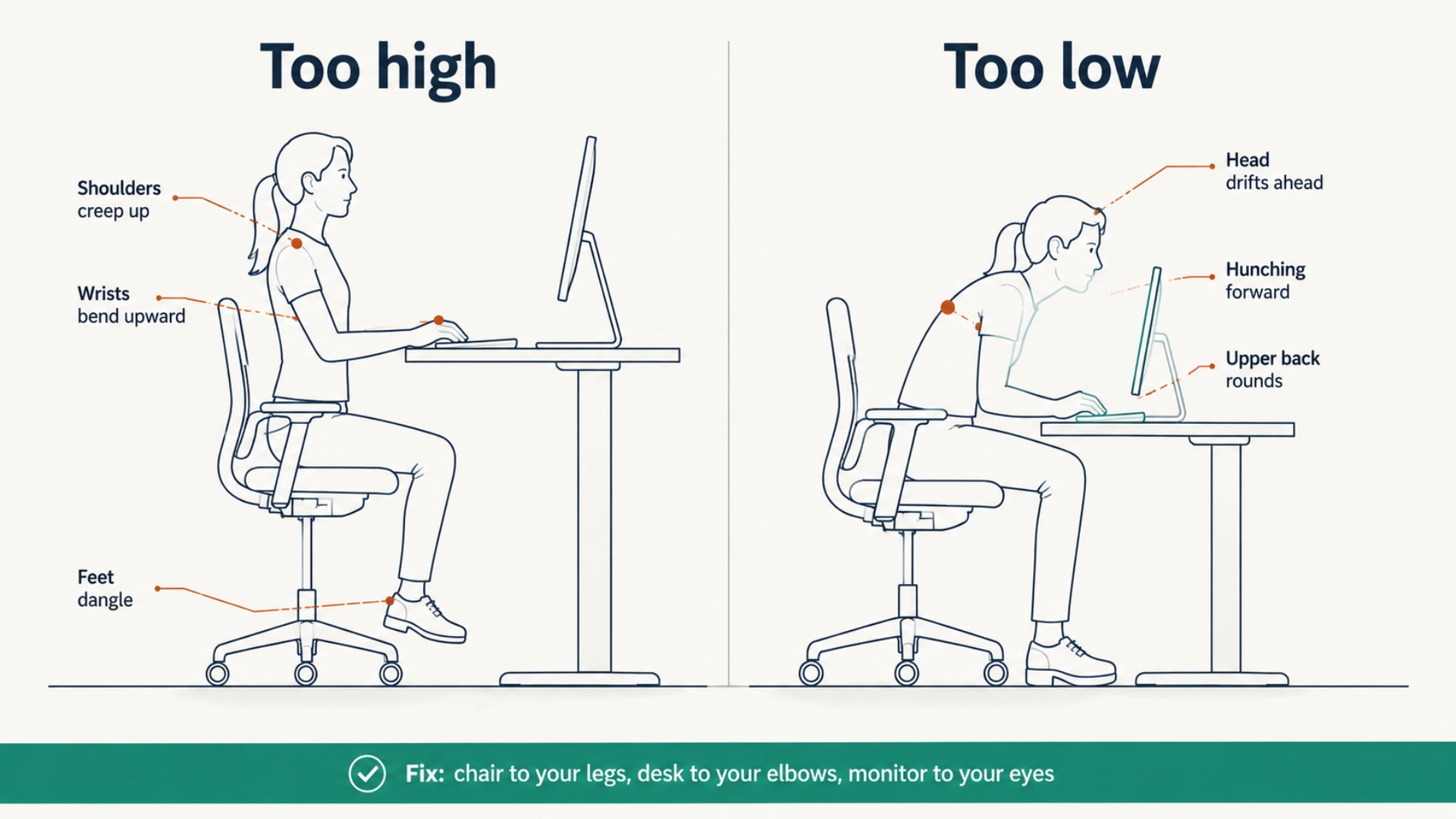
Proper desk height keeps shoulders dropped, wrists straight, and forearms level. Watch for these departures.
Too high:
– Your shoulders creep upward while you type, then ache by mid-afternoon.
– Wrists bend upward to reach the keys.
– The desk’s front edge leaves pressure lines on your forearms.
– After raising the chair to cope, your feet dangle without support.
Too low:
– You hunch forward and down toward the keyboard.
– Your upper back rounds and your head drifts ahead of your shoulders.
– Taller users feel their knees brushing the underside.
Run the step-by-step correct sitting posture checklist and the pattern usually shows itself within a minute. The Mayo Clinic’s office ergonomics guide points to the same markers: relaxed shoulders, straight wrists, level forearms.
Raised shoulders are your desk’s way of telling you, hour after hour, that it’s too tall.
Measure Your Elbows, Not the Catalog
The 29-inch desk isn’t going anywhere. Millions ship every year, and for a 6’2″ frame they’re honestly fine.
For everyone else, the fix costs one measurement: your relaxed elbow height, roughly 0.39 of your stature. So take it this week, then let the adjustable half of your workstation close the gap. That’s the job it was engineered for.
A chair with real height, depth, and lumbar adjustment turns almost any desk into your desk. If yours can’t reach your numbers, explore Merryfair’s adjustable ergonomic seating range and bring your chart row with you.
The right desk height is a measurement you take from your body, not a standard you buy.
Standard Desk Height FAQs
What is the standard height of a desk?
Standard desk height is 29 to 30 inches (73 to 76 cm) from floor to desktop. It’s a manufacturing convention rather than an ergonomic standard, and it matches the seated elbow height of a person around 6’2″. Shorter users typically need a lower surface or a raised chair with a footrest.
Is a 30-inch desk too tall?
For most people, yes. A 30-inch (76 cm) desktop suits standing heights around 6’4″. Anyone shorter will type with raised shoulders or bent-up wrists unless they compensate. Raise your chair until your elbows sit level with the desktop, then add a footrest so your feet stay supported.
What is a good desk height for a 5’6″ person?
At 5’6″ (168 cm), aim for a seated desktop of 64 to 68 cm, about 25 to 26.5 inches. Pair it with a chair seat height of 42 to 45 cm. Confirm with the elbow test: level forearms and relaxed shoulders mean the height is right for you.
Should my desk be at elbow height or below it?
Set the desktop at or slightly below relaxed elbow height. OSHA’s neutral posture guidance accepts elbow angles from 90 to 120 degrees, so a surface a touch under elbow level keeps wrists straight while typing. Above elbow height forces the shoulders up, which is the more damaging direction.
Are height-adjustable desks worth it for one person?
Sometimes. A single user inside the 5’2″ to 6’2″ range, with an adjustable chair and a footrest, does fine on a correctly sized fixed desk. Adjustability becomes worth the cost when you alternate sitting and standing, share the desk with someone else, or fall outside that height range.
Is 40 inches too tall for a desk?
For seated work, yes. A 40-inch (102 cm) desktop sits far beyond any chair’s ability to compensate. As a standing surface, the story flips: 40 inches suits standing elbow height for bodies around 5’2″ to 5’6″. That’s why fixed standing desks cluster in the 38 to 42 inch band, and why sit-stand switching needs an adjustable frame.
MORE BLOGS
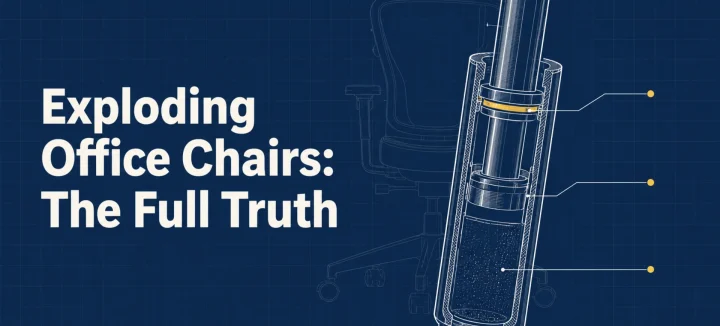
Exploding Office Chairs: The Full Truth From a Chair Maker
The exploding office chair story resurfaces every few years, same grainy photos attached. So can a chair really burst? A handful have, and every documented case involved an uncertified gas cylinder (the pressurized tube that raises and lowers your seat). Chairs built to recognized safety standards fail differently: seals leak, the seat sinks, nothing bursts. […]
Read More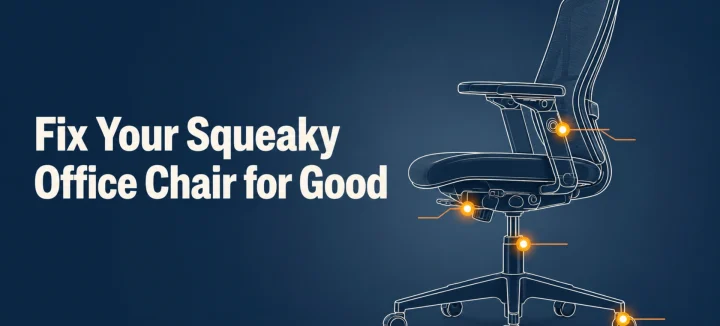
How to Fix a Squeaky Office Chair by Sound and Location
A squeaky office chair makes four different noises, and each one points to a different part. To silence it for good, find the source first: the tilt mechanism, gas cylinder, casters, or armrests. Then tighten what’s loose and lubricate with the right product for that joint. This guide matches each sound to its fix, and […]
Read More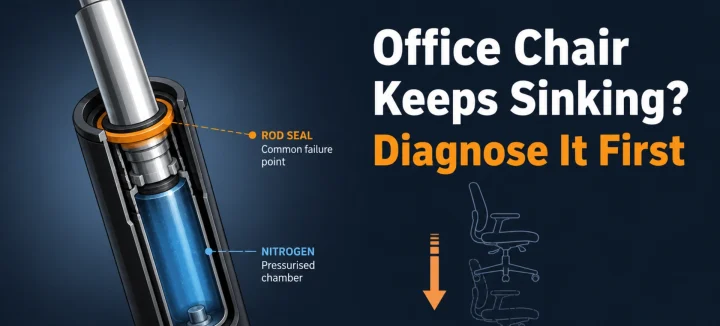
Office Chair Keeps Sinking? Diagnose and Fix It for Good
An office chair that keeps sinking or won’t stay up has one main cause: the gas cylinder under the seat is losing pressure. Worn seals let the nitrogen escape, so the piston stops holding your weight. A hose clamp or PVC pipe locks the height today; a new cylinder fixes it properly in 15 minutes. […]
Read More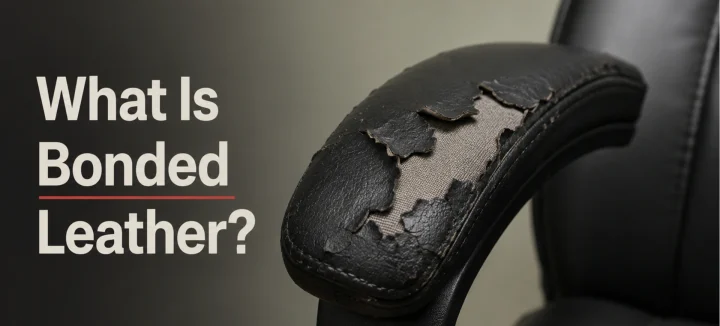
What Is Bonded Leather and Why It Peels in Office Chairs
Bonded leather is mostly plastic. The real hide inside usually makes up just 10 to 20 percent of it. The rest is polyurethane binder pressed onto a fabric or paper backing. It looks like leather on day one. By year three, it’s flaking onto your trousers. This guide covers what it’s made of, why office […]
Read More