What Is Bonded Leather and Why It Peels in Office Chairs
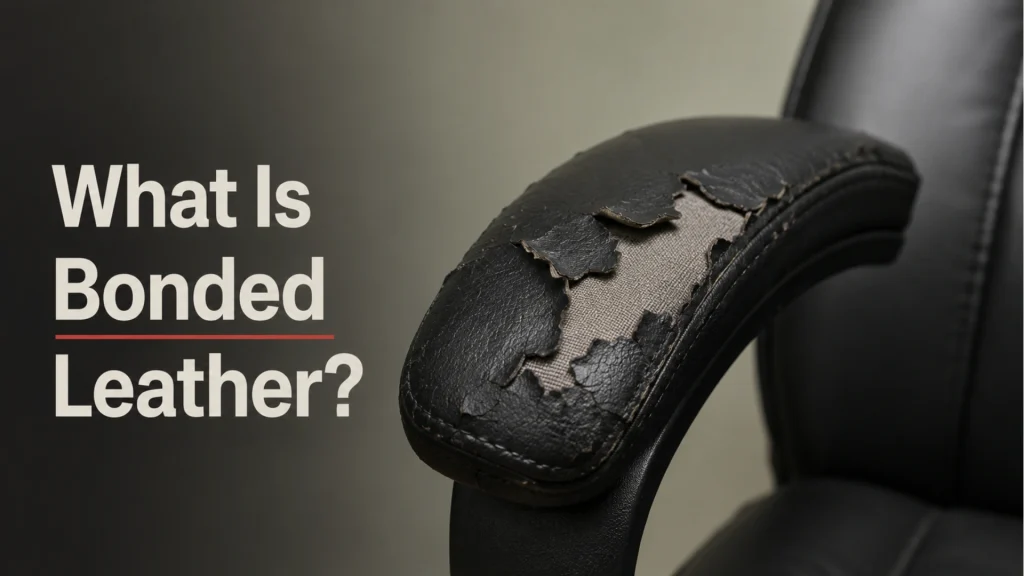
Bonded leather is mostly plastic. The real hide inside usually makes up just 10 to 20 percent of it. The rest is polyurethane binder pressed onto a fabric or paper backing. It looks like leather on day one. By year three, it’s flaking onto your trousers.
This guide covers what it’s made of, why office chairs destroy it fastest, and what to choose instead.
Key Takeaways
- Bonded leather contains as little as 10 to 20 percent real leather fiber. The rest is polymer binder and a fabric or paper backing.
- It typically peels within 2 to 5 years in an office chair, because heat, sweat, and friction break the bond fastest where you sit and lean.
- US law sets no minimum leather content for the “bonded leather” label, so the term tells you almost nothing about quality.
- Use the Three-Tell Test (label, touch, edge) to spot bonded leather in under a minute before you buy.
- For a chair you sit in daily, breathable mesh or quality woven fabric outlasts bonded leather by years.
What Bonded Leather Actually Is (and Isn’t)
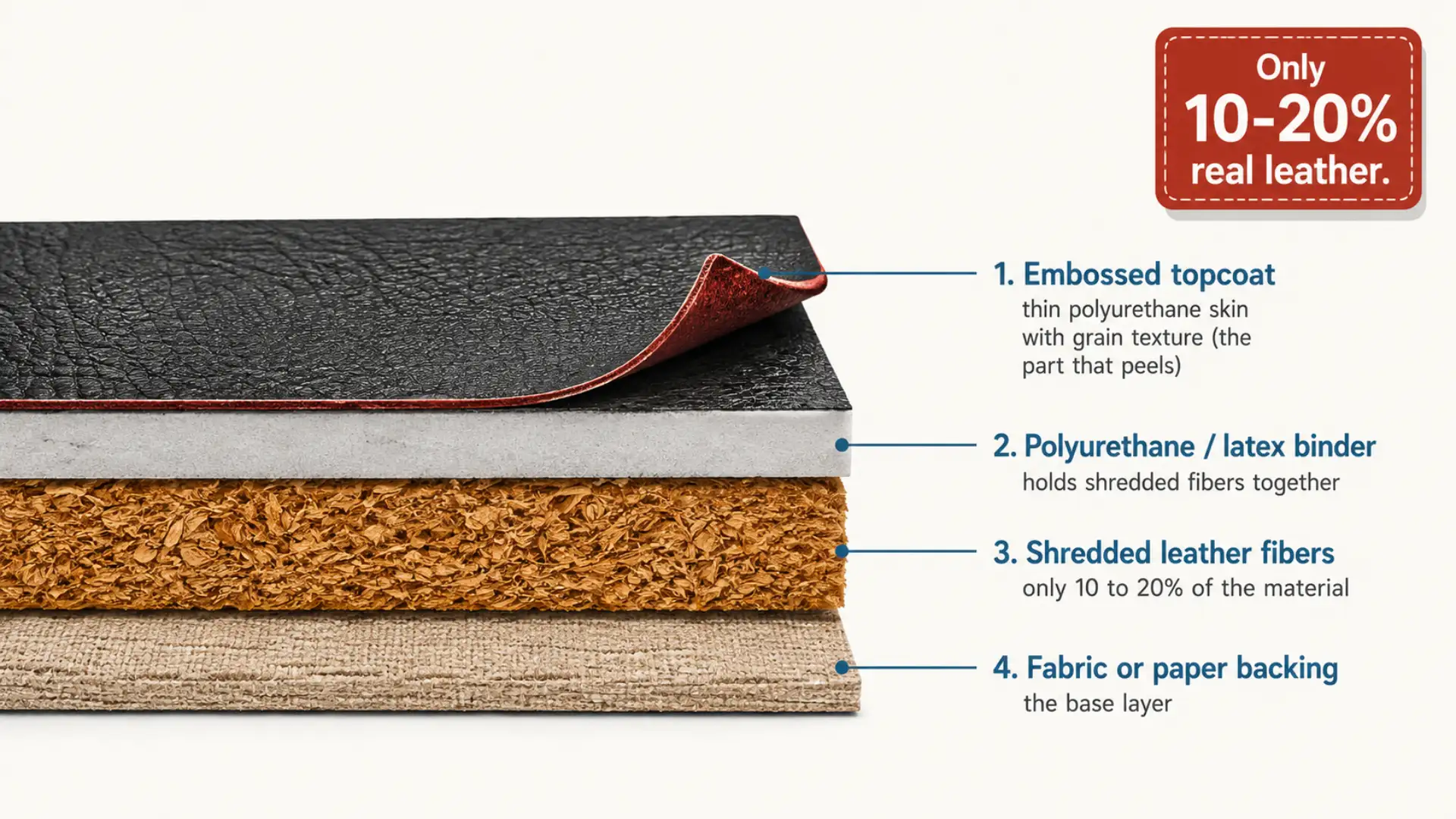
Bonded leather is a composite material, not a hide. Makers grind leftover leather scraps into a pulp. They blend it with polyurethane or latex, then spread it onto a fabric or paper backing. A machine embosses a grain pattern on top. The result mimics leather, but its structure resembles laminated plastic.
Think of it this way.
Bonded leather is to genuine hide what particleboard is to solid oak: the same raw material, ground up and glued back together.
What is bonded leather made of?
Bonded leather is made of shredded leather fibers, a polymer binder, and a backing layer.
According to Wikipedia’s entry on bonded leather, the material is a layered structure of a fiber or paper backer covered with shredded leather mixed with natural rubber or a polyurethane binder, then embossed with a leather-like texture. Most products land at only 10 to 20 percent leather by content.
That percentage is the whole problem. The binder, not the hide, does most of the structural work. So the material’s strength and lifespan track the plastic, not the leather.
And the exact ratio swings widely from one factory to the next, which makes performance hard to predict before you buy.
Why is bonded leather sometimes labeled “genuine leather”?
Because the labeling rules are looser than you’d expect. Bonded leather also goes by reconstituted, blended, or composition leather. Under the FTC Leather Guides (16 CFR Part 24), a product using the term “bonded leather” must disclose the percentage of leather fibers and the percentage of non-leather substances. Here’s the catch: the rule sets no minimum leather content.
Read that again.
A sheet that’s 90 percent plastic can still legally wear the word leather on its tag.
If you’re weighing it against other surfaces, we break down how office chair materials compare on breathability and lifespan in a separate guide. The label alone won’t tell you which one survives daily use.
Why Bonded Leather Peels Faster in an Office Chair Than Anywhere Else
An office chair is the worst possible home for bonded leather. You sit in it for hours, and your body heat plus sweat create a warm, damp micro-climate against the surface.
That moisture works into the binder. Friction at the seat edge and armrests flexes the coating until it cracks. The top layer then lifts away from the backing.
Upholsterers call that failure delamination, and once it starts, it spreads.
Why is my office chair peeling and flaking?
Your chair is peeling because it isn’t solid leather. The plastic topcoat loses flexibility as it ages, and the spots that touch your skin most go first: armrests, headrest, and the front seat edge.
Sweat and body oils get trapped against a surface that can’t breathe. So the coating bubbles, then sheds in sheets.
The best ergonomic office chairs for every budget in Malaysia use different materials, with bonded leather appearing mainly in the lower tier.
The flakes aren’t leather. They’re the failed plastic skin.
How long does bonded leather last in an office chair?
In our experience specifying upholstery for task seating, bonded leather on a daily-use chair tends to start peeling within two to five years. A sofa you sit on for an hour each evening may last longer. A chair under you forty hours a week does not.
The more heat, sweat, and flex it takes, the faster it goes.
There’s a quieter failure too. In humid climates the binder can break down even sooner, leaving a tacky, slightly sticky surface long before the peeling is obvious. (If your “leather” armrest feels faintly gummy, that’s the binder, not dirt.)
Bonded vs Genuine vs PU vs Fabric vs Mesh: An Honest Comparison
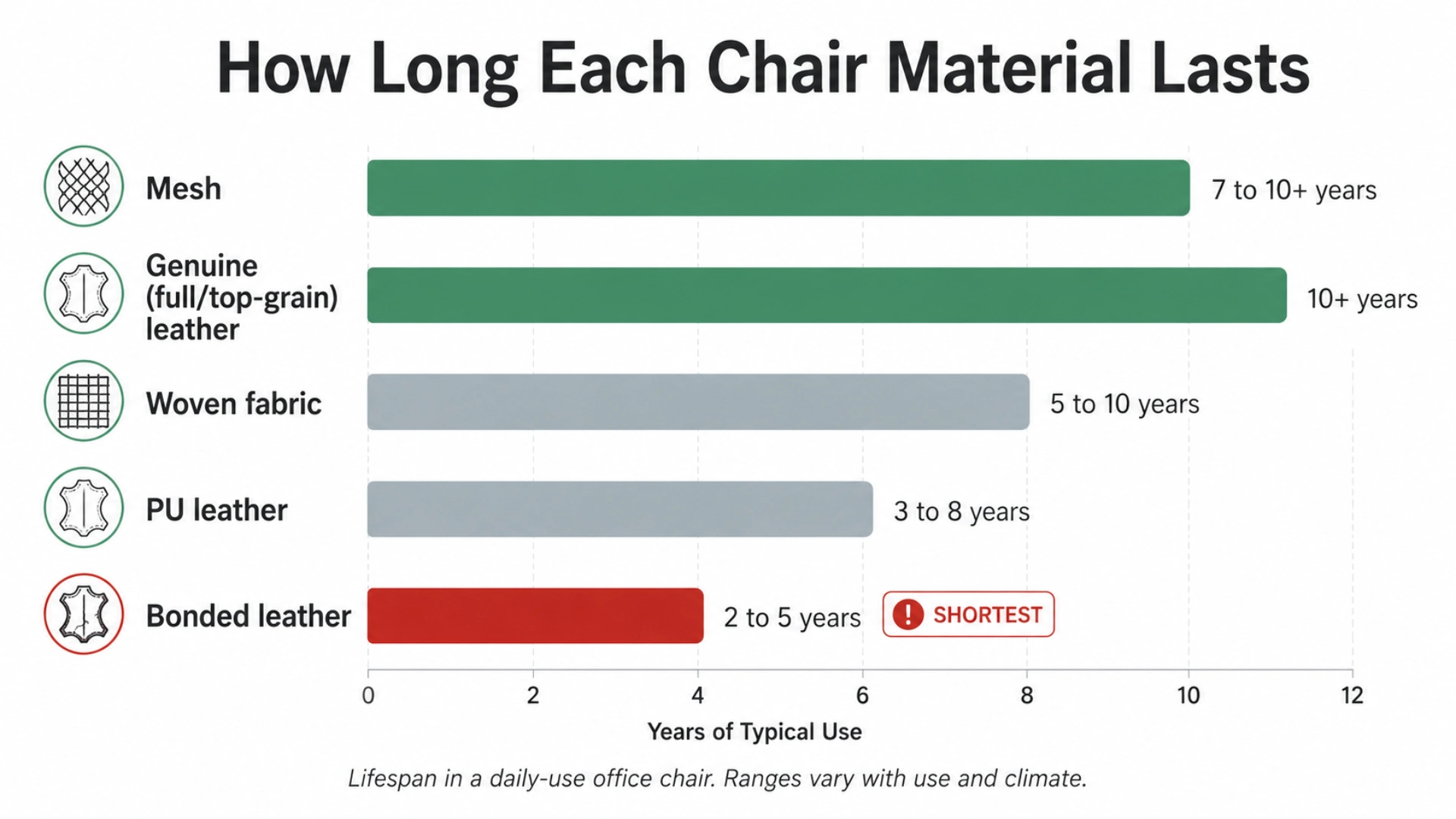
Not all leather alternatives fail the same way. Bonded leather and standard PU leather both peel, but for different reasons and on different timelines. Genuine leather ages instead of flaking. Woven fabric and mesh skip the peeling problem entirely. Here’s how the five materials stack up for a chair you actually sit in.
| Material | What it is | Lifespan in a task chair | How it fails | Best for |
|---|---|---|---|---|
| Genuine (full/top-grain) leather | One continuous animal hide | 10+ years with care | Develops a patina, eventually cracks; does not peel | Executive, low-friction seating |
| PU (polyurethane) leather | Fully synthetic coating on fabric, no hide | 3 to 8 years | Topcoat hardens and delaminates at flex points | Budget to mid seating; vegan choice |
| Bonded leather | 10-20% leather scraps + polymer binder on a backing | 2 to 5 years | Coating peels and flakes off the backing | Light-use decorative pieces, not task chairs |
| Woven fabric | Polyester or nylon textile, usually over foam | 5 to 10 years | Wears thin, pills, or stains; no peeling | Home and office task chairs |
| Mesh | Tensioned elastomer or polyester knit | 7 to 10+ years | Tension can slacken over years; no peeling | Warm climates, long hours, shared desks |
Is bonded leather better than PU leather?
For an office chair, no. PU leather contains no hide at all, yet it’s usually more consistent and slightly more durable than bonded leather, and it’s fully vegan. Bonded leather’s mix of scraps and binder makes its lifespan unpredictable. If your only two options are bonded or PU, PU is the safer bet.
You will also see PU leather sold as faux leather or vegan leather. Same synthetic material, different label.
PU still peels, but why PU leather outlasts bonded in office chairs shows the difference matters.
Bonded leather vs genuine leather: what’s the real difference?
Genuine full-grain leather is one continuous hide. Bonded leather is ground-up scraps glued to a backing. The gap shows up in how each one ages. Real leather softens and develops a patina over years. Bonded leather hardens, cracks, and sheds its surface. One material improves with use. The other is a coating waiting to fail.
Mesh also recycles cleanly at the end of its life, which is part of why our ergonomic chairs built from recyclable mesh and polypropylene lean on it instead of leather-look coatings.
How to Spot Bonded Leather Before You Buy (The Three-Tell Test)
Spotting bonded leather is easier than makers would like. You can follow what we call the Three-Tell Test: three signals you can read in under a minute, before you pay. Each one targets a place the material can’t hide what it is.
- The Label Tell: Read the tag. Words like bonded, reconstituted, blended, composition, or a disclosed leather percentage all point to bonded leather. A quality product says full-grain or top-grain instead.
- The Touch Tell: Press and smell. Bonded leather feels uniformly smooth and plasticky, with a faint chemical odor. Real hide has irregular grain and a rich, organic scent.
- The Edge Tell: Check a seam or cut edge. Bonded leather shows a fabric or paper layer under a thin colored skin. Genuine leather is the same fibrous material all the way through.
Run all three and the truth shows up fast.
If the tag needs a percentage to call itself leather, it isn’t the leather you think you’re buying.
How can you tell if a chair is real leather or fake?
Look at the edge first. Real leather is solid hide through its full thickness, so a cut edge looks fibrous and consistent. Bonded and PU leather reveal a fabric backing under a thin surface skin. Add the smell test and a sanity check on the price, and fakes get hard to disguise.
And if your chair is already flaking, that’s one of the warning signs your chair is overdue for replacement. Peeling rarely reverses.
What to Choose Instead for a Chair You Sit in All Day
For a task chair, skip the leather-look coatings. The materials that survive daily use are the ones that breathe and don’t depend on a glued-on skin. Mesh leads for airflow and longevity. Quality woven fabric is a close, comfortable second. And if you truly want leather, buy real leather, full or top grain, and accept the price that comes with it.
So why does anyone still pick bonded leather? Price, almost always. It costs the least to produce, and on a showroom floor it’s nearly indistinguishable from the real thing.
What office chair material lasts the longest?
Mesh and full-grain leather last longest, for opposite reasons. Mesh has no surface coating to peel and sheds heat instead of trapping it, so it commonly clears seven to ten years. Full-grain leather ages rather than flakes. Quality fabric sits in the comfortable middle. Bonded leather sits at the bottom.
As a seating manufacturer, Merryfair doesn’t spec bonded leather for task chairs. It can’t survive a warranty’s worth of daily use, and a peeling chair becomes a returned chair. Instead, our ergonomic range uses high-tensile mesh, recyclable polypropylene frames, and durable woven upholstery: surfaces chosen to last the hours you’ll actually sit. Material is only one part of the decision, though. The ergonomic features that matter more than upholstery deserve as much weight when you choose a chair.
The Word “Leather” Isn’t a Promise
The lesson here isn’t that bonded leather is evil. It’s that the word leather on a tag is marketing, not a guarantee of how long your chair will last.
For a chair you live in eight hours a day, durability beats the look of hide every time. Pick a surface that breathes and won’t peel, and you buy the chair once instead of twice. Browse Merryfair’s range of mesh and fabric upholstery options and choose a material built for the hours you actually sit.
Bonded Leather Questions, Answered
Is bonded leather real leather?
Partly. Bonded leather contains real leather fibers, usually 10 to 20 percent, but the rest is polyurethane binder and a fabric or paper backing. It legally contains leather, yet it doesn’t behave like a solid hide. Most leather specialists treat it as a leather-look composite rather than genuine leather.
Does bonded leather peel?
Yes, and it’s one of the material’s defining flaws. The plastic topcoat separates from the backing over time, a process called delamination. In an office chair, heat, sweat, and friction speed it up, with peeling often starting within two to five years at the armrests and seat edge.
Can peeling bonded leather be repaired?
Not in any lasting way. Once the topcoat lifts from the backing, glues and filler kits only hide the damage briefly before it spreads again. Because the surface keeps flexing and heating under daily use, repairs rarely hold. Replacing the chair is usually cheaper than chasing the peel.
Is bonded leather good for an office chair?
No. An office chair exposes upholstery to constant heat, moisture, and friction, the exact conditions that make bonded leather fail fastest. It can look fine in the showroom, then shorten to a few years under daily use. Breathable mesh or quality fabric is a far better long-term choice.
Is bonded leather cheaper than genuine leather?
Yes, and that’s its main appeal. Bonded leather costs far less to produce because it uses scrap fibers instead of whole hides. The trade-off is lifespan: you save money upfront, then often replace the chair years sooner. Across a full ownership period, the cheaper material can cost more.
MORE BLOGS
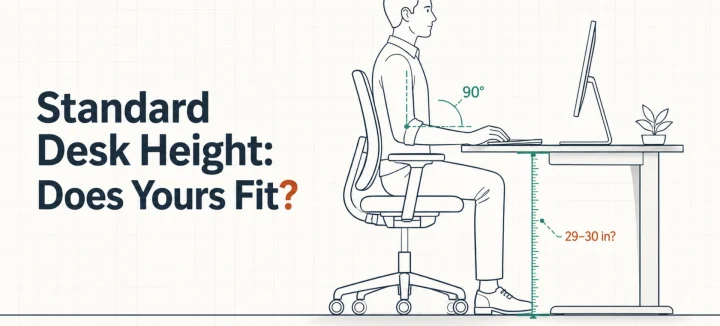
Standard Desk Height: Is 29 Inches Right for Your Body?
Standard desk height is 29 to 30 inches (73 to 76 cm). That number fits far fewer people than you’d think. A desktop that tall matches the seated elbow height of someone around 6’2″. The average American man stands 5’9″, and the average woman 5’3.5″. So this guide does two jobs. It shows you how […]
Read More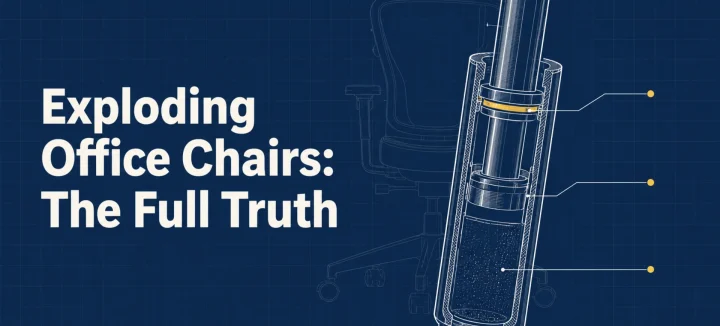
Exploding Office Chairs: The Full Truth From a Chair Maker
The exploding office chair story resurfaces every few years, same grainy photos attached. So can a chair really burst? A handful have, and every documented case involved an uncertified gas cylinder (the pressurized tube that raises and lowers your seat). Chairs built to recognized safety standards fail differently: seals leak, the seat sinks, nothing bursts. […]
Read More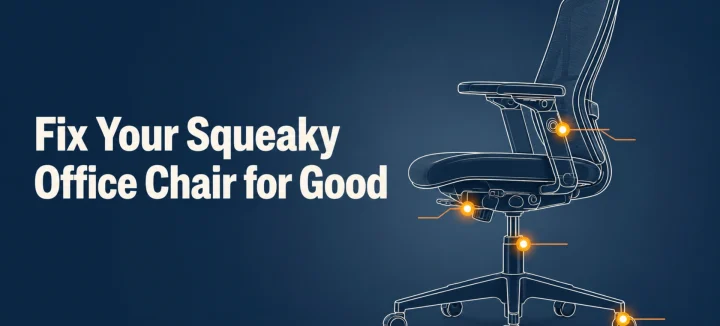
How to Fix a Squeaky Office Chair by Sound and Location
A squeaky office chair makes four different noises, and each one points to a different part. To silence it for good, find the source first: the tilt mechanism, gas cylinder, casters, or armrests. Then tighten what’s loose and lubricate with the right product for that joint. This guide matches each sound to its fix, and […]
Read More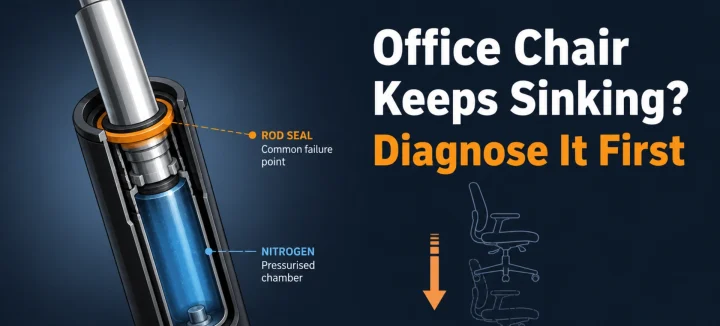
Office Chair Keeps Sinking? Diagnose and Fix It for Good
An office chair that keeps sinking or won’t stay up has one main cause: the gas cylinder under the seat is losing pressure. Worn seals let the nitrogen escape, so the piston stops holding your weight. A hose clamp or PVC pipe locks the height today; a new cylinder fixes it properly in 15 minutes. […]
Read More