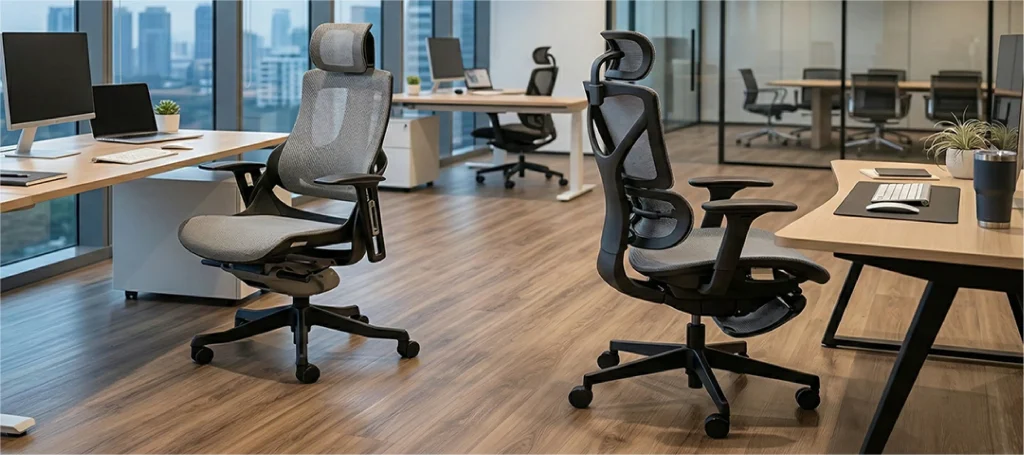
5 Best Ergonomic Chairs for Long Hours of Sitting (2026)
A chair that feels great in the showroom can still wreck your lower back by Tuesday at 3pm. The best ergonomic chair for long hours is one engineered for endurance, not just first-hour comfort: dynamic lumbar support, weight-sensing synchro tilt, breathable mesh, and adjustable seat depth.
These features let the chair move with you across a full eight-hour day, reducing spinal load and heat buildup that shorter sessions never expose.
This guide walks through the five chairs worth considering in 2026 and the engineering test that separates long-hour chairs from everything else.
Key Takeaways
- Endurance sitting is a distinct engineering problem, and it’s not solved by adding more cushion.
- The best ergonomic chair for long hours passes five engineering tests: mechanism, lumbar, thermal, depth, and fatigue.
- Weight-sensing synchro tilt matters more than manual tension dials when you sit eight-plus hours.
- Our 5 picks for 2026: Zenit for full-day executives, Tune for adjustability value, Spinelly for dynamic active sitting, Ovo for hot climates, and Aire for compact home offices.
- UC Riverside research links 8+ hour sitting to elevated cardiometabolic risk even in active adults, which makes chair engineering more consequential, not less.
Why Sitting 8 Hours Demands a Different Chair
Most ergonomic chairs are sold on how they feel in the first five minutes. That’s the easy part. The hard part starts at hour four, when your pelvic tilt shifts, your thoracic muscles fatigue, and the mesh that looked breathable starts trapping heat against your lower back.
A chair built for long hours is designed around that hour, not hour one.
The first hour in any chair feels fine. The eighth hour tells the truth.
What counts as “long hours” for chair engineering?
For chair engineering purposes, “long hours” means six or more continuous hours of seated work, repeated daily.
At that duration, static pressure on spinal discs, restricted blood flow through the thighs, and accumulated heat all compound into measurable fatigue. This is the threshold where chair design stops being a nice-to-have and starts being a health variable.
The health cost of sitting long in the wrong chair
The research here is worth taking seriously.
A 2024 study from UC Riverside published in PLOS One found that sitting 8 or more hours per day increases cholesterol ratios and BMI, even in physically active individuals, and standard exercise recommendations aren’t enough to offset the damage.
A larger cohort study in JAMA Network Open tracked 481,688 people and found prolonged occupational sitters had a 16% higher all-cause mortality risk. Sitting is not neutral time. The chair you sit in is part of the exposure.
So the question isn’t “will a better chair fix prolonged sitting?” It won’t. The question is: since you will sit long hours anyway, does your chair make those hours better or worse? The answer depends on how well the chair supports the body through micro-shifts, recline, and thermal change.
An endurance chair isn’t comfortable. It’s engineered to stop being uncomfortable.
The 8-Hour Test: five criteria we use to evaluate endurance chairs
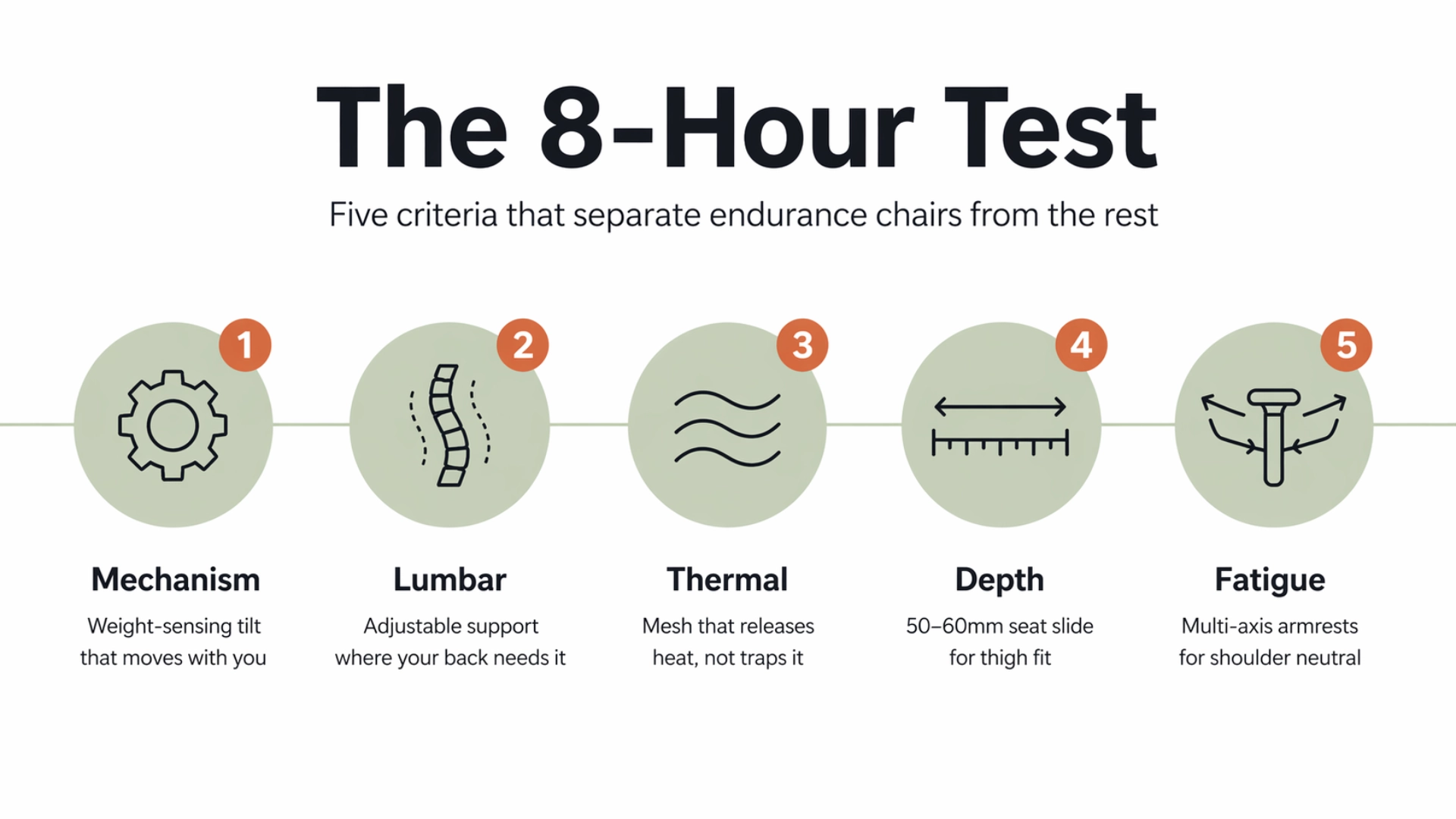
We use five criteria at Merryfair to separate chairs built for endurance sitting from chairs that only deliver the first-hour feel. Call it the 8-Hour Test:
- Mechanism Test — The chair should tilt without you thinking about it. Weight-sensing synchro tilt responds to how you actually move. A manual tension dial means fiddling, and by week two most people stop fiddling. Read more on how tilt mechanisms help during long hours.
- Lumbar Test — Fixed lumbar bulges sit where the designer decided, not where your spine needs. Adjustable or dynamic lumbar sits where you need. Here’s a deeper look at how lumbar support works during long sitting sessions.
- Thermal Test — The back of the chair either traps heat or releases it. High-tensile mesh releases it. Padded foam backs don’t. By hour seven, the difference is noticeable.
- Depth Test — A seat pan that’s too long for your femurs cuts circulation behind the knees. A pan with 50–60mm of slide range fits most body types.
- Fatigue Test — Multi-axis armrests (height, width, depth, pivot angle) let your shoulders stay neutral across typing, calling, and leaning. Fixed armrests force your body to adapt to the chair.
A chair that misses any one of these can still be a perfectly good chair, but it isn’t an endurance chair.
The 5 Best Ergonomic Chairs for Long Hours in 2026
Below are the five chairs from our range that pass all five criteria, each positioned for a different long-hour use case. Every one is designed and manufactured in-house at our Malaysia facility and carries BIFMA, Greenguard, ISO, and AFRDI certification. All five come with a 5-year warranty on seating mechanism, framework, adjustable arms, and seating foam.
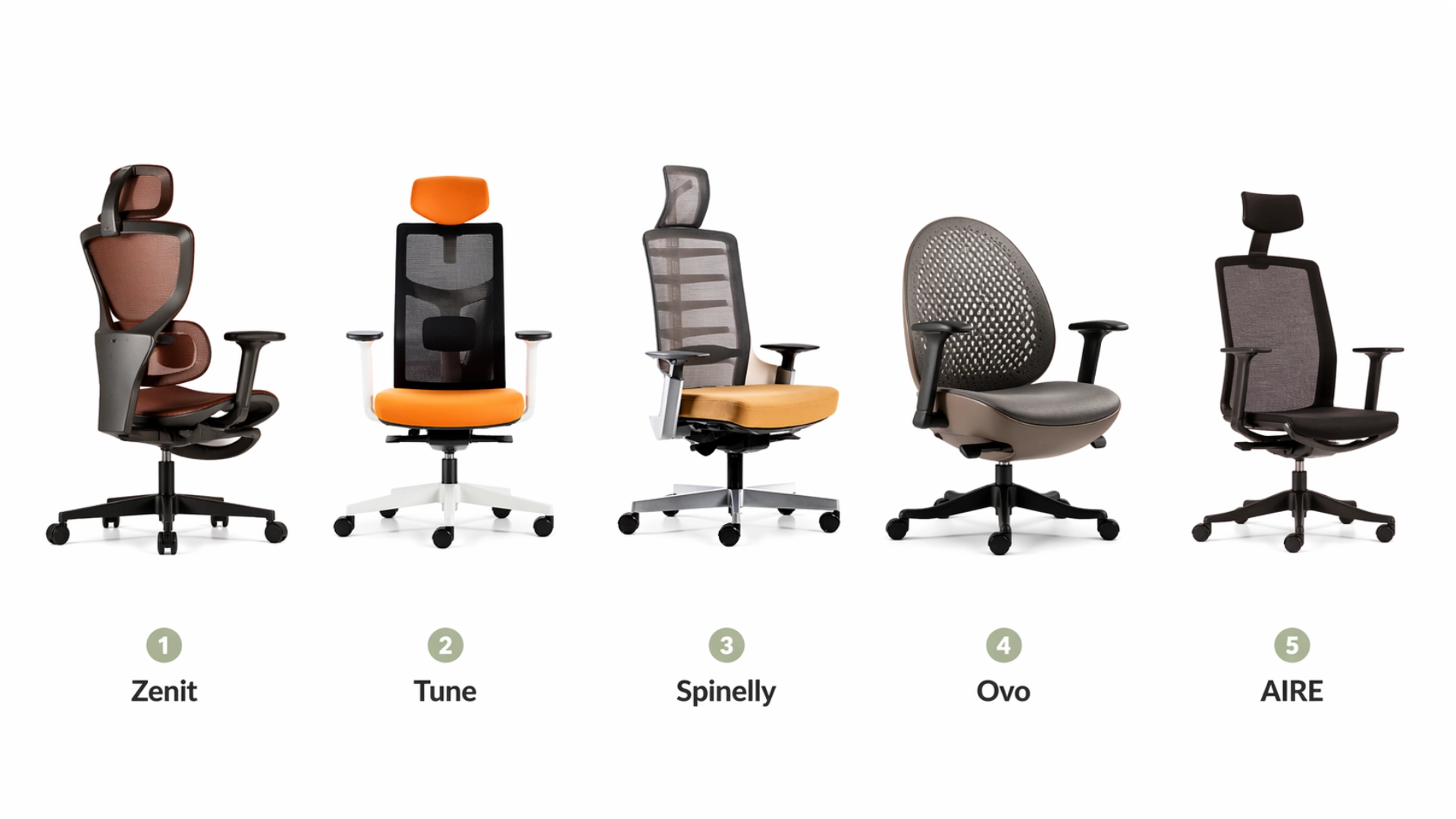
1. Zenit — Best premium pick for full-day professionals
Zenit is built for the person whose calendar is a wall of eight-hour days.
It runs a full polyester mesh backrest, 4-directional armrests with polyurethane pads, a 50mm seat slide for thigh-length fit, and a ratchet-adjustable backrest that lets you dial in the exact height of the lumbar contact point.
The synchro mechanism is auto weight-sensing with three tilt-lock positions, so you’re not fighting the chair to recline.
It carries BIFMA certification for durability plus Greenguard Gold for indoor air quality, which matters if your office is sealed and air-conditioned. At RM2,340, Zenit is our pick for users who want the upper end of ergonomic performance without stepping into five-figure territory. [REFRESH NOTE: verify pricing at refresh]
Who it fits best: Corporate professionals, executives, and anyone whose work depends on not noticing the chair.
2. Tune — Best mid-tier workhorse with full adjustability
Tune is the chair we recommend when someone wants the most adjustability per ringgit.
It runs a breathable polyester mesh back, a height-adjustable headrest, 3-way armrests (height, depth, angle), 60mm of seat depth adjustment, and a lumbar support that adjusts 20mm via side knobs — meaning you can fine-tune your lower-back support without standing up.
The backrest itself slides 105mm in height, which matters for taller users. Auto weight-sensing tilt with three lock positions rounds it out.
Tune carries a 125kg user weight rating and all the same certifications as Zenit, at a noticeably lower price point. This is the chair for people who want every ergonomic control without the executive premium.
Who it fits best: Remote workers, hybrid professionals, team installations, and users who actively dial in their chair rather than set and forget.
3. Spinelly — Best for active dynamic sitting
Spinelly is the chair we point to when static sitting is the problem. Its backrest is engineered around the structure of the human vertebrae: a unique rib design paired with an elastomer spine system allows the back to flex with every micro-shift of your torso.
You’re not held rigidly in one posture; the chair moves with your spine as you lean, twist, and reach. The weight-sensing recline mechanism adjusts resistance automatically to your body weight.
The breathable polyelastomer mesh handles the thermal test, 60mm seat-depth adjustment handles the depth test, and the 20° tilt range gives enough recline for a genuine break without leaving your desk. For users who find other chairs too static by hour six, this is the one.
Who it fits best: Knowledge workers who shift constantly, designers and developers, and anyone whose body rebels against chairs that want you to sit still.
4. Ovo — Best mesh pick for hot-climate endurance
Ovo is the chair we recommend when heat is the quiet problem. Its mesh is 76% elastomer with 24% high-tensile fibres engineered not to lose tension over time, and the backrest is described on the product page as filter-like — air moves through it rather than against it.
The seat uses a waterfall front edge, which is the detail most long-hour chairs skip: it relieves pressure behind the knees and keeps circulation open through the thighs across a full day.
The armrests adjust 10cm in height, 5cm in width, 6cm in depth, and swivel ±15°, giving you genuine 4-way positioning for typing, calling, and leaning. Side controls let you adjust recline tension and seat height without standing. If you work in a warm office, a tropical climate, or simply run warm, Ovo is built for you. For a wider view across price tiers, our shortlist of affordable ergonomic chairs for all-day use covers adjacent options.
Who it fits best: Anyone in a warm room, a tropical climate, or any workspace where thermal buildup ends the workday before the clock does.
5. Aire — Best lightweight pick for home offices and compact spaces
Aire is the newest addition, and it solves a problem most endurance chairs ignore: weight and footprint. A single-piece structural frame replaces the heavy modular joints of traditional chairs, and the body-weight recline responds automatically to how you lean. No tension knob to adjust.
The mesh back keeps airflow high, the lumbar support holds the lower-back curve, and the seat height plus tilt lock cover the basics cleanly.
What Aire trades away is the depth of adjustment you get on Zenit or Tune. What it gains is portability, aesthetics, and a form factor that fits small apartments and rented rooms without dominating them.
Who it fits best: Remote workers, home office users in compact spaces, and anyone who values minimal design without giving up eight-hour performance.
Here’s how the five chairs line up across the 8-Hour Test criteria:
| Chair | Mechanism | Lumbar | Thermal | Depth | Fatigue |
|---|---|---|---|---|---|
| Zenit | Auto weight-sensing synchro, 3-position tilt | Permanent-contact adjustable | Full polyester mesh | 50mm seat slide | 4D armrests |
| Tune | Auto weight-sensing synchro, 3-position tilt | Side-knob adjustable (20mm) | Breathable polyester mesh | 60mm seat depth | 3-way armrests |
| Spinelly | Weight-sensing recline, 20° tilt | Elastomer spine (dynamic) | Polyelastomer mesh | 60mm seat depth | Height-adjustable arms |
| Ovo | 22° tilt, side-control tension | Mesh contour support | 76% elastomer, 24% tensile mesh | Waterfall seat edge | 4-way armrests |
| Aire | Body-weight recline | Adjustable | Mesh back | Standard | Height-adjustable |
How to Choose the Right One for Your Body and Your Day
Five good chairs don’t help if you can’t pick one. The decision usually collapses to three variables: your body, your day, and your space. Here’s how to think about each. Explore the complete Merryfair ergonomic chair range if you want a fuller picture beyond these five.
A chair you adjust once and forget is working. A chair you keep fidgeting in is failing.
How do I know if a chair will last me eight hours before I buy it?
Sit in it for at least twenty minutes in the showroom, ideally after a meal when your body is more honest about pressure points. Check three things: whether the lumbar support sits at the small of your back (not your mid-back), whether your thighs rest flat with roughly two fingers of space behind your knees, and whether your shoulders drop when your forearms sit on the armrests. If all three feel right at twenty minutes, they’ll still feel right at eight hours.
Mesh vs foam for long sitting sessions
Mesh wins for most long-hour users, and it wins harder in warmer climates. High-tensile mesh releases heat instead of trapping it, which keeps your lower back dry and your concentration intact. Foam seats have their place, particularly for users who prefer a firmer, more defined feel, but a foam back across eight hours tends to accumulate heat in ways a mesh back doesn’t.
The combination most endurance chairs settle on is a mesh back with a molded foam seat. That gives you thermal release where you need it and pressure distribution where the body contacts the chair longest. Tune, Zenit, and Spinelly all follow this approach; Ovo takes it further with full mesh including the seat.
Matching chair to body type and workspace
- Taller than 5’10”: prioritise chairs with adjustable backrest height (Tune’s 105mm range) and adjustable headrests (Tune and Zenit both deliver).
- Under 5’4″: prioritise seat depth adjustment so the pan doesn’t bite behind the knees (Tune and Spinelly both offer 60mm; Ovo’s waterfall edge helps here too).
- Heavier frame (100kg+): all five chairs in this list are rated to 125kg, which covers most users; for higher loads, contact Merryfair for options from the broader range.
- Small home office: Aire’s single-piece design fits where other chairs feel bulky.
- Hot climate or warm room: Ovo’s full mesh is the default; Zenit and Tune are strong second choices.
Price tells you what the chair is made of. Mechanism tells you how long you can use it.
The Chair Decision That Pays You Back Every Workday
Most big purchases depreciate the day they arrive. An endurance-grade chair does the opposite. It compounds, one eight-hour day at a time, across years of use. The math is quiet but it’s real: a chair that costs more up front but lasts through fewer replacement cycles, prevents one musculoskeletal flare-up, and keeps you in flow through 4pm is cheaper than the chair it replaces.
The five chairs above are not the only good chairs in the world. They’re the five from our range that pass the 8-Hour Test and cover the use cases most long-hour sitters actually fall into. If any of them looks like a fit, visit a Merryfair showroom and put it through the twenty-minute test yourself. And if you’re sizing the decision against other tiers, our guide to the best ergonomic office chairs for every budget is the right next stop.
Frequently Asked Questions About Chairs for Long Hours
What is the best ergonomic chair for long hours of sitting?
The best ergonomic chair for long hours is one that passes five engineering criteria: weight-sensing synchro tilt, adjustable dynamic lumbar support, breathable mesh back, adjustable seat depth, and multi-axis armrests. Our top pick for full-day professionals is Zenit, which hits all five and carries BIFMA plus Greenguard Gold certification for durability and indoor air quality.
Is a mesh chair better than a foam chair for long hours?
For most long-hour users, yes. Mesh releases heat across a full workday while foam tends to trap it, and thermal buildup is one of the quietest drivers of afternoon fatigue. The ideal combination is a high-tensile mesh backrest paired with a molded foam seat, which gives you airflow where it matters and pressure distribution where the body contacts the chair longest.
How much should I spend on a chair I’ll use 8 hours a day?
A reasonable mid-tier ergonomic chair for daily full-day use falls in the range most buyers can justify over a 5–7 year lifespan. The calculation that matters is cost per sit: divide the chair’s price by roughly 1,200 sits a year across the chair’s life. Even mid-range chairs like Tune (RM1,300) usually work out to less per day than a takeaway coffee. [REFRESH NOTE: update pricing logic annually]
Can a gaming chair work for long office hours?
Most traditional gaming chairs fall short for long hours because they’re engineered for the G-force postures of racing seats, not the neutral seated posture of desk work. The bucket seat, fixed lumbar bolsters, and limited seat depth that define gaming chairs become liabilities across an eight-hour day. A proper ergonomic office chair outperforms them for sustained use.
How long should a good ergonomic chair last?
A well-built ergonomic chair with BIFMA-rated components should deliver 7–10 years of daily use. Every chair in this list carries a 5-year warranty on the seating mechanism, framework, adjustable arms, and seating foam. The components that wear fastest are upholstery and casters, both usually replaceable without retiring the chair.
MORE BLOGS
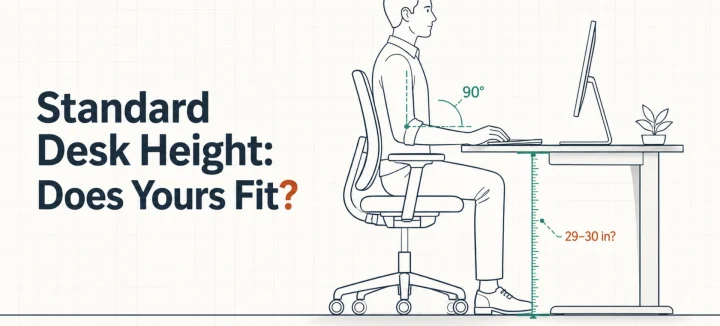
Standard Desk Height: Is 29 Inches Right for Your Body?
Standard desk height is 29 to 30 inches (73 to 76 cm). That number fits far fewer people than you’d think. A desktop that tall matches the seated elbow height of someone around 6’2″. The average American man stands 5’9″, and the average woman 5’3.5″. So this guide does two jobs. It shows you how […]
Read More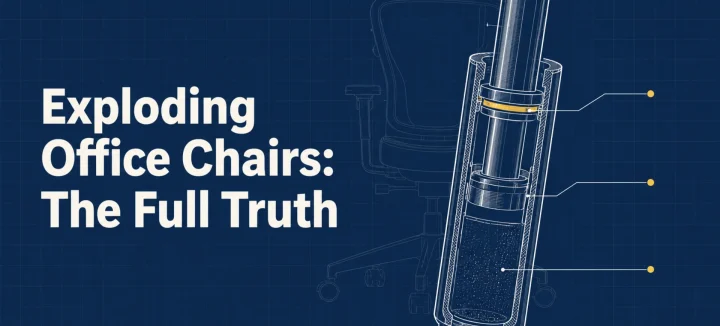
Exploding Office Chairs: The Full Truth From a Chair Maker
The exploding office chair story resurfaces every few years, same grainy photos attached. So can a chair really burst? A handful have, and every documented case involved an uncertified gas cylinder (the pressurized tube that raises and lowers your seat). Chairs built to recognized safety standards fail differently: seals leak, the seat sinks, nothing bursts. […]
Read More
How to Fix a Squeaky Office Chair by Sound and Location
A squeaky office chair makes four different noises, and each one points to a different part. To silence it for good, find the source first: the tilt mechanism, gas cylinder, casters, or armrests. Then tighten what’s loose and lubricate with the right product for that joint. This guide matches each sound to its fix, and […]
Read More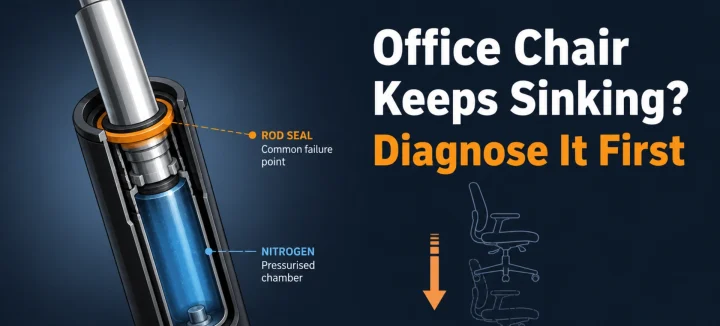
Office Chair Keeps Sinking? Diagnose and Fix It for Good
An office chair keeps sinking for one main reason: the gas cylinder under the seat is losing pressure. Worn seals let the nitrogen escape, so the piston stops holding your weight. A hose clamp or PVC pipe locks the height today; a new cylinder fixes it properly in 15 minutes. Diagnose first, and you’ll only […]
Read More