Your Ergonomic Chair Size Guide for Every Height and Weight
23rd March, 2026
An ergonomic chair size guide should start with your body, not a product page. About 40% of the working population falls outside the “standard” range most chairs target.
That means your chair might look ergonomic. It could still miss your body entirely.
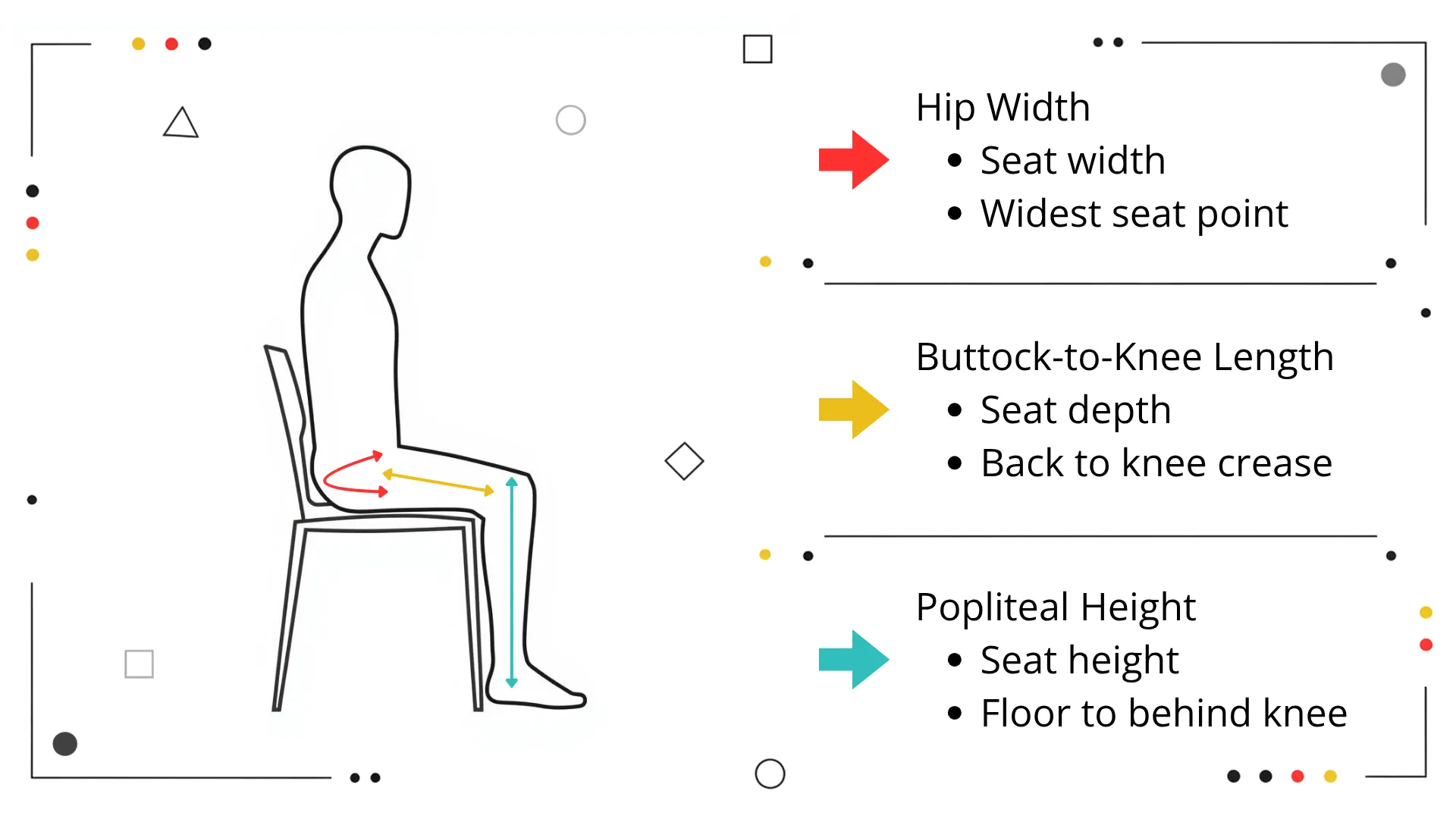
Your ideal chair size comes down to three numbers. Popliteal height (floor to behind your knee), buttock-to-knee length, and hip width.
These map directly to seat height, seat depth, and seat width. Get them right and the chair works for you.
Get them wrong and no amount of adjustability will compensate.
This guide gives you the complete sizing reference. You’ll find a measurement method, a dimension chart, and body-type advice for petite, tall, and heavier users.
Why Most Ergonomic Chairs Don’t Fit Most People
The average office chair adjusts between 16 and 21 inches in seat height. That range sounds generous until you check the numbers.
A person at 152 cm (5’0″) may need a seat as low as 14 inches. Someone at 198 cm (6’6″) may need 24 inches or more.
The gap isn’t small. It’s structural.
The standard office chair fits roughly 60% of the working population and fails the other 40%.
Most manufacturers design for the 5th to 95th percentile. But the data behind those targets doesn’t always reflect today’s workforce.
A 2023 study in the International Journal of Environmental Research and Public Health found that older anthropometric datasets may no longer match current body proportions. Population measurements have shifted since those datasets were collected.
Chairs designed on outdated data create a mismatch before you even sit down.
If you’ve noticed persistent discomfort, the issue might not be your habits. It might be that your chair’s dimensions don’t match your body.
Recognising the signs that your current office chair no longer fits your body is the first step toward fixing it. And how the right ergonomic chair supports spinal health makes the case for sizing correctly.
What is the standard office chair size and who does it actually fit?
Standard ergonomic chairs typically offer these ranges, based on BIFMA data:
| Dimension | Standard Range | Best Fits |
|---|---|---|
| Seat height | 40-53 cm (16-21 in) | Users 160-185 cm (5’3″-6’1″) |
| Seat depth | 40-50 cm (16-20 in) | Thigh length 43-51 cm |
| Seat width | 43-51 cm (17-20 in) | Hip width up to 46 cm |
| Backrest height | 45-56 cm (18-22 in) | Average torso lengths |
| Weight capacity | Up to 113 kg (250 lbs) | Most standard frames |
If your body falls within every column, a standard chair will likely work. But if even one measurement sits outside the range, that mismatch causes the discomfort you’ll feel by hour three.
How does your height affect which ergonomic chair you need?
Height determines where your knees bend and where your lumbar curve sits. It also dictates how much backrest you need above the lumbar region.
Taller people need deeper seats, higher backrests, and gas cylinders that extend further. Shorter people need the reverse across all three.
But here’s the part most guides skip.
Two people at the same height can need completely different chairs if their torso-to-leg ratio differs. Someone with longer legs and a shorter torso needs a higher seat and shallower depth. Someone with a longer torso and shorter legs needs the opposite.
Height alone is a starting point. It’s not a solution.
The 3-Number Sizing Method: Measure Yourself in Five Minutes
Merryfair’s 3-Number Sizing Method reduces chair selection to three body measurements. Each one maps directly to one chair dimension.
No guesswork. No “small, medium, large” labels.
An ergonomic label means nothing if the chair’s adjustment range doesn’t include your body.
How do I measure myself for an office chair at home?
You’ll need a measuring tape and a flat, hard-surfaced chair (a dining chair works). Wear the shoes you’d typically wear at work.
- Popliteal height (maps to seat height): Sit with feet flat on the floor. Measure from floor to the crease behind your knee. This is the max seat height your chair should reach. Set it 1-2 cm below this number.
- Buttock-to-knee length (maps to seat depth): Sit with your back against the chair back. Measure from your buttock to the back of your knee. Subtract 5-8 cm for your target seat depth.
- Hip width (maps to seat width): Measure across the widest point of your hips while seated. Add 2-5 cm for clearance. That’s your minimum seat width.
Write your three numbers down. You’ll use them against the size chart next.
What is popliteal height and why does it determine your seat height?
Popliteal height is the distance from the floor to the soft tissue behind your knee when seated. It’s the most important measurement for chair sizing.
It dictates whether your feet rest flat with proper thigh support.
If your chair sits higher than your popliteal height, the seat edge presses into your thighs. That pressure restricts blood flow to your lower legs.
If the chair sits too low, your hips drop below your knees. This flattens the lumbar curve and increases spinal disc pressure.
A chair that doesn’t match your popliteal height forces your body to compensate for the mismatch all day.
The PMC study on chair size design confirms a useful shortcut. Popliteal height averages about 25% of standing height.
So multiply your height by 0.25. That’s a rough target for seat height.
Knowing why seat depth is a critical adjustment most buyers overlook helps you pair measurement #2 with the right spec.
Ergonomic Chair Size Chart by Height and Weight
This table maps height and weight ranges to recommended chair dimensions. It draws on ratios from the BIFMA G1-2013 Guideline and industry standards used by Merryfair.
Use your 3-Number measurements for precision. Use this table as a starting reference if you haven’t measured yet.
What ergonomic chair dimensions should I look for at my height?
| Your Height | Seat Height | Seat Depth | Min. Seat Width | Backrest Height | Weight Capacity |
|---|---|---|---|---|---|
| Under 155 cm (5’1″) | 36-40 cm (14-16 in) | 38-42 cm (15-16.5 in) | 43 cm (17 in) | 40-48 cm (16-19 in) | 113 kg (250 lbs) |
| 155-165 cm (5’1″-5’5″) | 40-44 cm (16-17 in) | 40-45 cm (16-18 in) | 45 cm (18 in) | 45-50 cm (18-20 in) | 113 kg (250 lbs) |
| 165-175 cm (5’5″-5’9″) | 43-48 cm (17-19 in) | 43-48 cm (17-19 in) | 46 cm (18 in) | 48-53 cm (19-21 in) | 113 kg (250 lbs) |
| 175-185 cm (5’9″-6’1″) | 46-51 cm (18-20 in) | 46-50 cm (18-20 in) | 48 cm (19 in) | 50-58 cm (20-23 in) | 113 kg (250 lbs) |
| 185-195 cm (6’1″-6’5″) | 50-55 cm (20-22 in) | 48-53 cm (19-21 in) | 50 cm (20 in) | 55-63 cm (22-25 in) | 136+ kg (300+ lbs) |
| Over 195 cm (6’5″+) | 53-60 cm (21-24 in) | 50-55 cm (20-22 in) | 51+ cm (20+ in) | 60+ cm (24+ in) | 136+ kg (300+ lbs) |
For reference, Merryfair’s Tune chair supports users between 150 cm and 185 cm. That covers the 5th to 95th percentile range.
Once you’ve found your row, match those numbers to must-have ergonomic chair features to look for once you have your size.
Does my weight affect which ergonomic chair I should buy?
Yes. And it affects more than just weight capacity.
Weight determines how long your chair keeps its shape, not just whether it holds you.
A person at 90 kg in a chair rated for 113 kg will be safe. But the foam, gas cylinder, and tilt mechanism all work closer to their limits.
Over 12-18 months, the seat padding compresses faster. The gas lift may drift. The tilt tension loses its calibration.
The practical rule is to maintain a 15-20% buffer below maximum weight. That recommendation comes from the Eureka Ergonomic safety guide.
If you weigh 100 kg, aim for a chair rated at 120 kg or higher.
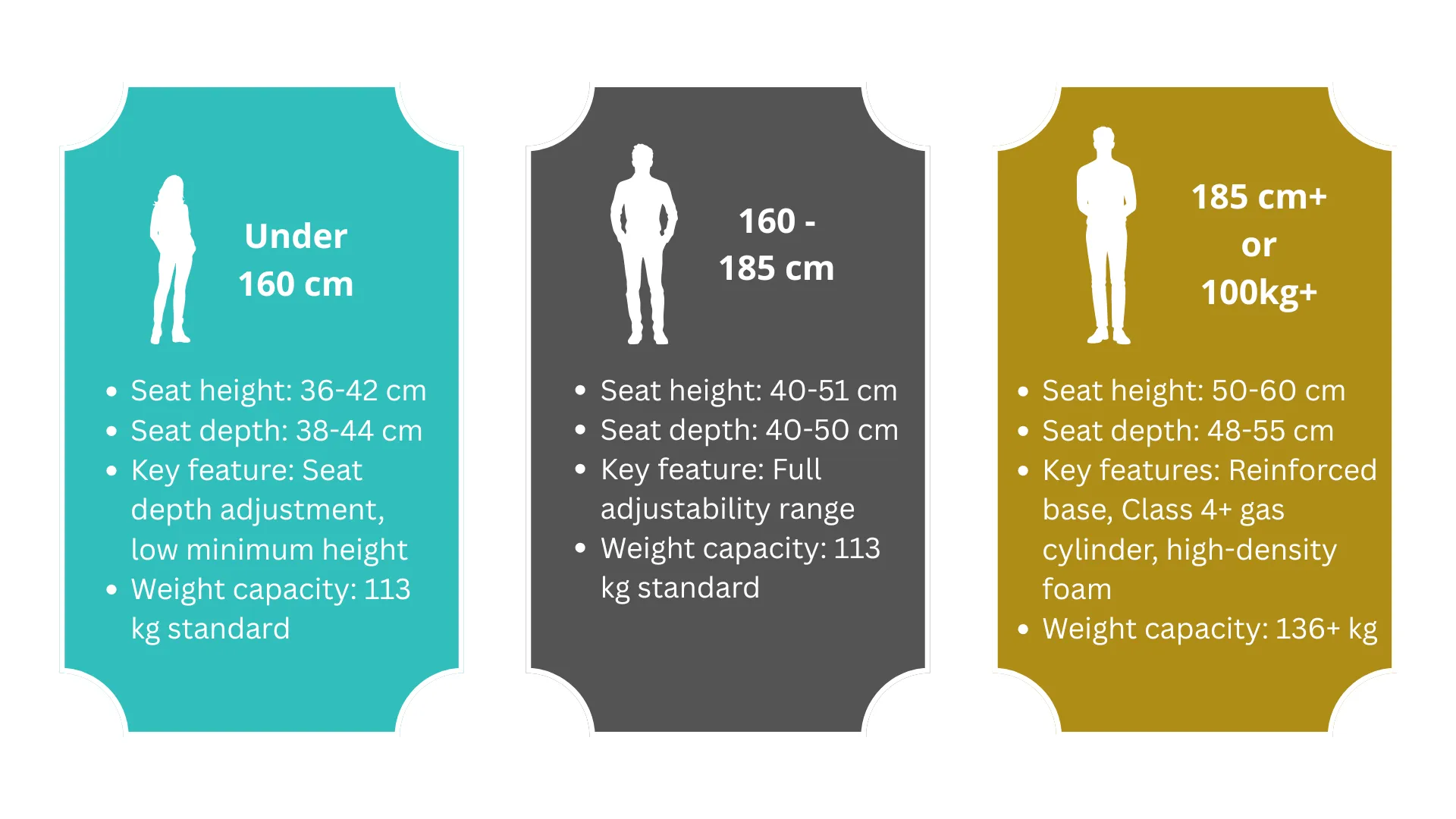
For users above 113 kg, look for reinforced steel bases and Class 4 gas cylinders. You’ll also need wider seat pans (50 cm+) and high-density foam rated for sustained heavy use.
Sizing for Every Body Type: Petite, Tall, and Heavy Users
Standard sizing charts work for the middle of the bell curve. If you’re at either end, you need targeted advice.
What office chair size works best if you’re under 160 cm?
Petite users face two recurring problems. Dangling feet and seat pans that extend past the back of the knees.
Look for chairs with a minimum seat height below 40 cm (16 in). Seat depth adjustment is non-negotiable.
Without it, you’ll either lose lumbar contact by sitting forward or accept knee pressure by sitting back. Neither is acceptable for 6+ hours.
If you’re choosing an ergonomic chair in Malaysia, test the seat depth with your back against the backrest. Two to three fingers should fit between the seat edge and your knee.
What should tall users over 185 cm look for in a chair?
Tall users need the inverse: more of everything. Deeper seat. Taller backrest. Higher gas cylinder range.
But the measurement that trips up most tall buyers is backrest height.
If the backrest only reaches your mid-back, your upper back gets no support. For users above 185 cm, look for backrests of at least 55 cm (22 in).
A headrest becomes functional rather than decorative at this height.
Seat depth is the most overlooked dimension and the fastest path to knee pain.
Check the maximum seat depth. If it’s under 48 cm, longer femurs won’t get adequate thigh support.
That shifts more weight onto the lower back.
How does weight change the chair features you need?
Beyond the 15-20% capacity buffer, weight changes three material requirements.
First, the base. Standard nylon suits users up to roughly 100 kg. Above that, aluminium alloy or reinforced steel provides the needed rigidity.
Second, the foam. Standard-density foam compresses under sustained pressure. High-density foam (50+ kg/m3) resists flattening and distributes weight more evenly.
Third, the gas cylinder. Class 3 cylinders are common in budget chairs. Class 4 is the minimum for users over 90 kg.
Some heavy-duty models use Class 5 cylinders rated for 150+ kg.
How to Confirm Your Chair Actually Fits
Numbers get you close. The final test happens when you sit.
What’s the fastest way to test ergonomic chair fit?
Merryfair developed a systematic approach beyond the quick sit-test. The 3-layer body fit test to confirm the chair fits your body evaluates three compatibility levels.
- Static fit: do the dimensions match your body at rest?
- Support fit: does the lumbar hit the right spot?
- Dynamic fit: does the chair move with you?
All three layers need to pass. A chair can match your measurements and still fail the dynamic test.
That happens when the tilt mechanism isn’t calibrated for your weight.
The best ergonomic chair isn’t the most expensive one or the highest-rated one. It’s the one that matches your body.
Spend at least 15 minutes in the chair. Twenty seconds in a showroom tells you almost nothing.
Your body needs time to settle. Subtle mismatches only surface after the initial comfort impression fades.
The Right Size Is the Starting Line, Not the Finish
Getting your chair size right eliminates the most common source of seated discomfort. That source is a dimensional mismatch between your body and the furniture you sit in 6-8 hours daily.
Take your three measurements. Check them against the sizing chart.
Then test before you commit.
Your three measurements determine your chair, not a label or a star rating.
If you’re ready to match your size to the right chair, explore ergonomic chairs across every budget tier in Malaysia. Bring your numbers with you.
Frequently Asked Questions About Ergonomic Chair Sizing
Can one ergonomic chair fit everyone in an office?
No single chair model fits every body. Offices with diverse teams should prioritise wide adjustment ranges. Look for at least 10 cm of seat height range, adjustable seat depth, and multi-directional armrests. A quality adjustable chair covers the 155-185 cm range, which suits most employees.
What seat height is correct for someone 170 cm tall?
A person at 170 cm typically needs a seat height of 43-46 cm (17-18 in). The precise number depends on your popliteal height, which averages 42-44 cm at this stature. Adjust until your feet rest flat and your knees sit slightly below hip level.
Is it better to size up or size down in an ergonomic chair?
Size down if you’re between ranges. A slightly smaller chair with full adjustment gives better lumbar contact and less wasted seat depth. A chair that’s too large creates gaps between your back and the support. That defeats the chair’s purpose entirely.
How often should I reassess my chair size?
Reassess when your body changes: weight shifts of 10+ kg, new footwear habits, or a different desk setup. Also reassess if discomfort develops gradually after months of comfortable use. Foam compression can shift the effective seat dimensions over time.
What happens if my ergonomic chair is the wrong size?
A mismatched chair creates compensatory postures your body adopts unconsciously. You adjust to fill gaps or avoid pressure points. That leads to muscle fatigue, reduced circulation, and chronic discomfort in the lower back, shoulders, or knees. Most people blame their posture, not the chair.
MORE BLOGS
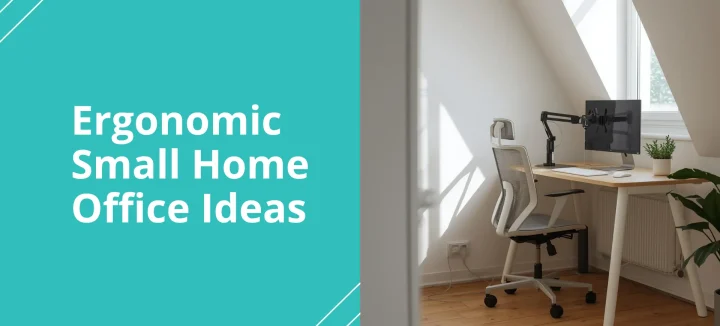
Small Home Office Ideas That Protect Your Back and Save Space
Small home office ideas don’t need to start with Pinterest boards and paint swatches. They need to start with your spine. A PMC study found that 61.2% of home workers reported musculoskeletal discomfort while working remotely, and over half were working from dining tables or bedrooms. The fix isn’t a bigger room. It’s a smarter […]
Read More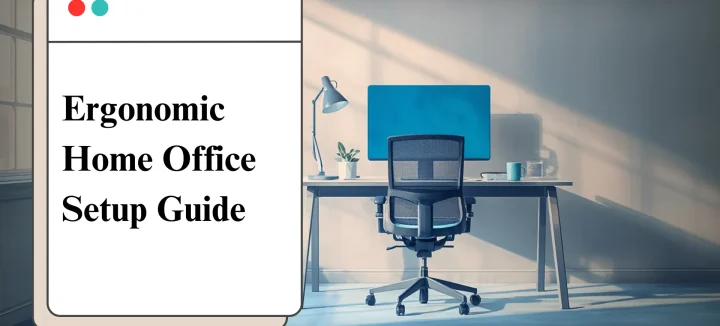
Ergonomic Home Office Setup: A 5-Zone Guide That Works
Your ergonomic home office setup is probably wrong. A PMC study found that 61.2% of home workers reported musculoskeletal discomfort while working remotely. Nearly half were working from dining tables or bedrooms. An ergonomic home office setup comes down to five zones: chair, desk, screen, peripherals, and environment. Get these five right and you fix […]
Read More
Office Chair Cost Calculator: Your True Cost Per Sit
An office chair cost calculator reveals something most Malaysian buyers overlook: the daily price of sitting. Divide any chair’s price by the total sits across its lifespan. That one number is the cost per sit. For Malaysian workers averaging 45 hours per week at a desk, the math favours mid-range ergonomic chairs over budget options […]
Read More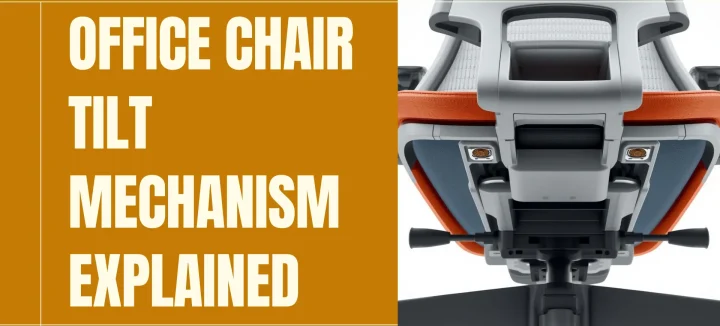
Office Chair Tilt Mechanisms: What Synchro Tilt Really Does
An office chair tilt mechanism is the hidden hardware under your seat. It controls how your chair moves when you lean, recline, or shift weight. It’s the single spec that separates a stiff, uncomfortable chair from one that supports you through an eight-hour workday. Synchro tilt has become the standard in mid-to-high-end ergonomic seating. It […]
Read More