
Office Chair Tilt Mechanisms: What Synchro Tilt Really Does
17th March, 2026
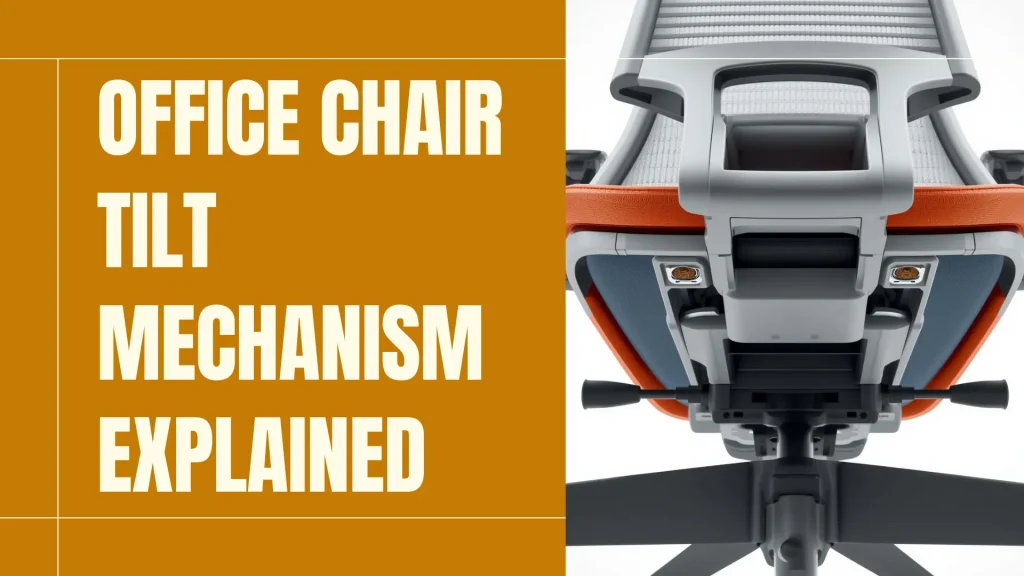
An office chair tilt mechanism is the hidden hardware under your seat. It controls how your chair moves when you lean, recline, or shift weight. It’s the single spec that separates a stiff, uncomfortable chair from one that supports you through an eight-hour workday.
Synchro tilt has become the standard in mid-to-high-end ergonomic seating. It solves a problem cheaper mechanisms can’t: keeping your feet on the floor while your backrest reclines.
This guide breaks down every tilt type and explains the physics behind each one. It gives you a clear method to match the right mechanism to how you sit. Why do some chairs feel like rocking in a hammock while others feel like tipping off a seesaw? The answer is under the seat.
What Actually Moves When You Lean Back
Most people test an office chair by sitting in it and wiggling around for 30 seconds. They check the mesh, squeeze the armrests, maybe spin the height lever.
Almost nobody flips the chair over.
That’s a problem. The mechanism bolted underneath the seat controls everything about how the chair responds to your body. And it’s the one component that differs most between a RM300 task chair and a RM3,000 ergonomic one.
What is an office chair tilt mechanism?
An office chair tilt mechanism is the metal assembly mounted between the seat pan and the gas cylinder. It governs how the backrest and seat respond when you lean backward, shift forward, or recline.
Every adjustment you feel originates from this single component. The resistance when rocking, the lock that holds your angle, the tension matching your weight. If you’re learning how to choose the right ergonomic chair for your workspace, the mechanism should be your first filter.
Think of it as the chair’s brain. It doesn’t just hold you up. It decides how the chair moves with you.
Why does the pivot point location matter?
The pivot point is where the mechanism allows the chair to rotate as you recline. Its position controls three outcomes: thigh pressure, foot stability, and recline naturalness.
A pivot under the centre of the seat creates a seesaw effect. A pivot near the knees reduces foot lift. A synchronised pivot coordinates backrest and seat movement at different speeds.
If your feet leave the floor when you lean back, your chair’s pivot point is in the wrong place.
[IMAGE: Side-view cross-section diagram showing three chairs with pivot points marked in different locations (centre, knee, synchronised), with arrows showing seat pan movement direction and magnitude for each | type: diagram]
Where that single point sits changes everything about your eight-hour experience.
Five Tilt Mechanisms Ranked by Ergonomic Performance
Here’s where it gets specific. Five mechanisms exist on the market today, each with different pivot physics and trade-offs. This isn’t a list of equals. They’re ranked from least to most ergonomic.
How does centre tilt work on an office chair?
Centre tilt (also called single-point tilt or swivel tilt) positions the pivot directly below the middle of the seat. The backrest and seat pan move together at a 1:1 ratio. Lean back 10 degrees and your seat tips 10 degrees with it.
It’s the simplest and cheapest mechanism available.
The drawback is immediate. As the seat pan rises in front, your feet lift off the floor. That creates pressure under your thighs and restricts blood flow to your lower legs.
You’ll feel pins and needles after about 20 minutes of sustained recline. Centre tilt works for small recline angles under 5 degrees. Anything beyond that and the physics work against you.
You’ll find this mechanism on chairs priced under RM500. It does the job for short, task-only sitting where reclining isn’t part of your routine.
What makes knee tilt different from centre tilt?
Knee tilt relocates the pivot from the seat centre to just behind the knees, near the front of the seat. This single change transforms the recline experience.
Because the bulk of your body weight stays behind the pivot, initiating the recline feels smoother. Your feet stay planted. The seesaw sensation disappears. The Merryfair WAU with adjustable tilt tension and tilt lock uses this principle to deliver a stable, natural lean-back.
But knee tilt has a ceiling. Because the mechanism sits at the front edge, it typically can’t accommodate seat depth adjustment. You get a better recline than centre tilt, but fewer fine-tuning options overall.
What is a synchro tilt mechanism and why is it popular?
A synchro tilt mechanism links the backrest and seat pan so they recline at different rates, typically a 2:1 ratio. For every 10 degrees the backrest reclines, the seat pan tilts only 5 degrees. This minimises seat pan rise, keeps your feet on the floor, and opens your chest without compressing your thighs.
Synchro tilt’s 2:1 ratio reclines your backrest twice as far as your seat tilts, keeping your feet planted.
This ratio mimics the body’s natural movement when shifting from upright work to a relaxed lean. It’s the reason synchro tilt became the default for mid-to-high-end ergonomic chairs. (These gears used to appear only in premium chairs over $1,000. Manufacturing advances have pushed them into mid-range models.)
Chairs with synchro tilt typically include a waterfall seat edge. It curves downward at the front to reduce thigh pressure. They also offer tilt lock, which holds your preferred angle. Tilt tension control adjusts how much resistance the chair provides.
How does a multi-function tilt mechanism compare?
Multi-function tilt, also called asynchronous tilt, lets you adjust the backrest and seat pan angles independently. You can set the backrest at one angle and the seat at another, then lock both.
In theory, this provides the highest level of personalisation. In practice, it introduces complexity. You’re managing two separate adjustments with separate levers, and finding the optimal combination takes time.
For some users, that precision is worth it. For most, synchro tilt delivers 90% of the ergonomic benefit with zero fiddling.
What are forward tilt and forward glide mechanisms?
Forward tilt dips the front edge of the seat pan about 5 degrees below horizontal. It’s designed for people who sit on the edge of their seat or lean toward their desk while working. You’ll find it on very few standalone chairs; it usually appears as an add-on within multi-tilt systems.
Forward glide is the inverse of standard recline. When you lean back, the seat pan slides forward and down instead of tilting backward with the backrest. This keeps your lower body angled correctly while your upper body reclines.
It’s used in premium chairs like the Herman Miller Aeron and the Humanscale Freedom.
Both are niche. If you don’t lean forward constantly or need a 135-degree recline for back pain relief, they’re not critical.
Comparison table:
| Mechanism | Pivot Location | Recline Ratio | Feet Stay Grounded? | Best For | Typical Price Tier |
|---|---|---|---|---|---|
| Centre tilt | Centre of seat | 1:1 | No (lifts after 5°) | Short task sitting | Budget (under RM500) |
| Knee tilt | Front of seat | Varies | Yes | Reclining + task combo | Mid-range |
| Synchro tilt | Synchronised gears | 2:1 | Yes | All-day mixed use | Mid-to-high |
| Multi-function | Independent | Custom | Depends on setup | Precision adjusters | High |
| Forward tilt/glide | Front edge | Reverse | Yes | Forward leaners | Premium |
Why Synchro Tilt Became the Ergonomic Standard
It’s tempting to call this marketing. Every chair brand claims “ergonomic design.” But synchro tilt’s dominance isn’t about branding. It’s about solving a specific, measurable physical problem.
What problem did synchro tilt solve that other mechanisms couldn’t?
The problem is called seat pan rise. When a chair reclines and the front of the seat tilts upward, it pushes against the underside of your thighs. That pressure compresses the popliteal area behind the knee, restricting venous blood return to the heart.
Centre tilt turns reclining into a seesaw. Your feet rise, your thighs compress, and comfort drops fast.
Synchro tilt tackled this by decoupling the speed at which the backrest and seat move. The backrest reclines freely while the seat moves slowly. Result: your thighs stay nearly level, your feet stay planted, and blood flows normally.
That’s the Pivot Point Principle in action. Our analysis of tilt mechanism design identifies three outcomes controlled by pivot position:
The Pivot Point Principle:
1. Thigh pressure — determined by how much the seat pan’s front edge rises during recline
2. Foot stability — determined by whether the pivot keeps your centre of gravity behind the rotation point
3. Recline naturalness — determined by whether backrest and seat speeds match the body’s biomechanics
Centre tilt fails all three at recline angles above 5 degrees. Knee tilt addresses foot stability but ignores ratio control. Synchro tilt is the first mechanism that addresses all three simultaneously.
Does synchro tilt help with back pain during long work sessions?
Synchro tilt encourages what ergonomists call dynamic sitting. That means making small postural shifts throughout the day instead of holding one static position.
The U.S. Bureau of Labor Statistics reports that civilian workers spend 44.9% of the workday sitting. For desk-based roles, that figure climbs past 75%. Staying locked in one posture for hours concentrates load on the same spinal segments.
A synchro mechanism lets you rock gently between upright and reclined positions without conscious effort. Your spine experiences varied loading, and your intervertebral discs rehydrate.
Thus, it allows your back muscles cycle between active and passive states.
Dynamic sitting isn’t about moving constantly. It’s about a chair that moves with you when you do.
The effects of poor sitting posture on your body compound over months, not minutes. A mechanism that makes micro-movement effortless protects you over time.
How does weight-sensing auto-tilt tension work?
Traditional tilt tension requires turning a knob under the seat. You set how much resistance the chair provides when you lean back. Heavier users turn it tighter; lighter users loosen it.
Weight-sensing (or auto-tilt) mechanisms do this automatically. The moment you sit down, the mechanism reads your body weight through the spring system and calibrates resistance accordingly.
The Merryfair Fulkrum with synchro tilt and weight-sensing tension uses this approach. So does the Merryfair Tune with synchronised mechanism and auto-weight sensing. The practical benefit? In shared offices or hot-desking environments, you sit down and the chair is already tuned to you.
No knob-fiddling. No five-minute setup.
Weight-sensing auto-tilt removed the biggest friction point in shared offices: five minutes of knob-fiddling before you can work.
How to Pick the Right Tilt for How You Sit
Before you compare chair brands, compare your sitting habits. The right mechanism depends on what you do in the chair, not how the chair looks.
Which tilt mechanism is best for sitting at a desk all day?
For task-primary users (writers, coders, administrative roles), synchro tilt is the strongest match. You’ll spend most of your time upright, but you’ll also lean back periodically to think, stretch, or read. Synchro tilt supports both postures without requiring manual adjustment.
If your budget is tight, look at budget ergonomic chairs under RM1,000 with tilt features. Several models now include synchronised mechanisms at accessible price points. Five years ago, this feature was exclusive to premium chairs.
What tilt mechanism should I choose if I recline a lot?
If your work involves phone calls, brainstorming, or supervising rather than constant typing, you’ll recline frequently. Synchro tilt still works here. But knee tilt is a strong alternative if deep recline matters more than seat depth adjustment.
Need the backrest locked at 120 degrees for deep recline? A multi-function mechanism gives you that precision. The trade-off is complexity.
How much should I spend on a tilt mechanism?
You don’t buy a tilt mechanism separately (unless you’re replacing parts). You buy a chair that includes one. The mechanism’s quality is baked into the chair’s price.
Here’s the honest breakdown:
- Under RM500: Expect centre tilt or basic swivel tilt. Functional for occasional use.
- RM500–RM1,500: Synchro tilt becomes available. This is the sweet spot for most office workers.
- Above RM1,500: Weight-sensing synchro, multi-function, and forward glide. Worth it for daily 8+ hour use.
The best tilt mechanism isn’t the most expensive one. It’s the one matched to how you actually sit.
Quick decision checklist:
– Primarily typing at a desk → synchro tilt
– Mix of typing and reclining → synchro tilt or knee tilt
– Heavy reclining with phone/meeting use → knee tilt or multi-function
– Forward leaning (drafting, drawing) → forward tilt
– Shared/hot-desking environment → weight-sensing auto-tilt
Your Chair Already Has a Tilt Type (Here’s How to Check)
Curious about what’s under your current seat? Two quick checks will tell you.
How do I find out what tilt mechanism my chair uses?
- Sit upright and slowly lean back. If the front of the seat rises noticeably and your feet start to lift, you have centre tilt.
- If you lean back and your feet stay flat while the backrest tilts more than the seat, that’s synchro tilt.
- If the pivot feels close to your knees and the chair rocks smoothly, you have knee tilt.
- If you can adjust the backrest and seat angles separately with different levers, you have multi-function tilt.
Not sure? Flip the chair over. The mechanism is the metal plate or box bolted between the seat base and the gas cylinder. The shape and number of levers give it away.
How do I adjust the tilt tension on my office chair?
Look for a knob (usually round, usually located under the seat, toward the front). Turning it clockwise increases resistance. Counter-clockwise decreases it.
Set the tension so that leaning back requires gentle effort, not a push. If the chair throws you backward, it’s too loose. If you have to shove yourself back, it’s too tight.
The ideal tension lets you rock gently with just a slight weight shift.
The tilt mechanism is the part of your chair you never see, but it controls every seated moment you feel.
The Feature That Separates Good Chairs from Great Ones
Every chair has a seat. Every chair has a backrest. But not every chair has a mechanism that responds to how you move.
The tilt mechanism is the dividing line between a chair you tolerate and one you forget you’re sitting in. The Pivot Point Principle holds: pivot position determines thigh pressure, foot stability, and recline naturalness.
Synchro tilt addresses all three. That’s why it became the standard. Merryfair builds it into chairs across its range, from the Fulkrum to the Tune.
If you’re replacing a chair or outfitting a workspace, start with the mechanism. Not the mesh. Not the colour. Browse Merryfair’s full ergonomic chair collection and check the tilt spec first. Everything else follows from that decision.
Synchro tilt didn’t become the industry standard by accident. It solved the one problem every other mechanism ignored.
Common Questions About Office Chair Tilt Mechanisms
What is synchro tilt on an office chair?
Synchro tilt is a mechanism that links the backrest and seat pan so they recline at a fixed ratio, typically 2:1. When the backrest tilts 10 degrees, the seat tilts only 5 degrees. This keeps your feet on the floor, reduces thigh pressure, and supports natural posture transitions.
Is synchro tilt better than knee tilt?
Synchro tilt provides a more controlled recline ratio and typically pairs with seat depth adjustment and tilt lock features. Knee tilt offers a smooth, natural recline by placing the pivot near the front of the seat. For all-day desk work, synchro tilt edges ahead. For conference rooms and executive seating, knee tilt works well.
Can I add a tilt mechanism to my existing chair?
In most cases, no. The mechanism is structurally integrated into the chair’s frame and seat mounting. Replacing it requires compatibility with your specific chair model. It’s typically more practical (and safer) to upgrade to a new chair with the mechanism you need.
How long does a tilt mechanism last?
A quality synchro tilt mechanism tested to BIFMA X5.1 or EN-1335 standards is rated for years of daily use. Merryfair backs its seating mechanisms with a 5-year warranty. Longevity depends on build quality, not mechanism type. Budget mechanisms using thinner metal plates wear faster than premium 2.5mm+ steel.
What does tilt tension do on an office chair?
Tilt tension controls how much resistance the chair provides when you lean back. Higher tension means you push harder to recline. Lower tension means the chair tilts easily. The right setting lets you rock gently without effort. Weight-sensing mechanisms adjust this automatically based on your body weight.
MORE BLOGS

Office Chair Cost Calculator: Your True Cost Per Sit
An office chair cost calculator reveals something most Malaysian buyers overlook: the daily price of sitting. Divide any chair’s price by the total sits across its lifespan. That one number is the cost per sit. For Malaysian workers averaging 45 hours per week at a desk, the math favours mid-range ergonomic chairs over budget options […]
Read More
Best Study Chairs: A Parent’s Guide to Ergonomic Student Seating
A study chair that fits your child’s body can prevent years of posture damage most parents never see coming. Over 83% of school children sit in chair-desk combinations that don’t match their body height, according to research compiled by Smith System. The best kind of study chair, such as Rookee, has the adjustable height, proper […]
Read More
The 3-Layer Fit Test: How to Choose an Office Chair for Your Body
Figuring out how to choose an office chair sounds simple until you’re three months into owning one that pinches behind your knees or leaves a gap where your lower back needs support. Nearly 70% of Malaysian office workers report musculoskeletal pain in the neck, shoulders, or lower back, according to a 2018 study by Universiti […]
Read More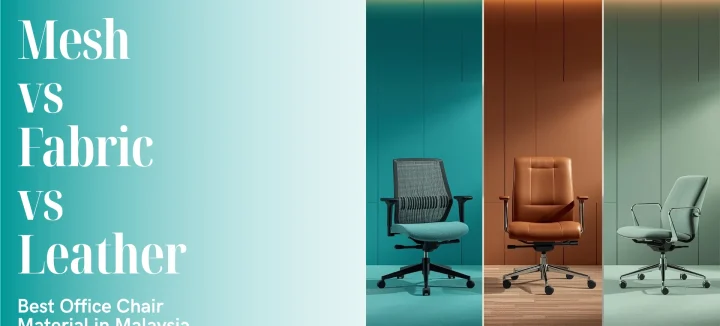
Mesh vs Fabric vs Leather: Best Office Chair Material for Malaysia
Office chair material is the single biggest factor separating a comfortable 8-hour workday from a sticky, frustrating one in Malaysia. Mesh performs best for most Malaysian workplaces because its open-weave design allows constant airflow in 80% average humidity. But leather and fabric each have their place depending on your workspace, budget, and how you use […]
Read More