Office Chair Cost Calculator: Your True Cost Per Sit
19th March, 2026
An office chair cost calculator reveals something most Malaysian buyers overlook: the daily price of sitting.
Divide any chair’s price by the total sits across its lifespan. That one number is the cost per sit.
For Malaysian workers averaging 45 hours per week at a desk, the math favours mid-range ergonomic chairs over budget options that need replacing every two years. Malaysia Population Research Hub (LPPKN) data backs this up.
This guide covers the Cost-Per-Sit Formula and the hidden costs most buyers skip. It also compares real numbers across three price tiers.
How the Cost-Per-Sit Formula Changes the Way You Buy Chairs
Most people compare chairs by sticker price. That’s the wrong number.
A RM300 chair and a RM1,500 chair look wildly different on a receipt. But receipts don’t track lifespan, replacement frequency, or what your back costs you later.
The Cost-Per-Sit Formula fixes that blind spot.
What is cost per sit for an office chair?
Cost per sit is what you actually pay each time you sit down to work. It spreads the purchase price across the chair’s full usable life.
Think of it the way businesses price equipment. Not a one-time buy. A daily operating cost.
A chair you sit in for 2,000 hours a year is a tool, not a purchase. Price it like one.
This reframe matters because it exposes the gap between “cheap” and “affordable.” A cheap chair has a low price tag. An affordable chair has a low cost per sit.
How do I calculate the true cost of an office chair?
Merryfair’s Cost-Per-Sit Formula uses three variables:
- Purchase price of the chair in RM
- Sits per year: the number of workdays you use the chair (typically 250 for Malaysian full-time workers)
- Usable lifespan in years, based on build quality and warranty
The formula: Purchase Price ÷ (Sits Per Year x Lifespan in Years) = Cost Per Sit
Here’s a worked example. A RM1,200 ergonomic chair with a 10-year lifespan.
At 250 working days per year, that’s 2,500 total sits. RM1,200 ÷ 2,500 = RM0.48 per sit.
Now a RM350 basic task chair lasting 2 years. That’s 500 sits. RM350 ÷ 500 = RM0.70 per sit.
The “expensive” chair costs 31% less per sit. And that’s before hidden costs.
The cheapest chair in the office is the one that lasts 10 years at RM0.48 per sit, not the one that costs RM350 upfront.
How many hours does a Malaysian office worker sit per year?
Malaysians work among the longest hours in the region. LPPKN data puts the mean work week at 45.4 hours. That’s far above the OECD average of 33.9 hours.
Loughborough University research, presented to the British Psychological Society, found something specific. Office workers average 5 hours and 41 minutes per day at their desk.
For a Malaysian worker, that’s roughly 1,420 chair hours per year. Over 10 years? 14,200 hours. Your office chair isn’t furniture. It’s the most-used tool you own.
Malaysians work an average of 45 hours per week. Your chair works every one of those hours with you.
That volume of use is why build quality matters for cost-per-sit. Chairs built for 500 hours collapse under 1,400.
The Hidden Costs That Make Cheap Chairs Expensive
The sticker price is just the starting number. Here’s where it gets interesting.
What hidden costs come with a cheap office chair?
Four cost categories sit below the surface of every chair purchase. Most buyers account for one of them.
| Hidden Cost Category | What Happens | Estimated Impact (over 10 years) |
|---|---|---|
| Replacement cycles | Budget chairs need replacing every 1.5–2 years. You buy 5–7 chairs in the time one quality chair lasts. | RM1,750–RM2,450 (5–7 chairs at RM350) |
| Health treatment | Poor lumbar support leads to chronic back pain. Physiotherapy runs RM150–250 per session. | RM900–RM3,000 (6–12 sessions) |
| Productivity loss | Discomfort causes micro-breaks, shifting, distraction. Even a 5% drop adds up across 1,400 annual hours. | Documented but hard to quantify precisely |
| Repair and parts | Gas cylinders fail, casters crack, armrest padding compresses. Repairs cost 30–50% of original price. | RM150–RM500 |
That table changes the conversation. A RM350 chair with RM1,000+ in hidden costs is a RM1,350 chair. You just paid in instalments you didn’t plan for.
How much does back pain treatment cost in Malaysia?
A single physiotherapy session in Malaysia costs RM150 to RM250. Trusted Malaysia’s clinic survey confirms this range. Soft tissue injuries from poor sitting posture typically need 6–8 weeks of treatment.
Six sessions at RM200 each is RM1,200. That’s the price of a mid-range ergonomic chair from Merryfair. And the chair prevents the problem. The physiotherapy only treats the damage.
Back pain treatment in Malaysia costs RM150–250 per session. Six sessions equals the price of a mid-range ergonomic chair.
A systematic review in Frontiers in Public Health quantified LBP costs globally. Annual direct costs range from USD 4,671 to USD 10,430 per patient in high-income countries.
Malaysia isn’t classified as high-income. But the pattern holds everywhere: back pain is expensive, and the workplace is a primary driver. Understanding the long-term health cost of sitting in a poor-quality chair puts the chair’s price into perspective.
The true cost of a chair is what you paid, plus what your body paid.
Should I repair or replace my office chair?
If the frame and mechanism are solid, repairs make sense. A gas cylinder swap runs RM50–RM100 and takes 15 minutes.
But if the seat foam has compressed and the lumbar has lost tension, those aren’t repair problems. They’re end-of-life signals.
A useful rule: if repair cost exceeds 40% of a replacement, replace. And when you do, knowing how to test whether a chair actually fits your body before buying prevents repeating the cycle.
Budget vs Mid-Range vs Premium: A Cost-Per-Sit Comparison
Numbers cut through opinion. Here’s what each tier costs per the formula.
How long does an office chair last at each price tier?
Lifespan depends on material quality, mechanism durability, and daily usage hours. Malaysian workers using chairs 6+ hours daily hit different wear timelines than someone sitting 3 hours.
| Factor | Budget (RM300–RM600) | Mid-Range (RM800–RM1,500) | Premium (RM1,800–RM3,000+) |
|---|---|---|---|
| Typical lifespan | 1.5–3 years | 5–8 years | 8–12+ years |
| Cost-per-sit (250 days/yr) | RM0.40–RM0.80 | RM0.25–RM0.60 | RM0.20–RM0.50 |
| 10-year total (with replacements) | RM1,000–RM2,400 | RM800–RM1,500 | RM1,800–RM3,000 |
| Warranty | 1–2 years (if any) | 3–5 years | 5–12 years |
| Typical failure point | Foam compression, gas cylinder | Mesh sagging after year 6–7 | Cosmetic wear before mechanical failure |
| Hidden health cost risk | High | Low | Very low |
The mid-range tier is where cost-per-sit and 10-year total cost converge at their lowest. You’re not paying for luxury. You’re paying for durability that outlasts three budget chairs.
A RM300 chair replaced every 2 years costs more over a decade than a RM1,500 chair replaced once.
For buyers exploring ergonomic chairs across every price tier in Malaysia, the cost-per-sit column matters most.
Is an expensive ergonomic chair worth it in Malaysia?
It depends on how you define “expensive.”
Sit 6+ hours daily, 5 days a week, 50 weeks a year. That’s roughly 1,500 sits annually. A RM1,200 chair lasting 8 years gives you 12,000 sits at RM0.10 each. Less than a packet of tissue.
A RM400 chair lasting 2 years gives you 3,000 sits at RM0.13 each. And you need to buy four more over the same period. Total: RM2,000 for worse comfort and no lumbar support.
So is RM1,200 “expensive”? By receipt, yes. By cost-per-sit, it’s 30% cheaper. And that’s before factoring in the back pain you avoided.
Merryfair’s affordable ergonomic options under RM1,000 to include in your cost comparison and budget-tier chairs under RM1,000 for the lower end of your comparison both sit in the sweet spot where cost-per-sit is lowest.
Cost-per-sit turns a shopping decision into a math problem. The math almost always favours quality.
Your Chair is a Daily Tool, Not a One-Time Purchase
The Cost-Per-Sit Formula replaces gut feeling with arithmetic. Run the numbers on any chair you’re considering. Divide price by the days you’ll use it. Factor in one hidden cost.
That single calculation changes what “affordable” means.
If you’re ready to compare models, explore Merryfair’s full range. Check out the real differences between gaming chairs and ergonomic office chairs if that’s a decision you’re weighing too. And once this post’s interactive calculator goes live, plug in your own numbers.
The best chair investment isn’t the cheapest or the priciest. It’s the one costing least per day, keeping your back intact, still doing its job in five years.
Frequently Asked Questions About Office Chair Costs
What is a good price for an ergonomic office chair in Malaysia?
A good ergonomic chair in Malaysia falls between RM800 and RM1,500. Chairs in this range offer adjustable lumbar support, proper tilt mechanisms, and 5–8 year build quality. Below RM500 sacrifices durability. Above RM2,000 adds premium materials and longer warranties.
How often should I replace my office chair?
Replace your chair when seat foam compresses, tilt loosens, or lumbar support loses shape. Budget chairs under RM500 hit this within 2–3 years. Mid-range chairs last 5–8 years. Premium chairs with care can exceed 10.
Can a good chair reduce back pain?
Yes. Ergonomic chairs with adjustable lumbar support maintain your spine’s natural curve. The Global Burden of Disease Study 2021, published in The Lancet Rheumatology, linked sedentary office work to low back pain. A properly fitted chair addresses the root cause, not just symptoms.
What does cost per sit mean?
Cost per sit divides a chair’s total price by the number of times you sit in it across its lifespan. A RM1,200 chair used 250 days per year for 8 years costs RM0.60 per sit. It measures value by daily use, not receipt price.
Is it cheaper to buy one expensive chair or replace cheap ones?
One quality chair is almost always cheaper over time. A RM350 chair replaced five times over 10 years totals RM1,750. A RM1,200 chair lasting 10 years costs RM1,200 total, with better support. The gap widens every year the quality chair lasts.
MORE BLOGS
How to Adjust Your Office Chair for All-Day Comfort
Most people who own an adjustable office chair never actually adjust it. A field study published in Applied Ergonomics found that the majority of office workers used two or fewer of their chair’s available adjustment functions, despite having access to five or more. Here’s how to adjust your office chair properly: start with seat height, […]
Read More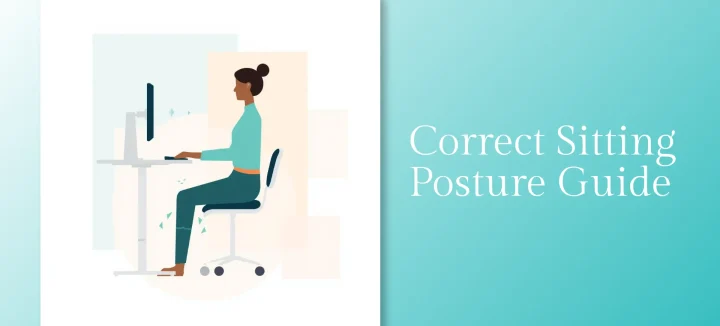
Correct Sitting Posture: Step-by-Step Office Chair Guide
Correct sitting posture breaks down within 20 minutes for most people. That’s the finding from Cornell University’s ergonomics research. Your body starts slouching before you notice it. And by mid-afternoon, most desk workers are sitting in a shape their spine was never designed to hold. So what does correct posture look like? It starts at […]
Read More
Standing Desk vs Ergonomic Chair: How to Pick the Right One
Standing desk vs ergonomic chair is the wrong question. Here’s why. Even standing desk owners still sit for 75 to 80 percent of their workday. That data comes from ProtoArc’s workplace wellness research. Your body doesn’t need you to pick sides. It needs support when you sit and movement when you’ve sat too long. This […]
Read More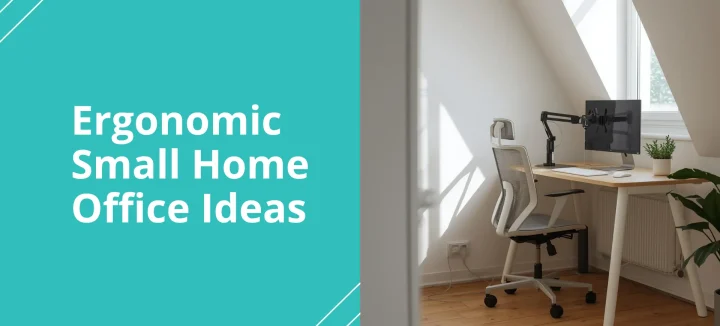
Small Home Office Ideas That Protect Your Back and Save Space
Small home office ideas don’t need to start with Pinterest boards and paint swatches. They need to start with your spine. A PMC study found that 61.2% of home workers reported musculoskeletal discomfort while working remotely, and over half were working from dining tables or bedrooms. The fix isn’t a bigger room. It’s a smarter […]
Read More